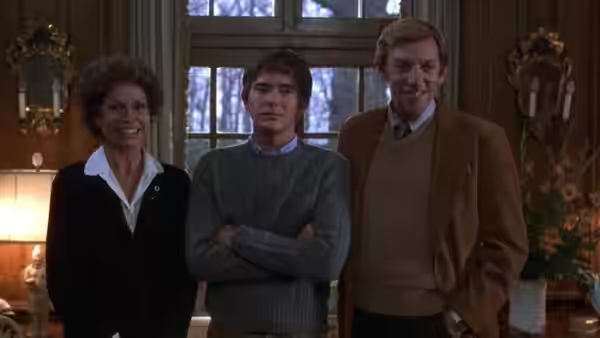
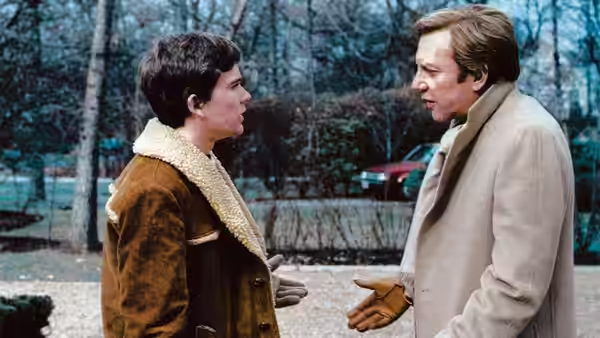
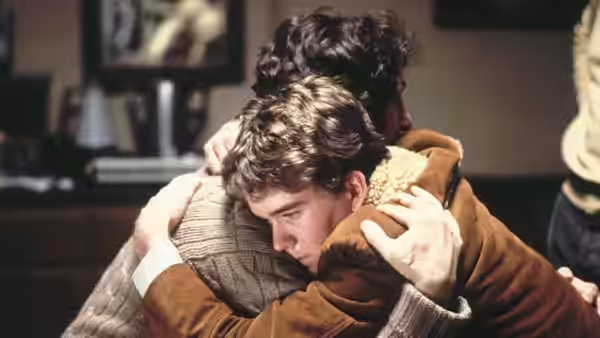
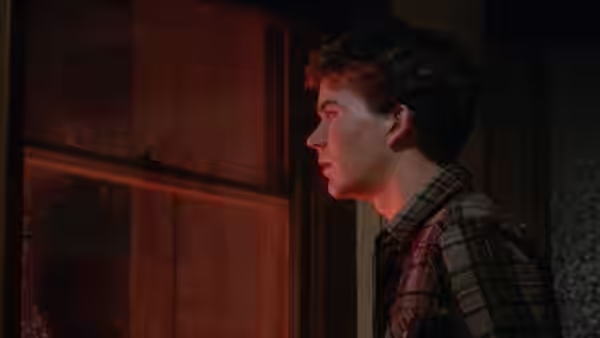
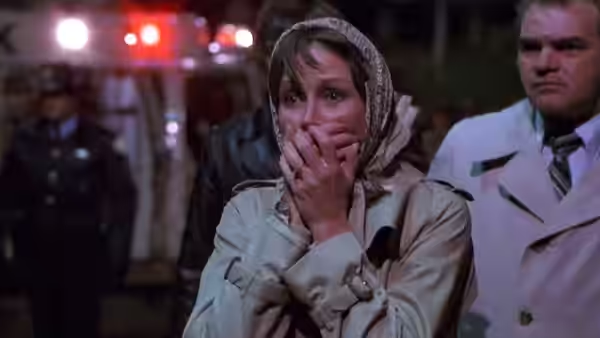
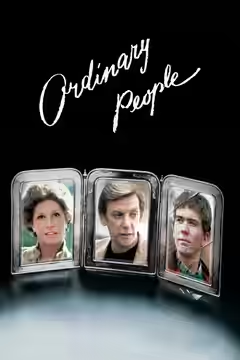
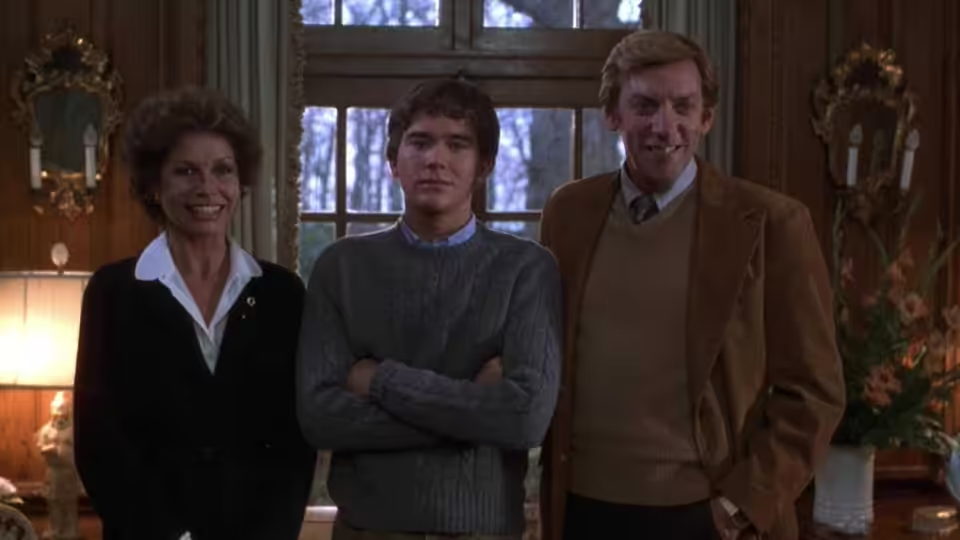
Beth Jarrett (Mary Tyler Moore), Conrad Jarrett (Timothy Hutton) and Calvin Jarrett (Donald Sutherland) standing indoors
Film review

Ordinary People

1980 · Directed by Robert Redford · 2h 04m

In a sentenceMary Tyler Moore makes us want to apologise for things we haven’t done

After a tragedy, the Jarrett family tries to carry on while tensions within the household become harder to contain. Beth (Mary Tyler Moore), Calvin (Donald Sutherland) and Conrad (Timothy Hutton) have different ways of coping, and increasingly struggle to understand one another. Therapy offers a place to discuss feelings that are difficult to acknowledge at home. Judd Hirsch plays Dr Berger in Robert Redford’s drama, adapted by Alvin Sargent from Judith Guest’s novel. The story follows the family’s attempts to manage grief, maintain appearances and decide what they owe each other.

Fi1m review

Robert Redford’s moving family drama gives Mary Tyler Moore, Donald Sutherland and Timothy Hutton the attention they deserve. The screenplay explains more than it needs to, but Moore makes its troubled mother impossible to dismiss.

Robert Redford’s Ordinary People is a moving family drama, weakened a little by its eagerness to explain what is wrong. The Jarretts struggle to acknowledge painful feelings, and Redford takes their difficulty seriously without treating them as an exceptional case. He is interested in what living together demands of people who cannot readily give each other what they need. Mary Tyler Moore, Donald Sutherland and Timothy Hutton make those demands matter.

Mary Tyler Moore’s Beth Jarrett is the reason to stay with it. Moore makes being tightly controlled look like hard work, and being near Beth look harder still. We found her painful to watch, because the effort she puts into containing herself leaves so little ease for anyone else. There is cruelty in this performance, but also enough fear to prevent Beth becoming merely the difficult mother. Moore makes us want to challenge her without feeling entitled to dismiss her.

Donald Sutherland’s Calvin Jarrett supplies a warmth that could easily have become an excuse to prefer him. Sutherland is more interesting than that: his gentleness makes us consider how little kindness can accomplish when a family has stopped understanding itself. Timothy Hutton’s Conrad Jarrett is more openly vulnerable, and Hutton never lets that vulnerability become a plea for indulgence. He makes Conrad someone we care about without making the people around him seem irrelevant. Redford gives all three performances the attention they need.

Alvin Sargent’s screenplay, adapted from Judith Guest’s novel, is sometimes too eager to explain their behaviour. Its treatment of therapy has a welcome seriousness, and Judd Hirsch gives Dr Berger the presence the part needs. Yet the explanations can become too tidy, particularly beside Moore’s stubbornly uncomfortable work. We do not need every painful response explained before we can care about it. The writing sometimes tells us what the actors have already made us feel.

John Bailey’s cinematography contributes to the handsome finish, which suits the family’s determination to remain composed but occasionally makes their distress too comfortable to look at. Jeff Kanew’s editing is most effective when the pace lets us attend to the performances without pressing for the next explanation. Marvin Hamlisch’s music can feel more solicitous than necessary; these actors need little help securing our sympathy. The care is evident throughout, although a rougher edge here and there would have served the material.

The Jarretts’ comfortable circumstances might make their troubles easy to dismiss, and Redford refuses that easy response. Their unhappiness receives the close attention a family drama owes its people, however well they live. The film is less convincing when it seems to rank them according to how well they can talk about themselves. That risks making Beth’s restraint look like an offence for which she alone should answer. Moore keeps us considering what this family asks of her.

The reservations matter, but they need not keep anyone drawn to domestic drama away. Redford gives the actors enough room to make these people worth thinking about after the film has stopped explaining them. Watch it for Moore in particular, and allow yourself to feel more sympathy for Beth than the screenplay always seems to invite.

Critical consensus AI synthesised

79
Positive
7
Mixed
3
Negative
0

Most critics like it, and the praise falls in two places. The first is the acting: Mary Tyler Moore’s tightly wound mother is singled out again and again, with Timothy Hutton’s damaged son and Donald Sutherland’s bewildered father close behind. The second is Redford, whose first film as director is repeatedly called assured and understated, letting the performances carry the weight. Several reviews add that the family stays ordinary without being patronised, and that the film is funnier than its reputation suggests.

The reservations cluster around depth. The New Yorker finds an earnest, academic exercise in catharsis that never reaches past its acting effects, and Time Out sees a tasteful psychodrama that amounts to an elegant advert for therapy. Later reappraisals, including Radio Times, think the handling of the family’s buried tensions now looks pat. The spread is wide, from full marks to the low fifties, though nobody dismisses it outright.

RogerEbert.com
1 January 1980 · ★★★★/4 · Roger Ebert
100

The film develops its characters through genuine emotional change and growth following family tragedy. Redford's understated direction and strong performances, especially by Timothy Hutton, Mary Tyler Moore, and Donald Sutherland, make it intelligent and deeply moving.

Read the full review →
Empire
1 January 2000
90*

This superior family-in-crisis drama is thoughtful and beautifully observed, fully deserving of its many accolades including Oscars for Best Picture, director Robert Redford, the screenplay and Timothy Hutton.

Read the full review →
Los Angeles Times
21 September 1980 · Charles Champlin
90*

Redford's assured adaptation is a strongly emotional and beautifully written family drama about the rending of a complacently happy upper-middle-class family. It is fine and touching, with standout performances, especially from Mary Tyler Moore.

Read the full review →
The New York Times
19 September 1980 · Vincent Canby
90*

The film is a moving, intelligent and funny portrait of an upper-middle-class family unraveling after tragedy. Canby praises Redford's assured directorial debut and the way the characters remain ordinary without being patronized.

Read the full review →
Variety
17 September 1980 · Todd McCarthy
90*

Redford delivers a remarkably intelligent and assured directorial debut in this powerfully intimate domestic drama. The review highlights the craftsmanship, strong performances (especially by Timothy Hutton and Mary Tyler Moore), and sensitive handling of the family's emotional turmoil.

Read the full review →
Little White Lies
80*

Redford’s directorial debut is a moving exploration of loss, guilt, and mental illness within a privileged WASP family. It stands out for its humane portrayal of the relationship between the troubled son and his psychiatrist.

Read the full review →

Straight answers AI written, from our review

Is Ordinary People worth watching?
Ordinary People is worth watching for anyone who can sit with a quiet, painful family drama, and we scored it 81. Mary Tyler Moore's tightly controlled Beth Jarrett is the reason to stay, with Donald Sutherland and Timothy Hutton close behind. Alvin Sargent's screenplay explains more than it needs to, but the performances carry it.
How long is Ordinary People, and what is it rated?
Ordinary People runs 2h 04m. It is a drama film.
Where can I watch Ordinary People in Ecuador?
Ordinary People is not on any streaming or rental service in Ecuador at the moment. It is available in 20 other countries; change your country at the top of the page to see where. Availability is checked daily.
How violent or frightening is Ordinary People, and is it suitable for children?
Ordinary People is a 15 in the UK and rated R in the US, and it is not violent or frightening in any physical sense. Its weight is emotional: a family failing to cope after a tragedy, with grief, cruelty and therapy sessions at the centre. It is unsuitable for young children on those grounds alone, and better suited to older teenagers and adults.
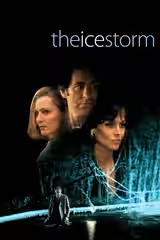
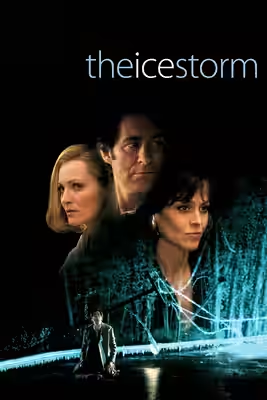
How does Ordinary People compare to The Ice Storm?
Ordinary People is the sadder and more earnest of the two, while The Ice Storm is funnier and more uncomfortable about the same subject: comfortable families whose good manners fail them. Redford's film gives Mary Tyler Moore room for a stubbornly painful performance; Ang Lee's is sharper in tone but leans too hard on its weather symbolism. Choose Redford for grief, Lee for social discomfort.
Is Ordinary People based on a true story or a book?
Ordinary People is based on Judith Guest's novel of the same name, adapted by Alvin Sargent, and is not a true story. The film keeps the book's focus on the Jarrett family and their therapy sessions, though we found the screenplay explains their behaviour more tidily than it needs to. Knowing the novel is not required to follow or feel it.
What should I watch after Ordinary People?
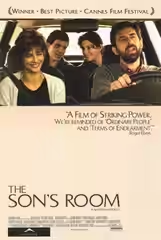
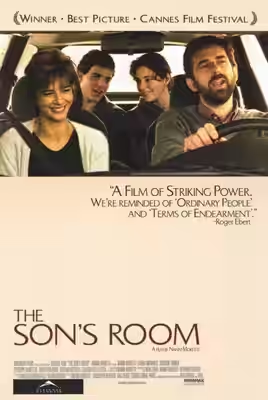
After Ordinary People, try The Ice Storm (1997, Fi1m 85): Comfortable families discover that good manners are poor preparation for emotional trouble. Then Secrets & Lies (1996, Fi1m 88): Family tensions become almost unbearable before anyone manages to speak plainly; and The Son's Room (2001, Fi1m 82): A family’s grief is observed closely, with particular care for the limits of therapy.

Cast

Awards

Academy Awards, 1981

Nominated
Best Actress
Won
Best Director
Won
Best Picture
Won
Best Supporting Actor
Won
Best Writing, Adapted Screenplay

If you liked this, try…

  1. The Ice Storm (1997, Fi1m 85)Comfortable families discover that good manners are poor preparation for emotional trouble.

  2. Still Walking (2008) · not reviewed yetA family gathering lets old grief emerge through food, small talk and remembered slights.

  3. Secrets & Lies (1996, Fi1m 88)Family tensions become almost unbearable before anyone manages to speak plainly.

  4. The Son's Room (2001, Fi1m 82)A family’s grief is observed closely, with particular care for the limits of therapy.

  5. Wild Strawberries (1957, Fi1m 88)An ageing man’s difficult family relationships receive a searching, unexpectedly tender examination.

Free account

Know what to watch tonight

Two lists that know where things are streaming, collections you can share, your own score beside ours, and Discover that remembers what you have seen.

  • Want to see, sorted by what is streaming now
  • Seen, with your score out of ten
  • No adverts, ever