D.W. Griffith’s historical melodrama earns its length chiefly through Lillian Gish and its capacity for suspense. The emphatic storytelling can tire us, and the history needs scepticism, but the feeling repays the patience.
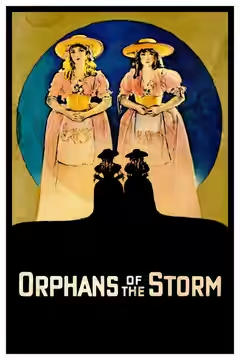
D.W. Griffith’s Orphans of the Storm is good historical melodrama, provided the melodrama matters more to us than the history. Its incidents are extravagant, its emotional demands insistent, and Lillian Gish makes enough of them count to justify the attention. At 150 minutes, it does require patience. We recommend it to anyone comfortable with a film that would rather risk being excessive than let an emotion pass quietly.
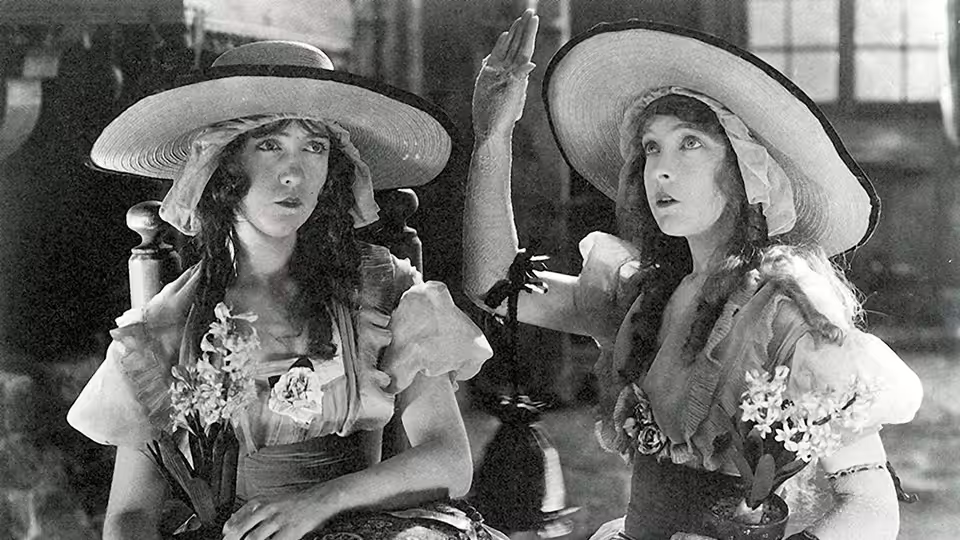
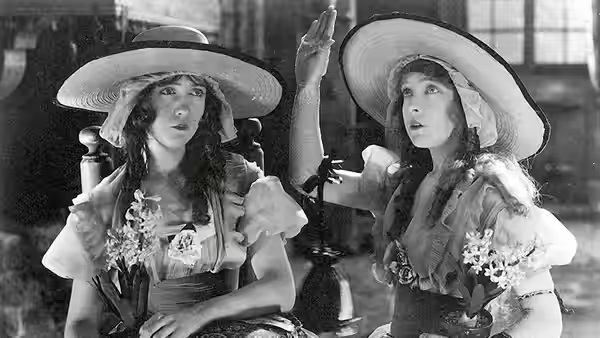
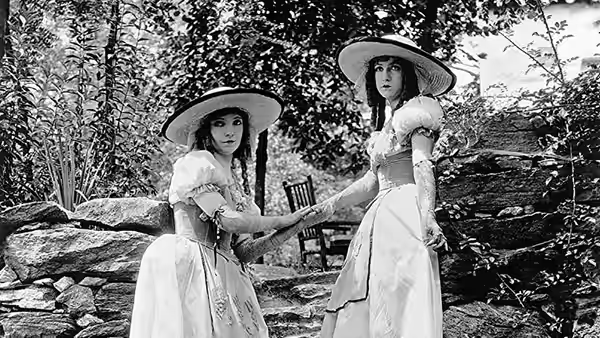
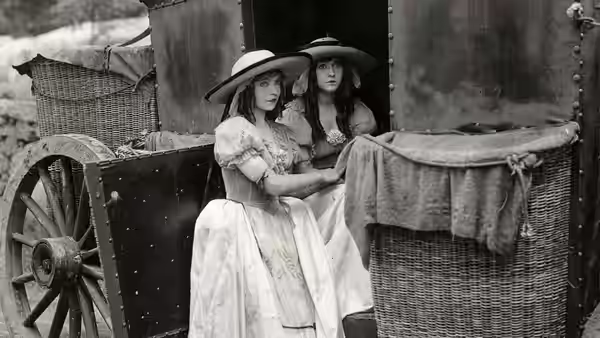
We were moved by Lillian Gish as Henriette Girard. Her emotional directness makes the extravagant plotting easier to accept, because we remain concerned with the person at its centre. That is harder than it sounds in material which keeps increasing the dramatic pressure. A performance this emphatic could become exhausting, but she makes the feeling seem necessary, even when we have reservations about the incident provoking it.
Dorothy Gish plays Louise Girard, with Joseph Schildkraut as Chevalier de Vaudrey, though our attention repeatedly returns to Lillian Gish. The acting asks us to accept a degree of emotional openness that can take some adjustment. We find that directness mostly welcome, and the film’s age is neither an excuse for it nor an obstacle to enjoying it. There are nevertheless passages when the insistence becomes tiring: we have understood the feeling and would welcome a little less persuasion.
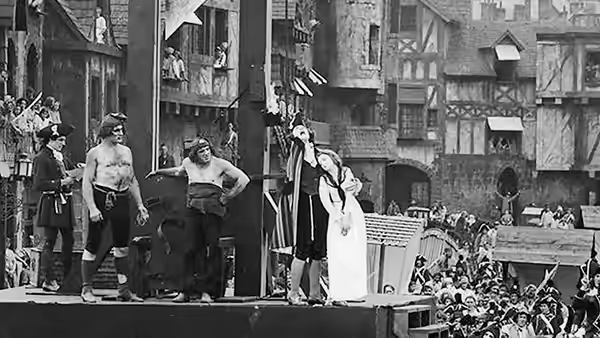
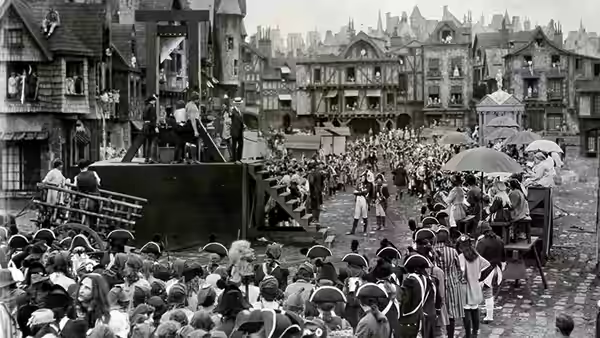
The cinematography is credited to Hendrik Sartov, Billy Bitzer and Paul H. Allen. The pictures are most persuasive when they give us time to attend to a performance; the broader effects cannot hold our interest as reliably. Rose Smith and James Smith’s editing provides much of the excitement, making dramatic urgency out of developments that invite objections when considered calmly. We were gripped despite those objections, because the cutting keeps our concern ahead of our doubts.
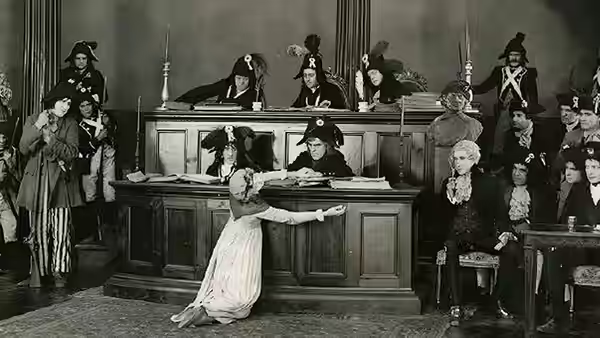
The screenplay, also by D.W. Griffith, is less convincing when approached as history. Danton (Monte Blue) and Robespierre (Sidney Herbert) appear among its characters, but their presence should not encourage anyone to treat the film as a reliable guide to events. The questionable fidelity matters because the storytelling is so forceful about securing our agreement. We can enjoy the dramatic complications without accepting the account of history that accompanies them.
William Frederick Peters is credited with the music, though the performances and editing already give us firm instructions about how to feel. The greater reservation is the length, which makes the repeated emotional emphasis more noticeable. There are stretches when the drama would benefit from moving on sooner, rather than asking for another measure of sympathy. That weakness does not cancel the excitement, but it makes the film easier to recommend to an admirer of historical romance than to someone merely curious about it.
Judged as melodrama, its strengths are substantial: a central performance worth watching closely and suspense that survives our doubts about the plotting. The extravagance is part of the pleasure, until the repetition begins to blunt it. A more restrained film might lose something valuable, but a tighter one would not necessarily do so. Allow an evening for Lillian Gish, and keep some scepticism for the history.