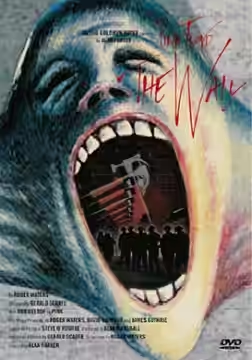
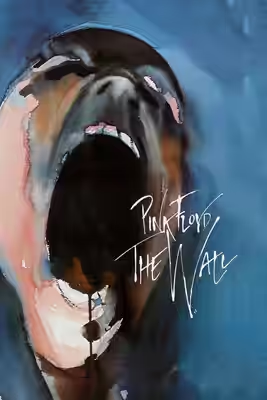
Alan Parker gives Pink Floyd: The Wall forceful images and a chilling centre in Bob Geldof. The music holds it together, but the repeated insistence on Pink’s suffering makes this a wearing film with too little human detail.
Alan Parker’s Pink Floyd: The Wall is a forceful musical drama that becomes wearing because it keeps pressing points we have already understood. There is enough here to reward an interest in music-led storytelling, provided there is some patience for its punishing insistence. Roger Waters writes the screenplay and supplies the music, and the film allows songs and images to carry much of the work usually done by conversation. It makes a serious attempt to show how memory can take over a life.
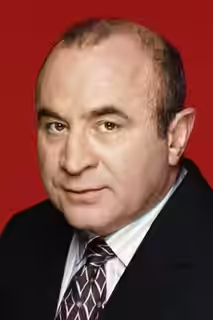
Bob Geldof gives Pink a coldness that is more troubling than a broadly demonstrative performance would have been. He makes the character’s withdrawal convincing without making him easy company, and that reserve usefully checks the film’s appetite for enormous visual statements. But the screenplay does not give us enough to distinguish the man from the distress he represents. Bob Geldof holds our attention through stretches in which Pink himself remains frustratingly difficult to know.
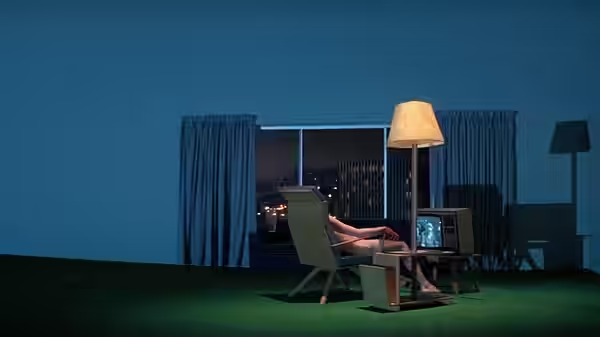
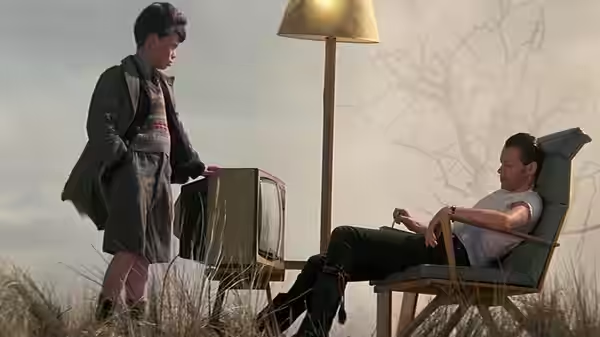
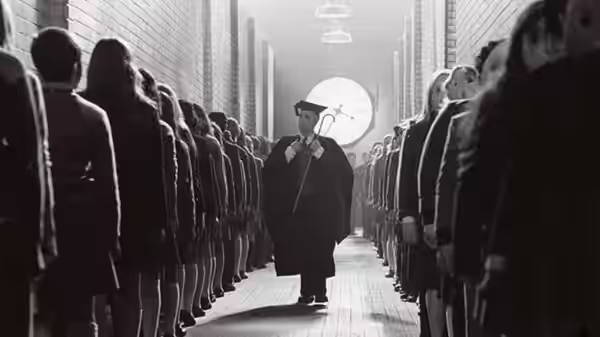
Peter Biziou’s photography does much of the explaining that the dialogue leaves out. The images have a clarity that lets us register their emotional purpose quickly, even when the connections between them are less secure. Brian Morris’s production design helps give the school imagery its oppressive force, making institutional life look capable of swallowing a child whole. The schoolchildren on the conveyor belt are an effective example, although the idea hardly needs underlining.
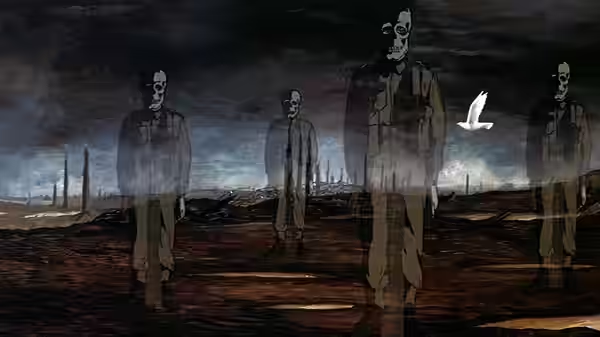
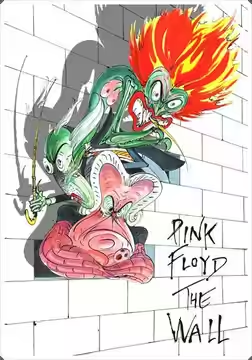
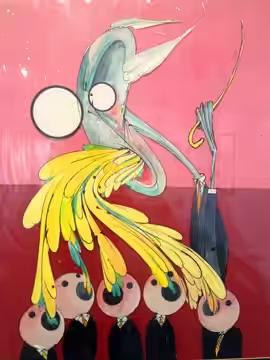
We were unsettled by those children on the conveyor belt. The image reduces education to processing bodies, and its bluntness gets to us before there is time to object to the bluntness. The surreal animation gives the film room to push that kind of exaggeration further, without having to make every image obey physical rules. It also makes the repeated insistence on suffering tiring: there is little chance to sit with one disturbing thought before another demands attention.
Roger Waters’s music gives these passages a continuity that the story often struggles to provide. The songs can sustain an emotion for longer than a single image, and they give the film a reason to keep moving when Pink’s misery starts to feel repetitive. Gerry Hambling’s editing is alert to that musical movement, keeping the pictures responsive to what we hear. It is less successful at creating pauses, so the film’s 95 minutes can feel longer than their running time suggests.
Roger Waters’s screenplay is least persuasive when it asks a forceful symbol to account for an entire human problem. The school sequence tells us what it thinks about conformity almost immediately; further emphasis adds little. The film tells us how badly Pink has been hurt often enough that we begin to want a better sense of what else he might be like. Bob Geldof cannot supply all of that on his own, however much we value the severity of his performance.
As a music film, it takes risks that a straightforward performance film would never have to consider. Alan Parker trusts the combination of songs, photography and animation to hold us, and enough of it works to justify that trust. The reservations matter, especially if the music itself does not already have a hold on you. Try it for the images and Bob Geldof, but allow for a musical drama that seldom knows when to ease off.