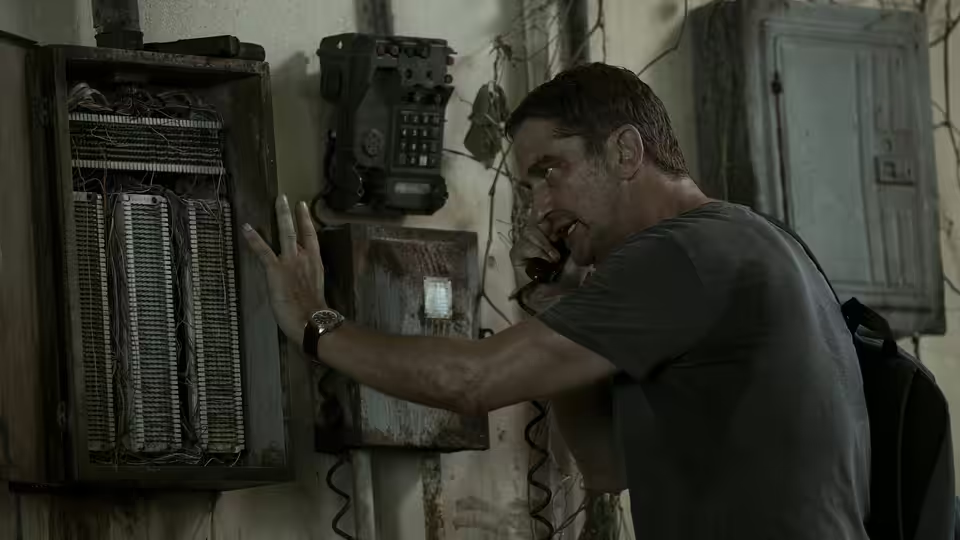
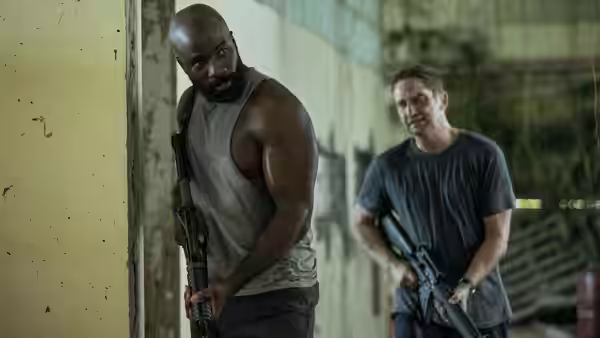
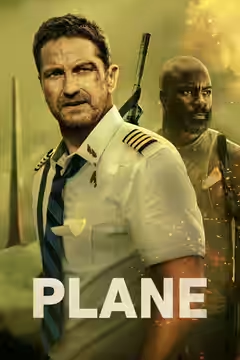
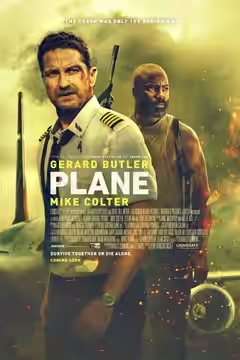
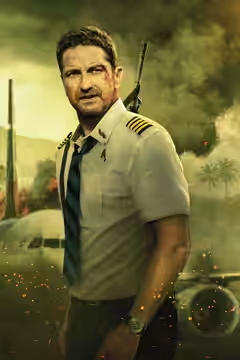
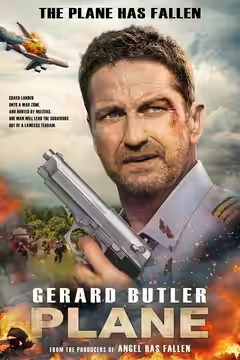
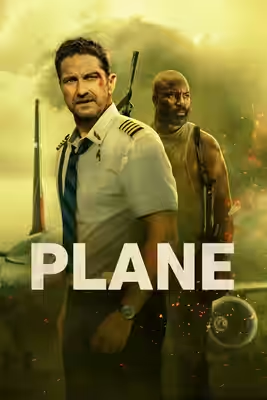
Plane is a sturdy, satisfying thriller with a tense emergency landing and an appealing partnership between Gerard Butler and Mike Colter. The supporting characters are thin, but the leads give the danger enough weight.
Plane is a solid action thriller, helped considerably by Gerard Butler’s willingness to look as though the job might be beyond him. Jean-François Richet directs with a sensible grasp of what matters: we need to understand the danger and believe that surviving it takes effort. The film delivers that, even when the writing settles for familiar threats and thin supporting characters. It is worth an evening if straightforward action is what we are after.
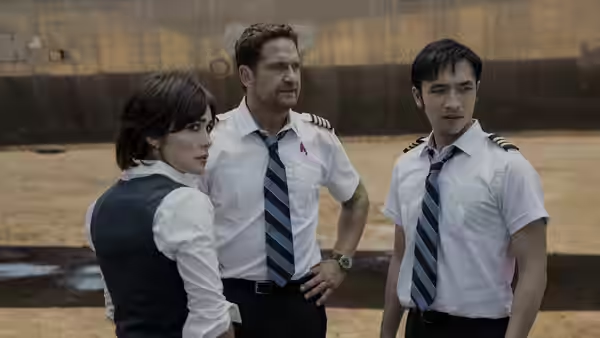
The storm and emergency landing are the strongest stretch, because the film gives us time to sit with the problem. Brendan Galvin’s cinematography makes the cockpit feel restrictive without making the action impossible to follow. David Rosenbloom’s editing allows the crisis to build rather than hurrying through it. Mailara Santana’s production design helps establish the cockpit as a workplace, which gives its occupants something more useful to do than look frightened. We were properly tense during the descent; the patience with the people at the controls made the danger feel immediate.
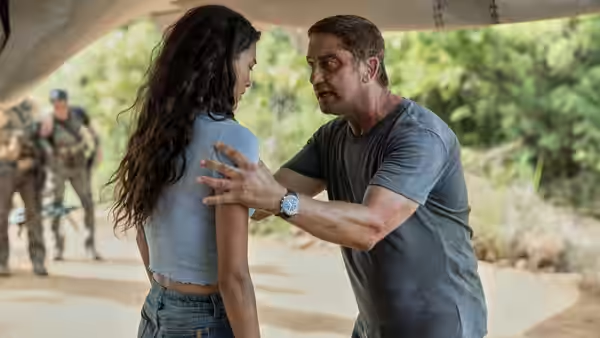
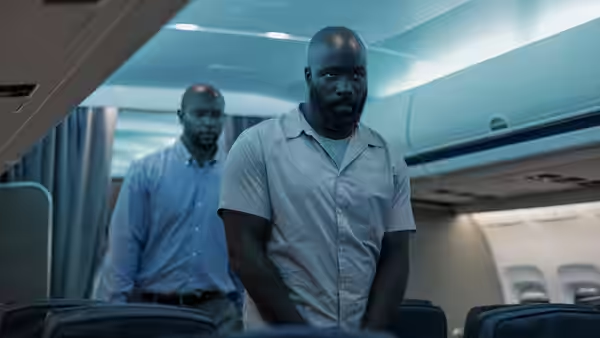
Gerard Butler gives Brodie Torrance a welcome degree of uncertainty beneath the determination. He seems shaken by what happens, and that matters more than another demonstration that an action hero can take punishment. Mike Colter’s Louis Gaspare supplies a steadier, more imposing presence, and the difference between them makes their cooperation worth watching. Neither performance needs a laborious explanation of the men’s pasts to establish why we might want to spend time in their company.
The direction is equally effective when the violence gets close. A sustained hand-to-hand fight gives us enough uninterrupted time to register the effort involved, rather than relying on cuts to manufacture force. The blows have weight, and the people delivering them appear to be working for it. The shooting is less distinctive: once the film is dealing mainly in gunfire, its pleasures become more ordinary. The music by Marcus Trumpp and Marco Beltrami reinforces the danger but makes little distinction between the gripping confrontations and the routine ones.
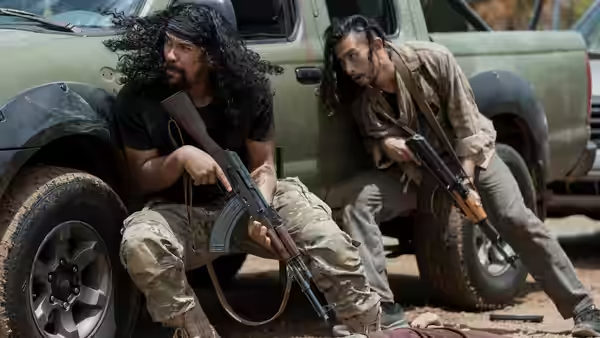
The screenplay by J.P. Davis and Charles Cumming gives the leads enough to work with, but the people around them are less fortunate. Supporting characters are defined so quickly that there is little to hold on to beyond their immediate usefulness. The middle stretch also loses some of the urgency of the landing. Jolo is reduced to a source of danger, with little interest in anyone who might live there outside the needs of an action scene. The villains are broadly drawn even by the standards of a film asking for modest expectations.
For much of its 107 minutes, Plane remembers that watching somebody work through an emergency can be entertainment enough. Action thrillers do not always let their heroes look this uncertain. There is pleasure in seeing it taken seriously here, even when the plot is taking shortcuts. Save it for a night when a worried man doing his job is more appealing than another invulnerable hero.