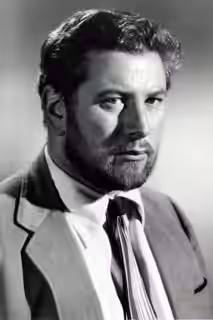
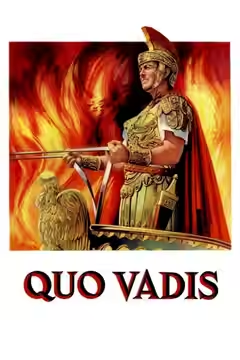
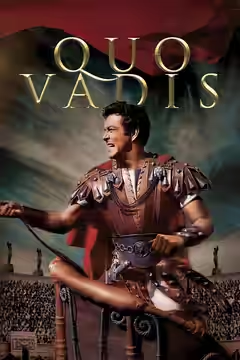
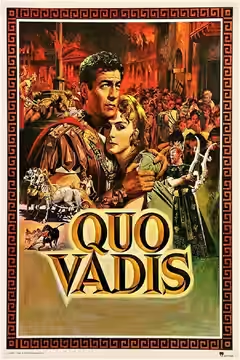
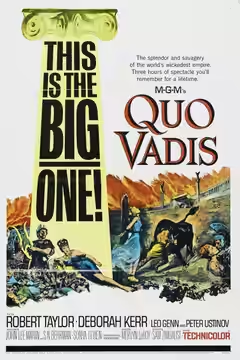
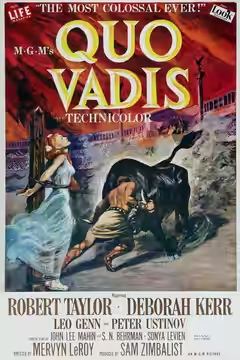
Mervyn LeRoy’s Roman epic is enormous, handsome and, for long stretches, dull; the romance between a Roman commander and a Christian hostage never convinces. Peter Ustinov’s Nero, vain, frightened and forever composing, is the reason to sit through it.
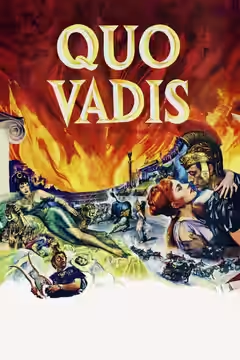
Mervyn LeRoy’s film of Henryk Sienkiewicz’s novel puts a Roman commander, a Christian hostage and the emperor Nero in the same city and waits, for 174 minutes, for the city to burn. It is enormous. The sets run back further than the eye can follow, the crowds are real people and there are a great many of them, and nothing in it is small except the story. It is a decent evening if you like your Rome at this scale, a long one if you do not, and the man who makes it bearable is Peter Ustinov.
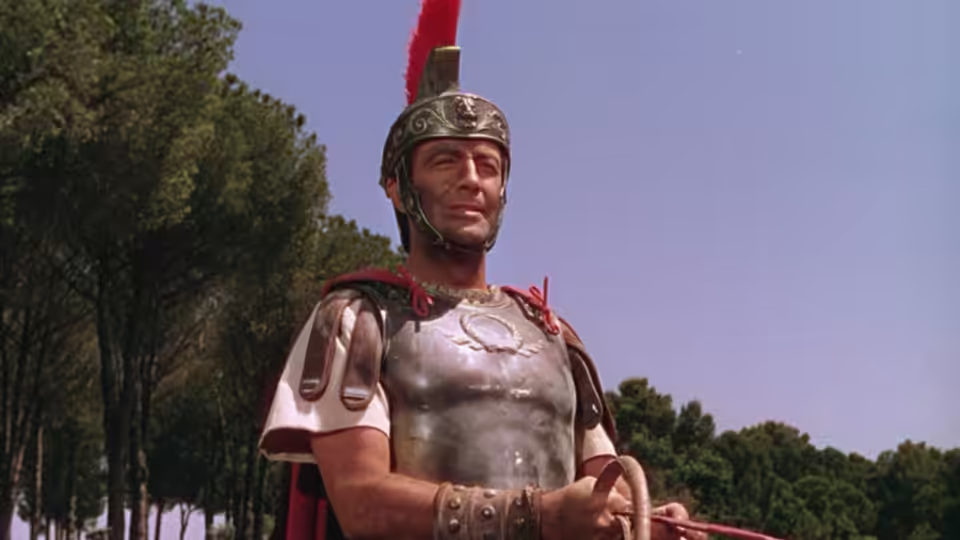
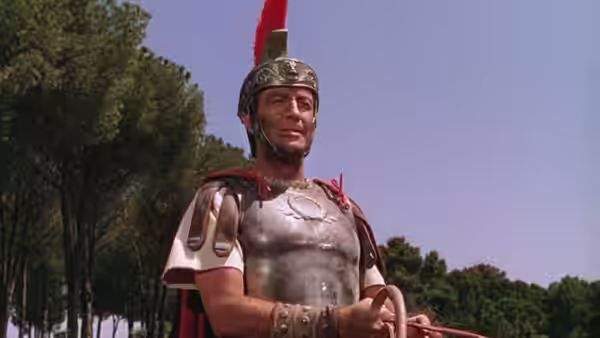
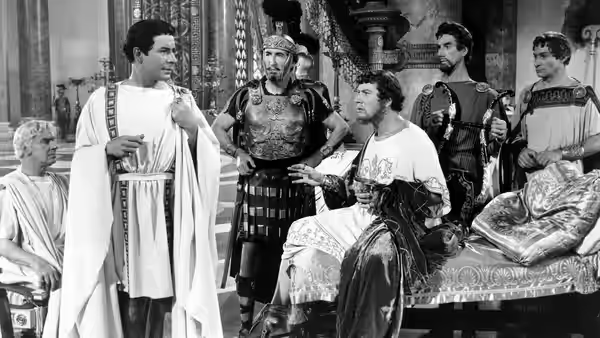
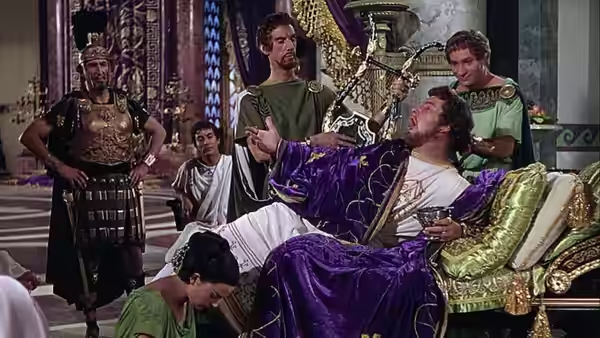
The scale is not faked and it is never dull to look at. Robert L. Surtees and William V. Skall light the palace so the marble glows, and they shoot the triumph from above so the column of soldiers seems to go on to the horizon. Nero’s banquets are lamplit and crowded, and when he holds a disc of red glass to his eye the film cuts to what he sees, the whole hall gone the colour of wine. Herschel McCoy dresses Nero in purple and gold and the Christians in undyed wool, so you can tell the two Romes apart from the back of the hall.
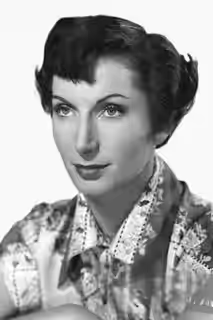
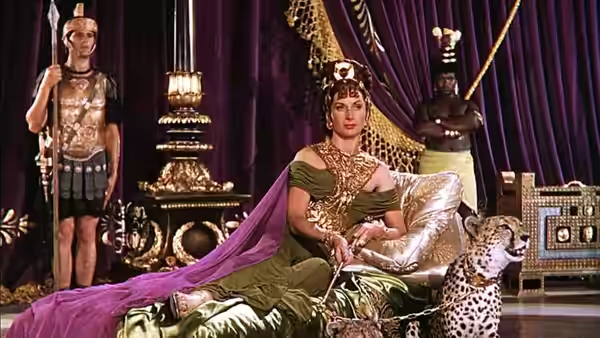
Ustinov plays Nero as a fat, frightened child who has been given the world and would rather have had an audience. He composes verse of majestic badness, recites it with wet eyes and looks about the court for the applause, which arrives because the alternative is death. Leo Genn’s Petronius supplies it in a voice so dry the flattery curdles on the way out, and the emperor takes every insult as a compliment. Their scenes are the best written in the film; Genn does almost nothing with his face and gets a laugh every time. Patricia Laffan’s Poppaea watches all of it from her couch with the patience of a cat.
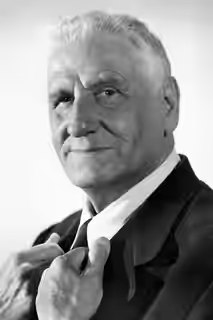
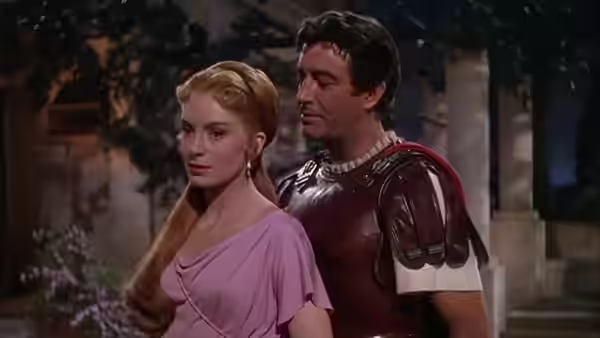
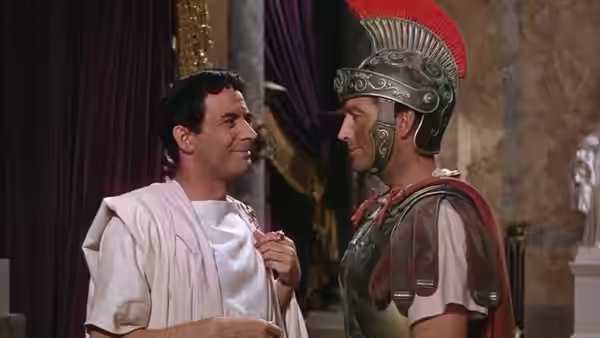
Then the film goes back to the lovers and sits down. Robert Taylor plays Vinicius as a man who has never lost an argument and sees no reason to start, and the script by John Lee Mahin, Sonya Levien and S. N. Behrman asks us to believe he is worth saving. Deborah Kerr’s Lygia has to be saintly, frightened and in love with a brute, and the writing gives her forbearance and little else. Faith is discussed in speeches: Finlay Currie’s Peter preaches in the garden and Abraham Sofaer’s Paul explains doctrine to a soldier who is only pretending to listen. The middle hour is mostly this.
We were bored, twice, in that hour, and checked the time. Then Rome burns, and the film wakes up. The fire is real flame on full-size streets with people running through it, and it is the one stretch where the scale frightens rather than impresses. Ustinov’s part in it we will not describe, except to say that we laughed out loud, not at the film but with it: he and LeRoy know how ridiculous this man is and how dangerous, and they put both in the same shot.
Miklós Rózsa scores Rome with brass and drums and the Christians with a plainer line, voices in unison, and the music does more to tell the two sides apart than the dialogue does. Ralph E. Winters cuts the triumph and the arena with a patience that suits them, and the love scenes with the same patience, which does not. The arena sequence has a sweep the rest of the film only reaches for; we will not describe what happens in it.
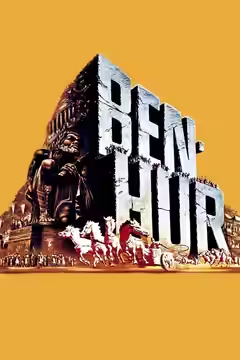
Sam Zimbalist produced this and Surtees shot it, and eight years later the same two made Ben-Hur (1959), which does everything this does and gives you a hero to care about. Spectacle needs a face in front of it, and Taylor’s is handsome and closed. When the crowd roars in Ben-Hur you know who it is roaring for. Here you admire the crowd.
See it at home, where it can be taken in two sittings and the middle hour walked through with a cup of tea. Stay for every scene Ustinov is in. It carries a PG and runs just under three hours, which is a long time on any sofa.