Jasmila Žbanić’s Srebrenica drama is harrowing and worth the distress. Jasna Đuričić gives a mother’s efforts to save her family an urgency that the controlled filmmaking never exploits for easy excitement.
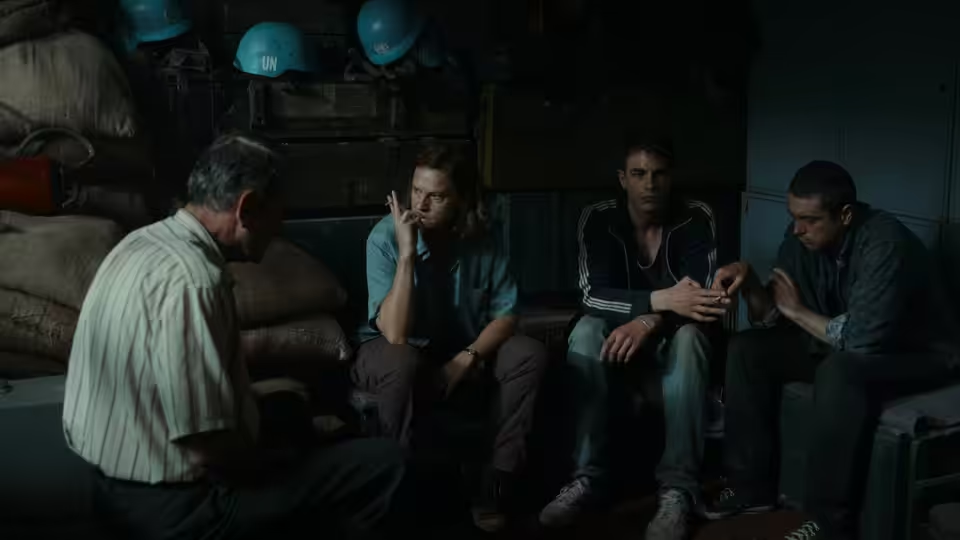
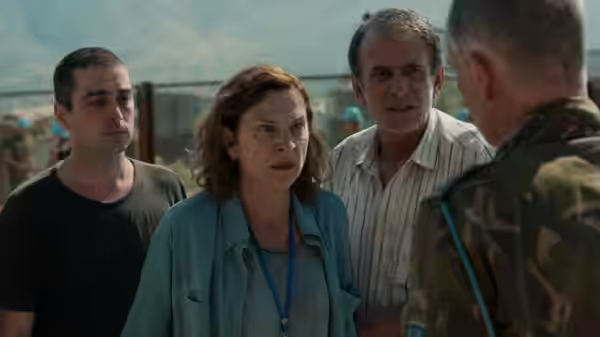
Quo Vadis, Aida? is a war drama we would urge people to see, despite the distress it causes. Jasmila Žbanić keeps the Srebrenica massacre close to one woman, Aïda Selmanagić (Jasna Đuričić), and her efforts to save her family. That choice gives the film a clear purpose: we are asked to follow what she tries to do, and to understand why she keeps trying. It is a demanding 104 minutes, made bearable by the care taken with the people whose lives are threatened.
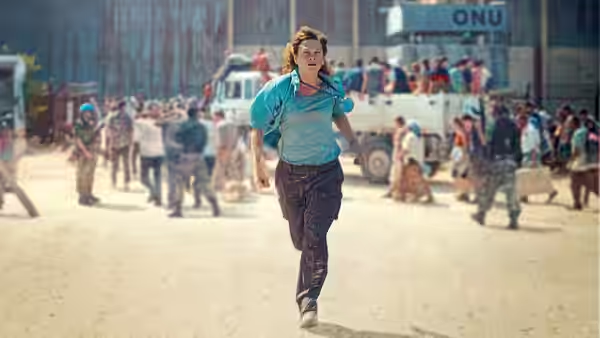
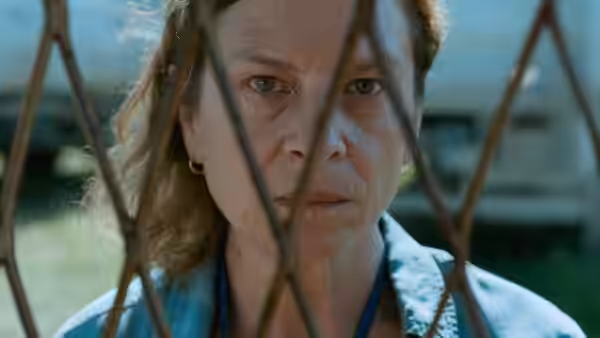
Đuričić gives Aïda a physical urgency that makes even the prospect of waiting feel intolerable. Her performance has the strain of someone who must keep thinking while frightened, with other people’s lives depending on her ability to do so. We were frightened for her, because the effort she puts into protecting her family is so visible and offers so little reassurance. Žbanić allows that effort to remain uncomfortable; there is no invitation to applaud Aïda for being a resourceful heroine and settle back into our seats.
Christine A. Maier’s cinematography stays restless, but the film remains easy to follow. That clarity matters, because the drama depends on understanding how much control Aïda has over what happens to her family. Jarosław Kamiński’s editing changes pace without letting the danger seem to have passed. The gentler passages have enough time for affection to be felt, so that danger never becomes the only thing we know about these people, or the only reason to care about them.
Hannes Salat’s production design and Antoni Łazarkiewicz’s music are harder to separate from the film’s effect. Neither feels like something offered for admiration on its own, which helps keep our attention on the people. Žbanić is particularly careful about how much excitement she permits the material to generate. The tension can be nearly unbearable, but there is little of the pleasure a thriller usually offers when it puts a capable person in danger and lets us anticipate an escape.
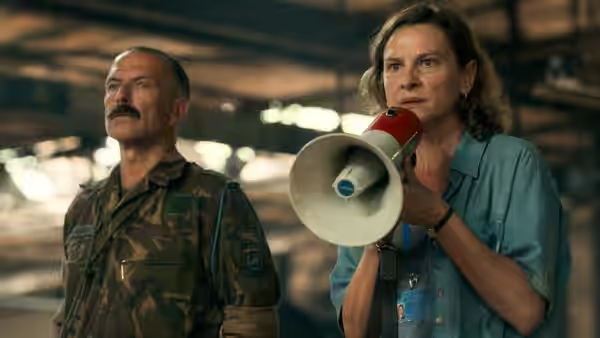
Our reservation is that such close attention to Aïda leaves some of the people around her less fully felt. Johan Heldenbergh’s Colonel Karremans and Boris Isaković’s General Ratko Mladić matter chiefly for the authority they exercise, and neither holds our attention in quite the same way. Žbanić makes the institutional failure clear, sometimes clearer than the individuals involved. This is a small limitation, but it means the film’s human detail is concentrated heavily in Đuričić’s performance, with less to discover elsewhere.
Against the conventions of the war film, Žbanić resists making courage reassuring. Aïda’s determination does not turn the wider catastrophe into a test of whether one person is brave or clever enough. The institutional failures matter precisely because individual effort cannot compensate for them. Affection for a family is allowed to be ordinary, while the demands being made on that family are appalling; Đuričić makes that fear recognisable without making it comfortable to watch. See it when you can give it your full attention, rather than squeeze it between other things.