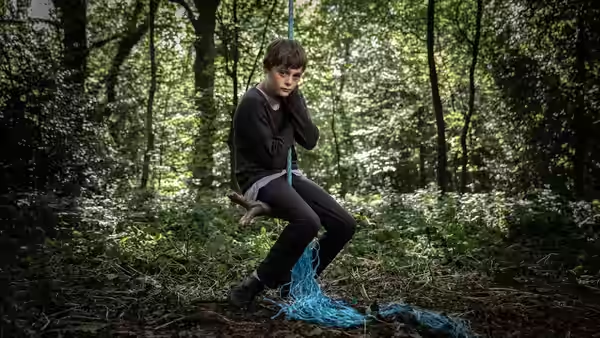
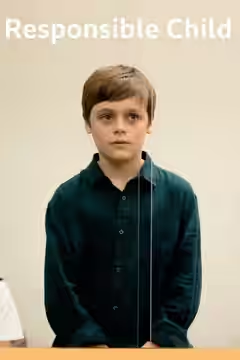
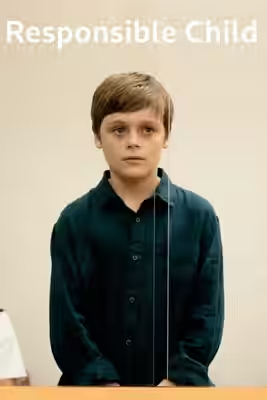
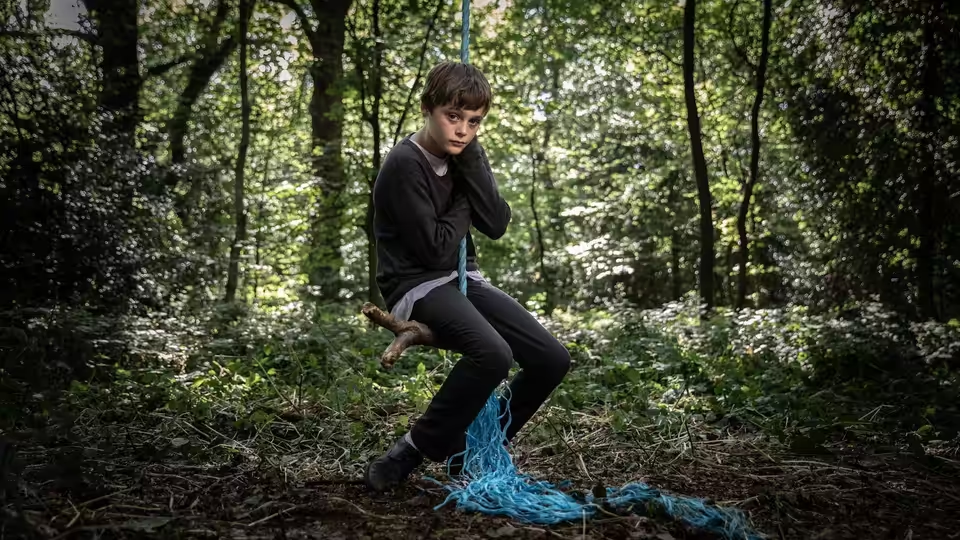
Ray (Billy Barratt) sits on a branch in the woods with a blue rope around him
Film review

Responsible Child

2019 · Directed by Nick Holt · 1h 27m

In a sentenceWe wanted more of Billy Barratt and considerably less help deciding what to think

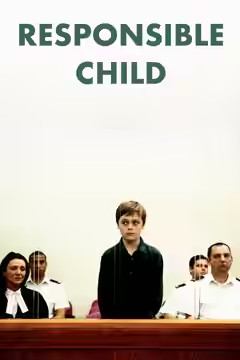
Ray (Billy Barratt) is a child facing criminal proceedings in England, where his case raises questions about trying children as adults. His mother, Veronica (Debbie Honeywood), is part of the family story that the drama sets alongside court proceedings involving Judge Walden (Stephen Boxer). Ray needs the adults around him to understand his circumstances, while the legal process asks how far he can be held responsible. Moving between the family and the courtroom, the film follows a child whose age complicates the responsibilities assigned to him, and adults charged with deciding what the law should ask of him.

Plays from YouTube when you press play; nothing loads from them until then.

Fi1m review

Billy Barratt gives Responsible Child its force, but the legal drama is thinner than the subject deserves. Nick Holt’s film is worth considering for its performances, with patience required for the fractured storytelling.

Responsible Child is a troubling drama with a stronger central performance than screenplay. Nick Holt directs a story about a child facing adult judgement, while Sean Buckley asks how criminal responsibility should be understood when the person being judged is still growing up. The subject warrants care, and the film has enough of it to deserve attention. It makes Ray’s situation distressing without examining the law as closely as it should.

Billy Barratt gives Ray the film’s most persuasive claim on our attention. We found his predicament distressing because the performance makes it hard to lose sight of the child inside the legal proceedings. There is a danger that such a role becomes an illustration of the writer’s position, with every moment pointing towards the same conclusion. He gives us enough of a person to resist that, even when the surrounding drama is less patient.

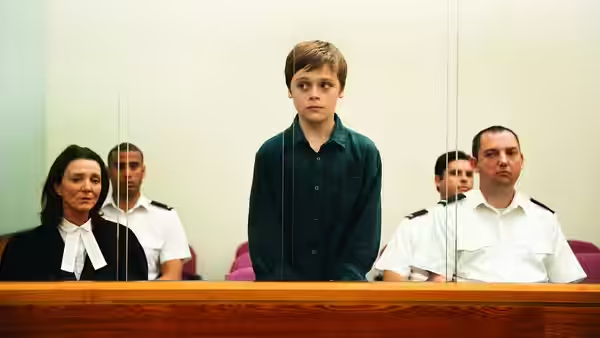
The fractured chronology is a less successful choice. Matthew Gray’s editing moves between timelines, asking us to consider the family circumstances alongside the legal process, but the changes interrupt our involvement more often than they deepen it. The court scenes in the first hour need greater development if they are to do more than raise the central question again. At 87 minutes, the film has little spare room, and the division of attention makes material that deserves scrutiny feel hurried.

Debbie Honeywood, as Ray’s mother Veronica, is the other reason to keep watching. Her performance gives the family distress a weight that the legal scenes do not consistently achieve. It also makes the thinness elsewhere more noticeable: we begin to want the same attention paid to the people through whom the law operates. That need not mean excusing them, or pretending that every position deserves equal sympathy. It would mean giving their decisions enough detail to make us think harder.

Nick Cooke’s cinematography and Tom Bowyer’s production design make less of an impression than the casting. Our attention stays with the performers, and neither the images nor the surroundings compensate for the court material’s lack of development. Adrian Johnston’s music is similarly less important to the film’s force than what Billy Barratt and Debbie Honeywood supply themselves. The drama is affecting, but greater feeling cannot fill in the parts of the hearing that the script has not sufficiently explored.

As a drama about social injustice, the film does not need to offer a neutral account of every possible view. It does need to make its preferred position withstand some pressure, and Sean Buckley is too ready to assume that the sight of a child being tried settles the discussion. We wanted a fuller consideration of what responsibility might mean in Ray’s case, not a lecture defending the existing system. A courtroom drama should give us enough detail to weigh the decisions being made, even when it plainly considers them wrong.

There is still enough here for viewers drawn to difficult family and legal dramas. Nick Holt gets performances worth attending to, and the shortcomings do not make Ray’s situation any easier to dismiss. They do make the film less useful as an examination of the law than it might have been. Go for Billy Barratt and Debbie Honeywood, and allow for a courtroom drama that needs more time in court.

Critical consensus AI synthesised

3 of 6
Positive
1
Mixed
2
Negative
0
Radio Times
16 December 2019 · Flora Carr
75*

The review presents the drama as a thought-provoking examination of England’s minimum age of criminal responsibility. It singles out the legal questions raised by the child’s case.

Read the full review →
The Guardian
16 December 2019 · Lucy Mangan
65*

Mangan finds the drama effective overall, though its shifting timelines and underdeveloped court scenes weaken the first hour. She praises Debbie Honeywood’s portrayal of the boys’ mother and calls her brief scene with Ray after the verdict harrowing.

Read the full review →
The i Paper
16 December 2019 · ★★★ · Rupert Hawksley
60

Hawksley argues that the drama lacks nuance and too readily assumes its position on trying children as adults. He praises Billy Barratt’s extraordinary central performance as Ray.

Read the full review →

Straight answers AI written, from our review

Is Responsible Child worth watching?
Responsible Child is worth considering for viewers drawn to difficult family and legal dramas, and we score it 66 out of 100. Billy Barratt and Debbie Honeywood give the family story real weight, but the fractured chronology interrupts our involvement and the courtroom scenes offer less scrutiny than the subject deserves.
How long is Responsible Child, and what is it rated?
Responsible Child runs 1h 27m. It is a drama film.
Where can I watch Responsible Child in Colombia?
Responsible Child is not on any streaming or rental service in Colombia at the moment. It is available in 4 other countries; change your country at the top of the page to see where. Availability is checked daily.
How does Responsible Child compare to The Selfish Giant?
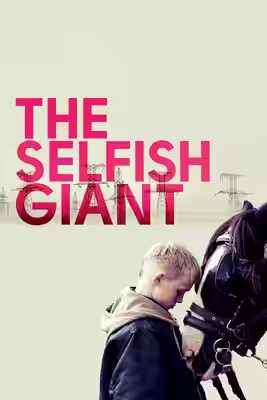
Responsible Child is the less satisfying of the two dramas; we favour The Selfish Giant for its affecting friendship between two Bradford boys, despite some familiar plotting. Both draw their force from young performances, but Responsible Child divides its attention between family distress and underdeveloped court proceedings, making it more suited to those specifically interested in childhood criminal responsibility.
What should I watch after Responsible Child?
After Responsible Child, try The Selfish Giant (2013, Fi1m 88): Young performances give this British drama about neglected children its painful force. Then A Separation (2011, Fi1m 93): For a family dispute whose legal questions resist comfortable answers.

Cast

If you liked this, try…

  1. The Kid with a Bike (2011) · not reviewed yetAnother vulnerable child, with more room for uncertainty in the adults around him.

  2. The Selfish Giant (2013, Fi1m 88)Young performances give this British drama about neglected children its painful force.

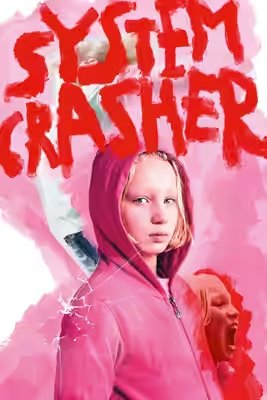
  3. System Crasher (2019) · not reviewed yetA troubled child tests the limits of adult patience and institutional care.

  4. A Separation (2011, Fi1m 93)For a family dispute whose legal questions resist comfortable answers.

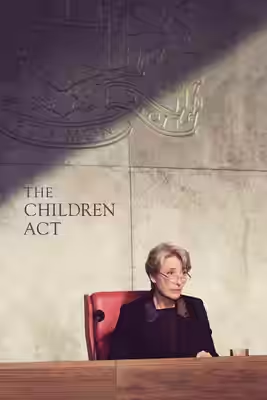
  5. The Children Act (2017) · not reviewed yetAnother encounter between childhood and legal authority, approached from the adult side.

Free account

Know what to watch tonight

Two lists that know where things are streaming, collections you can share, your own score beside ours, and Discover that remembers what you have seen.

  • Want to see, sorted by what is streaming now
  • Seen, with your score out of ten
  • No adverts, ever