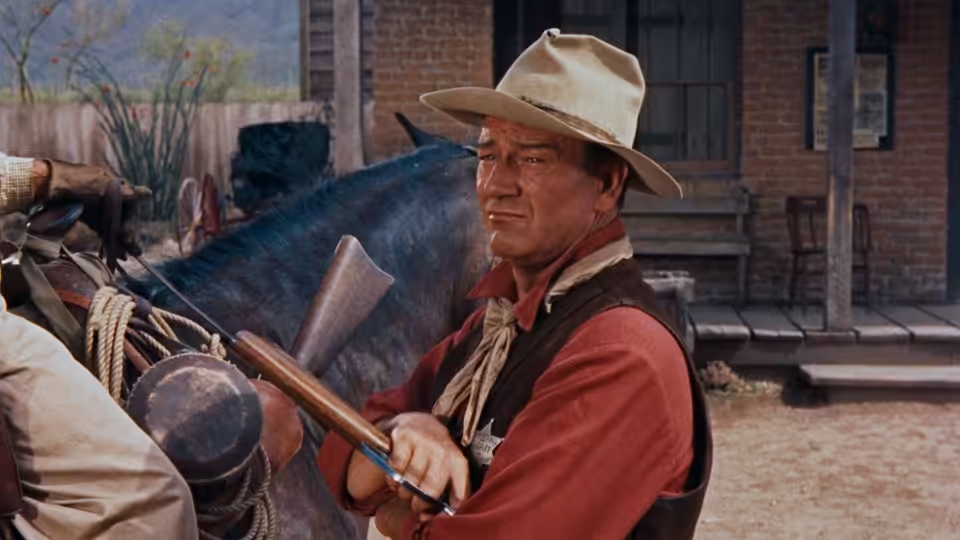
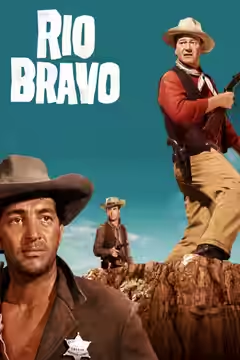
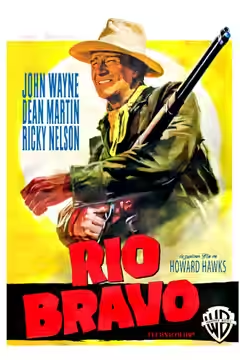
Howard Hawks makes an excellent Western out of unhurried company, dry comedy and carefully rationed danger. John Wayne anchors a generous ensemble, though 141 minutes leave a few conversations with more room than they need.
Rio Bravo is an excellent Western, provided we allow it to move at its own pace. Howard Hawks makes the company of the lawmen so enjoyable that the gaps between confrontations become something to welcome. There is suspense, but no anxious effort to keep proving that something is happening. At 141 minutes, the film expects us to care about how people spend their time together, and earns that patience for most of its length.
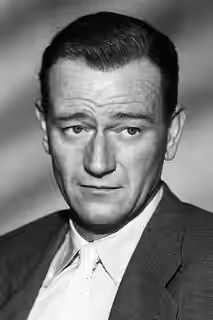
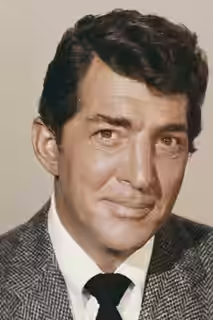
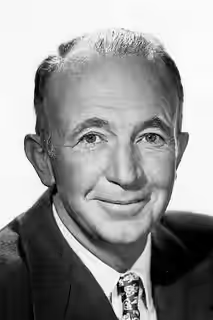
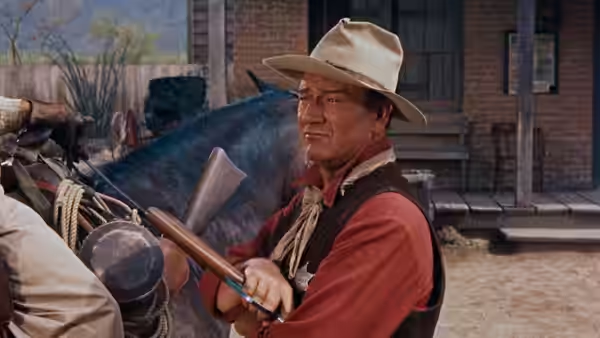
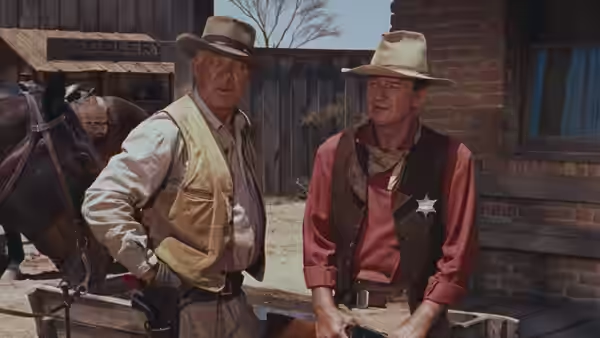
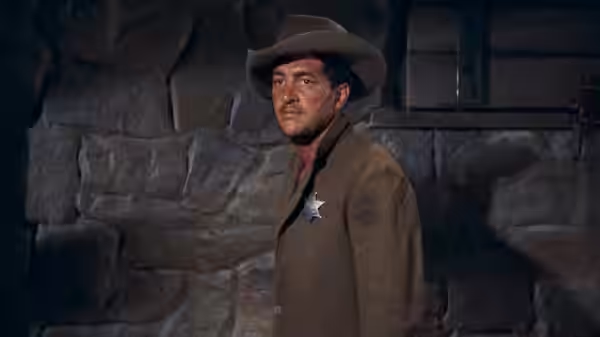
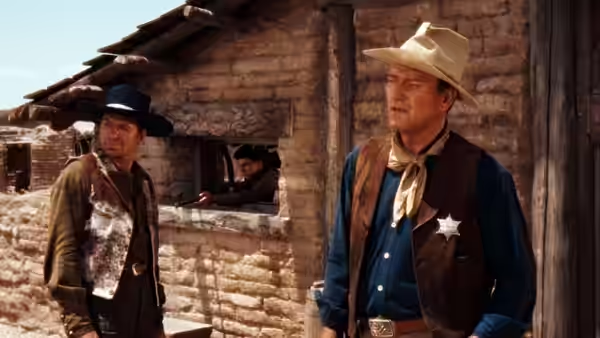
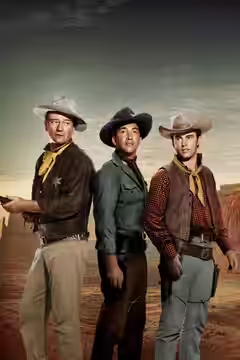
The screenplay by Jules Furthman and Leigh Brackett lets strength of character show through conversation. John Wayne’s Sheriff John T. Chance is authoritative without having to make every sentence a declaration, and the performance is funnier for it. Dean Martin’s Dude makes a more unsettled impression, giving the exchanges a tension that does not depend on anyone reaching for a weapon. These are distinct personalities, and the writing allows their differences to remain awkward rather than tidying them away for the sake of harmony.
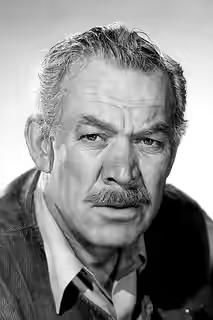
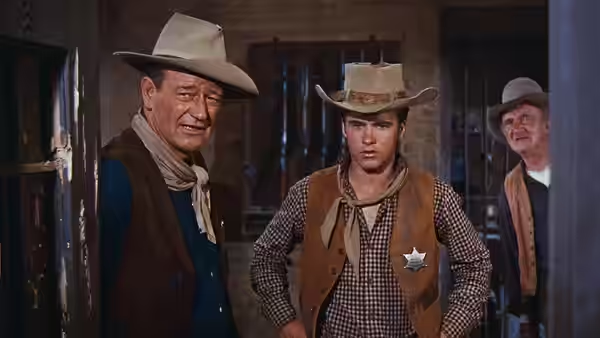
We laughed at the friction between John Wayne and Walter Brennan, and then found ourselves surprisingly attached to the whole group. Walter Brennan’s Stumpy makes impatience entertaining without making the character merely an interruption. His contribution matters because this much masculine assurance could become exhausting without somebody being difficult. The humour lets us enjoy the lawmen as people before the prospect of violence asks us to worry about them.
Russell Harlan’s cinematography gives the performances room without making the relaxed passages feel neglected. We can attend to the group instead of being continually directed towards its most important member. Editor Folmar Blangsted allows the comic timing to register, while keeping enough tension beneath the pauses to prevent the film from settling into amiable inertia. Dimitri Tiomkin’s music is less restrained, occasionally supplying more insistence than the acting needs. The company can hold our attention without quite so much encouragement.
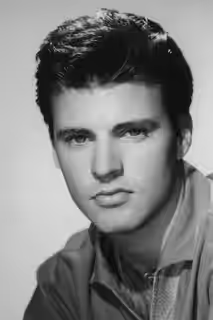
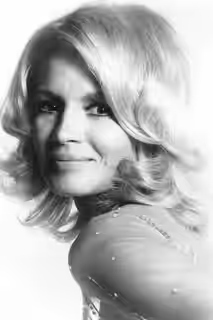
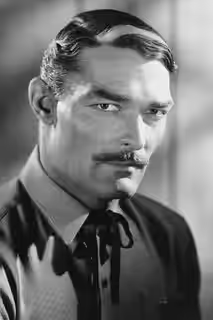
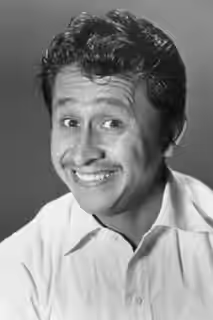
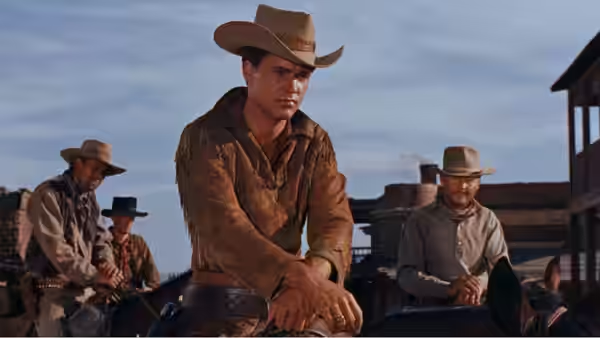
Angie Dickinson’s Feathers is sharp and engaging, though the film sometimes gives the conversation more time than it needs. Her presence makes John Wayne’s deliberateness funny in a different way: she seems ready for his answer before he has finished giving it. Ricky Nelson’s Colorado Ryan is the weaker link in the company, too composed to be quite as interesting as the others. The performance does its job, but we feel the gap when attention shifts from Dean Martin or Walter Brennan.
Measured against Westerns that hurry towards the next confrontation, the film can seem indulgent. We would not ask Howard Hawks to remove all that waiting: it allows us to notice how people listen, tolerate one another and use humour to keep company bearable. The widely spaced action benefits from that attention to character. Still, the director’s confidence occasionally becomes complacency, and a warm atmosphere cannot make every exchange equally necessary.
The particular pleasure here is having enough time to develop favourites without feeling that the film has chosen them for us. Its generosity extends beyond the leading performance, and even the less compelling characters belong in the company. Choose it for an evening when there is no need to hurry; a demand for constant action will only make both parties unhappy.