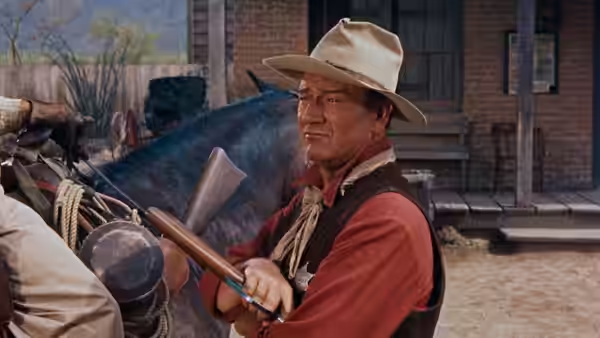
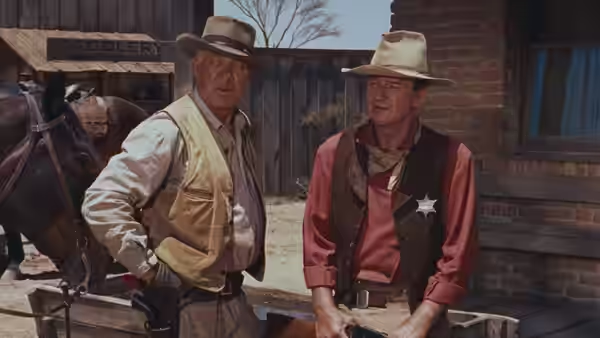
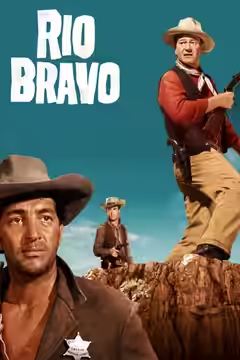
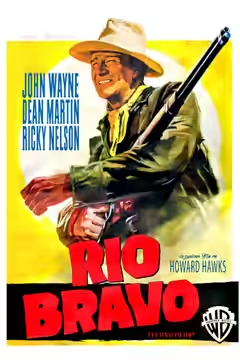
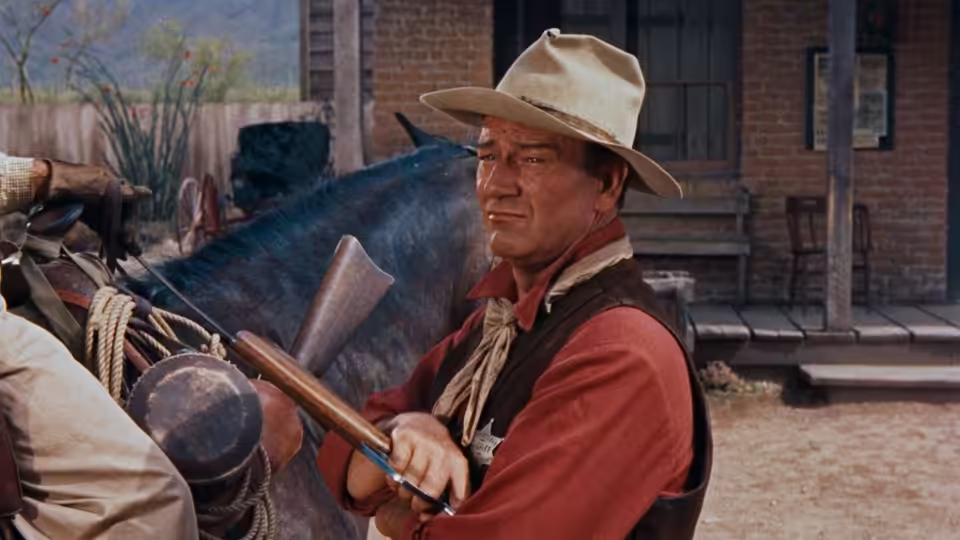
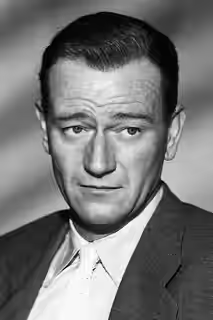
Sheriff Chance (John Wayne) holding a rifle beside a horse
Film review

Rio Bravo

1959 · Directed by Howard Hawks · 2h 21m

In a sentenceA Western so comfortable with its own company that the gunfire can feel like an interruption

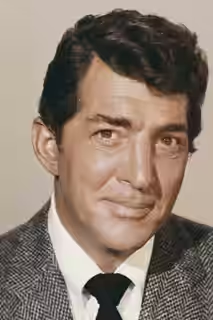
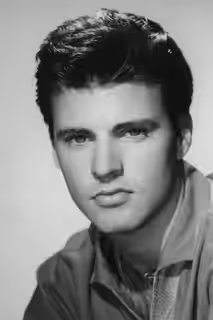
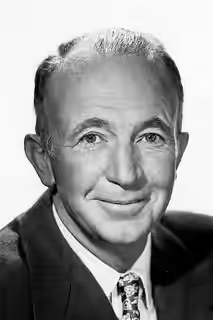
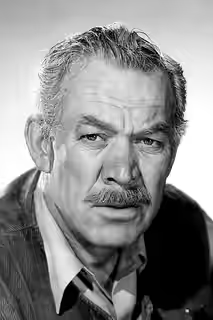
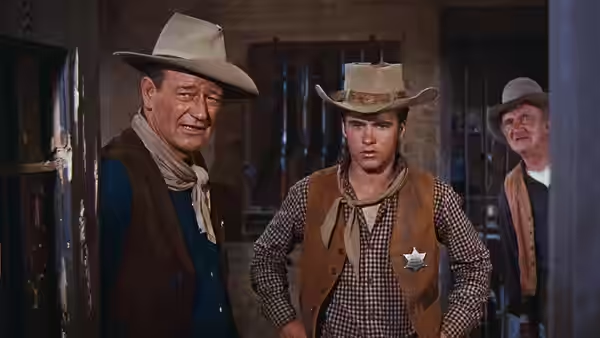
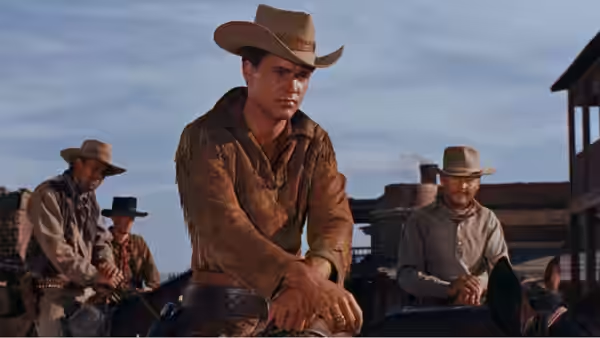
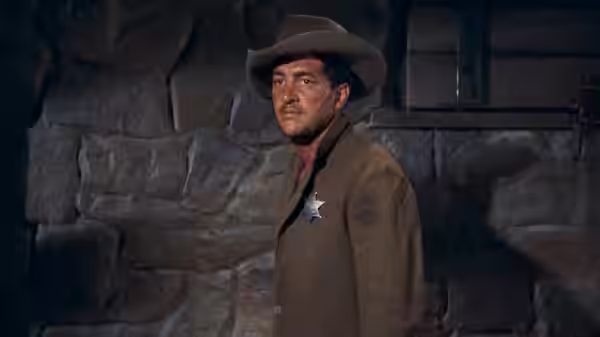
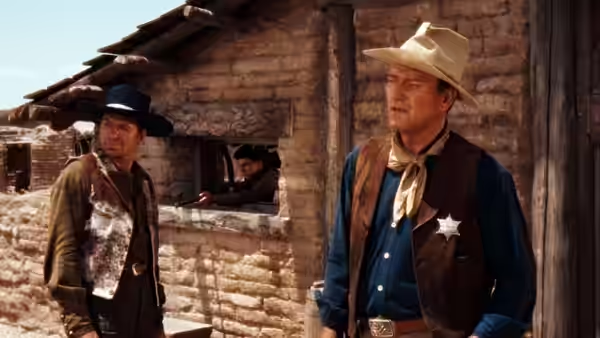
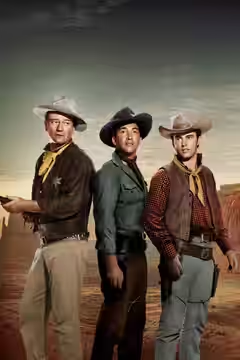
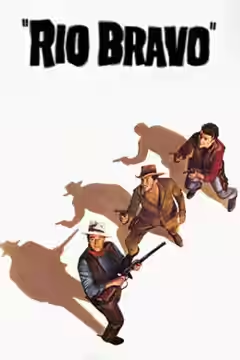
Sheriff John T. Chance (John Wayne), Dude (Dean Martin), Colorado Ryan (Ricky Nelson) and Stumpy (Walter Brennan) form the central company of Rio Bravo. Feathers (Angie Dickinson) takes a prominent place alongside them, with Pat Wheeler (Ward Bond), Nathan Burdette (John Russell) and Joe Burdette (Claude Akins) also part of the story. The film stays close to its lawmen, spending time on their conversations and the relationships within the group. Comedy runs alongside the threat of violence, and stretches of waiting separate the confrontations. The action leaves space for people to get accustomed to one another.

Plays from YouTube when you press play; nothing loads from them until then.

Fi1m review

Howard Hawks makes an excellent Western out of unhurried company, dry comedy and carefully rationed danger. John Wayne anchors a generous ensemble, though 141 minutes leave a few conversations with more room than they need.

Rio Bravo is an excellent Western, provided we allow it to move at its own pace. Howard Hawks makes the company of the lawmen so enjoyable that the gaps between confrontations become something to welcome. There is suspense, but no anxious effort to keep proving that something is happening. At 141 minutes, the film expects us to care about how people spend their time together, and earns that patience for most of its length.

The screenplay by Jules Furthman and Leigh Brackett lets strength of character show through conversation. John Wayne’s Sheriff John T. Chance is authoritative without having to make every sentence a declaration, and the performance is funnier for it. Dean Martin’s Dude makes a more unsettled impression, giving the exchanges a tension that does not depend on anyone reaching for a weapon. These are distinct personalities, and the writing allows their differences to remain awkward rather than tidying them away for the sake of harmony.

We laughed at the friction between John Wayne and Walter Brennan, and then found ourselves surprisingly attached to the whole group. Walter Brennan’s Stumpy makes impatience entertaining without making the character merely an interruption. His contribution matters because this much masculine assurance could become exhausting without somebody being difficult. The humour lets us enjoy the lawmen as people before the prospect of violence asks us to worry about them.

Russell Harlan’s cinematography gives the performances room without making the relaxed passages feel neglected. We can attend to the group instead of being continually directed towards its most important member. Editor Folmar Blangsted allows the comic timing to register, while keeping enough tension beneath the pauses to prevent the film from settling into amiable inertia. Dimitri Tiomkin’s music is less restrained, occasionally supplying more insistence than the acting needs. The company can hold our attention without quite so much encouragement.

Angie Dickinson’s Feathers is sharp and engaging, though the film sometimes gives the conversation more time than it needs. Her presence makes John Wayne’s deliberateness funny in a different way: she seems ready for his answer before he has finished giving it. Ricky Nelson’s Colorado Ryan is the weaker link in the company, too composed to be quite as interesting as the others. The performance does its job, but we feel the gap when attention shifts from Dean Martin or Walter Brennan.

Measured against Westerns that hurry towards the next confrontation, the film can seem indulgent. We would not ask Howard Hawks to remove all that waiting: it allows us to notice how people listen, tolerate one another and use humour to keep company bearable. The widely spaced action benefits from that attention to character. Still, the director’s confidence occasionally becomes complacency, and a warm atmosphere cannot make every exchange equally necessary.

The particular pleasure here is having enough time to develop favourites without feeling that the film has chosen them for us. Its generosity extends beyond the leading performance, and even the less compelling characters belong in the company. Choose it for an evening when there is no need to hurry; a demand for constant action will only make both parties unhappy.
Critical consensus AI synthesised

85
Positive
8
Mixed
1
Negative
0

Most critics are strongly favourable towards Rio Bravo, with praise clustering around its relaxed pace, humour and camaraderie rather than the frequency of its action. The reviews repeatedly value Howard Hawks’s attention to character: the central group’s warmth and ease give familiar Western conventions a humane quality. Its apparently rambling storytelling is generally treated as a strength, allowing comedy, quiet exchanges and violence to sit comfortably together.

The spread is largely within favourable territory, and the differences concern emphasis more than substantial disagreement. Variety puts greater weight on the forceful story and accumulating suspense, while singling out Angie Dickinson’s performance. The Hollywood Reporter offers the most qualified assessment, but its reservations concern the remastered image rather than a clear objection to the film itself. That distinction matters here: the supplied reviews contain little sustained criticism of the leisurely pacing that so many of them praise.

RogerEbert.com
★★★★/4 · Roger Ebert
100

Ebert regards the film as an outstanding Western, valuing its relaxed, character-driven storytelling. He especially praises the camaraderie among the central characters.

Read the full review →
Empire
1 January 2000 · William Thomas
90*

Thomas gives the film a strongly positive verdict, calling it faultless and funny. He singles out its warm atmosphere and memorable ensemble of characters over its widely spaced action.

Read the full review →
Los Angeles Times
20 May 2007 · Dennis Lim
90*

Lim calls the film a masterpiece and perhaps Howard Hawks’s finest work. He praises how its humane spirit and richly drawn characters deepen familiar Western conventions.

Read the full review →
The New Yorker
12 September 2012 · Richard Brody
90*

Brody presents the film as both a pinnacle of classic Western style and an unusually modern work. He praises how its lawmen’s relaxed elegance shapes the film’s distinctive blend of principled violence, comedy, and rawness.

Read the full review →
Time Out
· GA
90*

The review presents the film as arguably Howard Hawks’s greatest. It praises its deceptively rambling chamber-Western form, made in response to High Noon.

Read the full review →
The New York Times
12 July 2010 · Gabe Johnson
85*

A. O. Scott presents the film as an unusually entertaining Western. He praises its slow, quiet, wise pace as a welcome alternative to noisy summer entertainment.

Read the full review →

Straight answers AI written, from our review

Is Rio Bravo worth watching?
Rio Bravo is an excellent Western for anyone who enjoys unhurried character work, dry comedy and carefully spaced danger; we score it 88. We find the lawmen’s company worth the patience, though some conversations stretch beyond their usefulness across 141 minutes. Choose it for the ensemble rather than constant action.
How long is Rio Bravo, and what is it rated?
Rio Bravo runs 2h 21m. It is a western and drama film.
Where can I watch Rio Bravo in India?
Rio Bravo is available to rent from Amazon Prime Video from ₹119.00. Availability is checked daily; the links above go straight to each service.
How does Rio Bravo compare to Seven Samurai?
Rio Bravo is the more relaxed choice beside Seven Samurai, which we recommend more broadly as an adventure. Both take pleasure in gathering professionals and letting humour and friction develop between them. We find that Seven Samurai earns its length more consistently through absorbing recruitment and fighting, while Rio Bravo occasionally lets its enjoyable conversations run too long.
What should I watch after Rio Bravo?
After Rio Bravo, try Seven Samurai (1954, Fi1m 95): Another patient gathering of professionals, with humour, friction and clearly staged danger. Then The Station Agent (2003, Fi1m 82): For the pleasure of watching wary people gradually get used to one another.

Cast

Awards

Directors Guild of America Award for Outstanding Directing – Feature Film, 1959

Nominated
Directors Guild of America Award for Outstanding Directing – Feature Film

Golden Globes, 1959

Won
New Star of the Year – Actress

Golden Globes, 1958

Nominated
New Star of the Year – Actor

If you liked this, try…

  1. Only Angels Have Wings (1939) · not on Fi1m yetHoward Hawks gives another close working group time to become indispensable company.

  2. Seven Samurai (1954, Fi1m 95)Another patient gathering of professionals, with humour, friction and clearly staged danger.

  3. Le Trou (1960) · not on Fi1m yetShared work and watchfulness make confined spaces tense without neglecting the people inside.

  4. Assault on Precinct 13 (1976) · not on Fi1m yetA leaner siege, where an unlikely alliance matters as much as the gunfire.

  5. The Station Agent (2003, Fi1m 82)For the pleasure of watching wary people gradually get used to one another.