Federico Fellini’s Satyricon offers elaborate sets, strange faces and costumes worth inspecting. We recommend it to the visually curious, with a warning: its wandering story and stiff dialogue demand more patience than its characters earn.
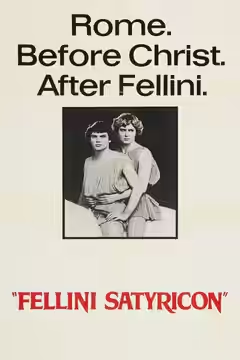
Federico Fellini’s Satyricon is worth seeing for its production design, though the people wandering through it can make the evening feel long. Adapting Petronius with fellow screenwriter Bernardino Zapponi, he gives a young man’s efforts to retain his lover’s affection a sprawling Roman setting. The film’s curiosity about bodies, clothes and buildings is much more sustained than its interest in that pursuit. It runs 129 minutes. We recommend it with reservations about how many of those minutes the drama can support.
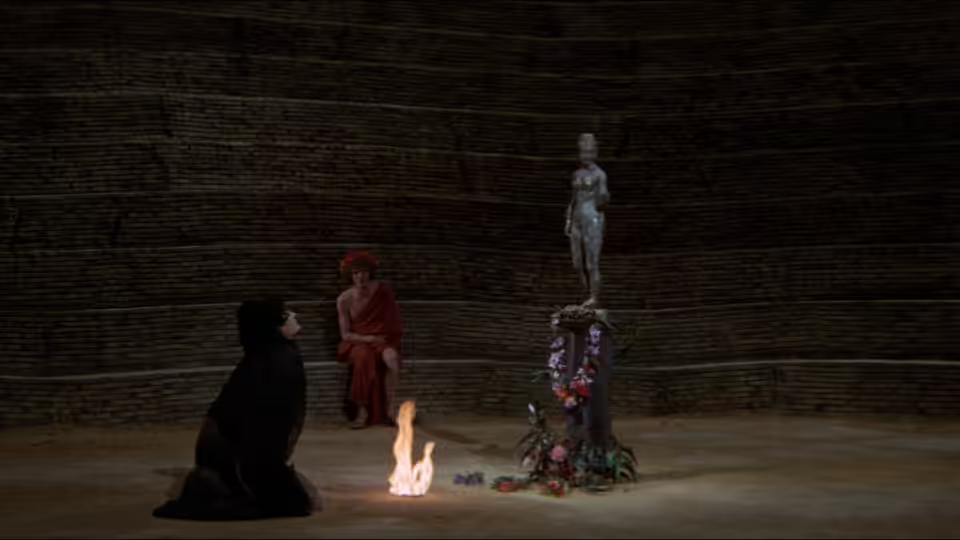
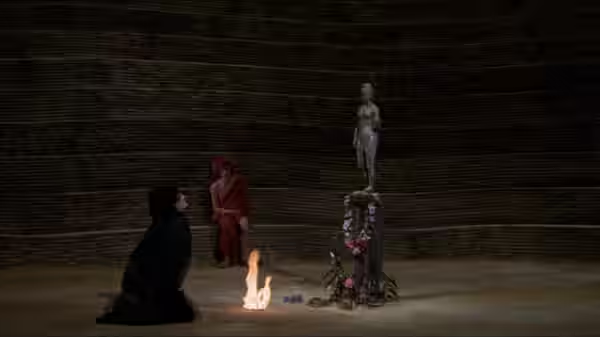
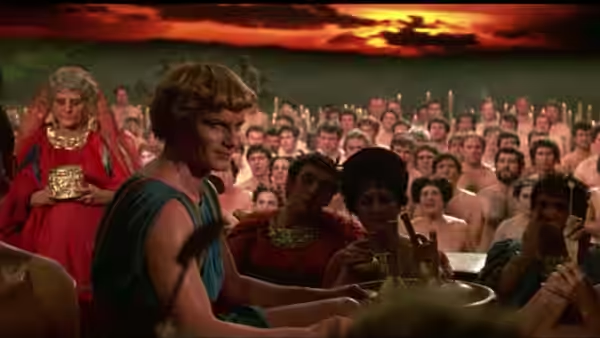
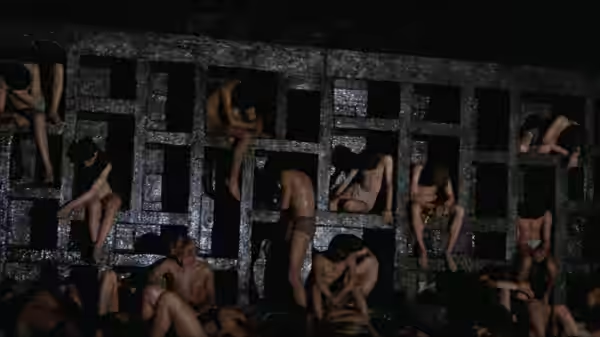
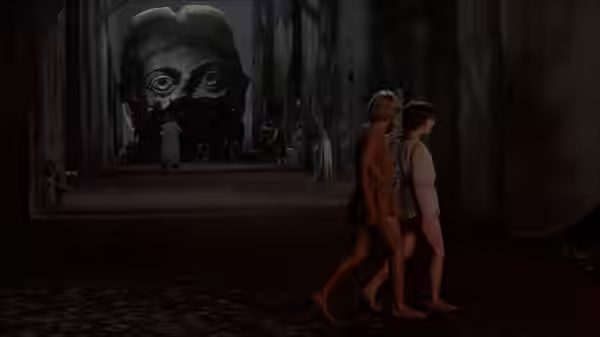
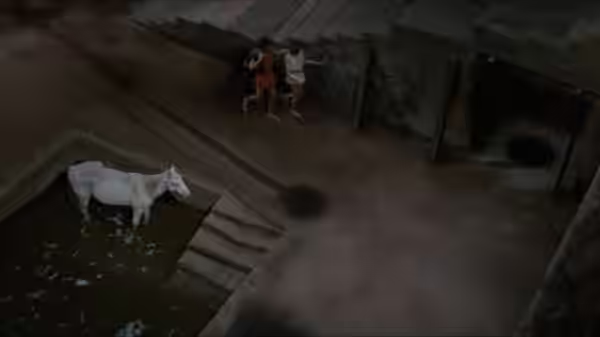
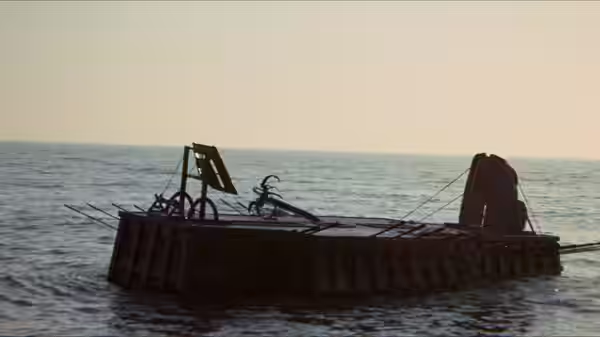
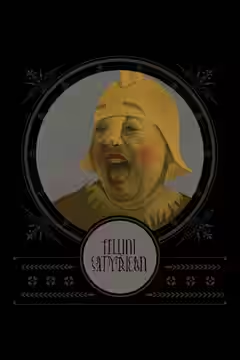
Production designers Luigi Scaccianoce and Danilo Donati give the film its strongest reason to exist. The scale of the sets makes the human figures seem small without making them easy to ignore; the costumes, also by Danilo Donati, keep pulling attention back towards their bodies. This is an ancient Rome that offers little reassurance of familiarity. The sheer amount to inspect is pleasurable, and the buildings and clothing remain interesting even when the conversation does not.
Giuseppe Rotunno’s cinematography makes those expansive spaces feel oddly oppressive. Faces and costumes compete with the sets, so there is plenty to look at and little sense of somewhere to rest. We felt hemmed in by the elaborate surroundings, despite the space apparently available. That discomfort is one of the film’s achievements, although the repeated grotesquerie gradually loses force: once every new image promises another oddity, surprise becomes harder to sustain.
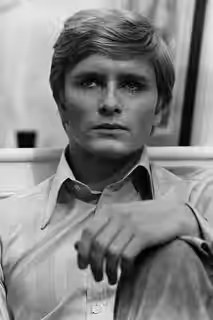
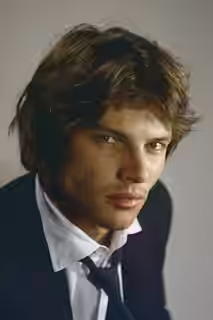
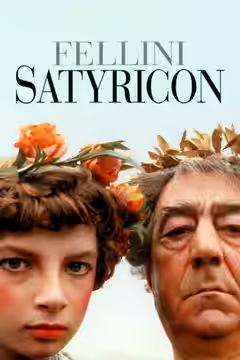
Martin Potter’s Encolpio is less compelling than the world around him. Hiram Keller, as Ascilto, and Max Born, as Gitone, add distinctive presences, but the performances struggle against stiff dialogue and dubbing that keeps drawing attention to itself. We were bored during the static exchanges, because they gave us too little reason to care about the people speaking. The problem is especially noticeable when the dialogue needs more from the actors than a striking appearance.
Ruggero Mastroianni’s editing preserves the story’s loose, discontinuous movement. That allows individual images to register without having to explain their place in a neatly organised adventure, and the freedom initially feels promising. But the screenplay by Federico Fellini and Bernardino Zapponi gives the central pursuit too little urgency to carry us through the interruptions. Too much time passes while we wait for another passage to catch our attention, with little curiosity about what will happen next.
The music, credited to Nino Rota, Andrew Rudin, Ilhan Mimaroglu and Tod Dockstader, helps sustain the strangeness. It is more persuasive at making this Rome feel unfamiliar than the dialogue is at making its inhabitants matter. Sound gives the elaborate images an unease that survives some of the slower passages. Even here, though, an arresting accompaniment cannot supply all the interest missing from an exchange between people.
As historical fantasy, Satyricon has the virtue of making the past seem difficult to recognise. Its artificiality is often exciting, and there is no obligation for such a film to explain every custom or smooth every interruption. There is an obligation to hold our attention, which it meets unevenly. Choose it for an evening of looking closely, rather than one of getting attached to the company.