Peter Glanz’s period satire sets Richard E. Grant and Claire Foy loose in a rotting country house and shoots the mould in loving close-up. They are good company; the joke about the upper classes is the same one, made louder, for 114 minutes.
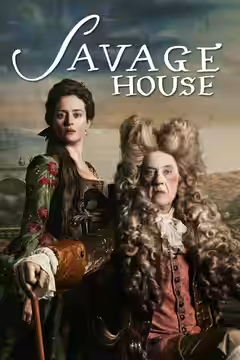
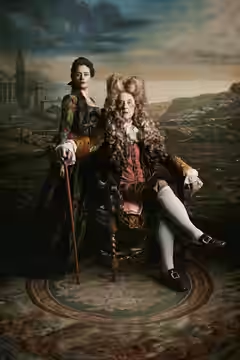
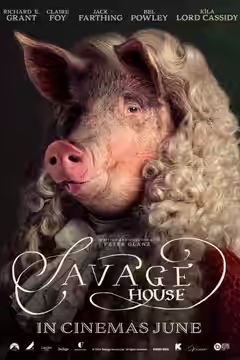
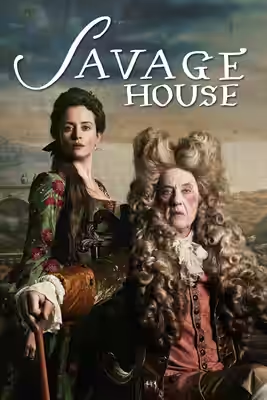
Peter Glanz writes and directs a period comedy about a titled family going to seed and the people foolish enough to accept an invitation to dinner. Sir Chauncey Savage (Richard E. Grant) and Lady Savage (Claire Foy) keep the name up while the house comes down around them, and Robert Bathurst narrates the whole business in the tone of a man reading a will. The idea is a satire of class and of the lengths the well-born will go to in order to stay well-born. Two performances make it worth an evening. The script makes its one point in the first ten minutes and then keeps making it, and by the end we had stopped listening.
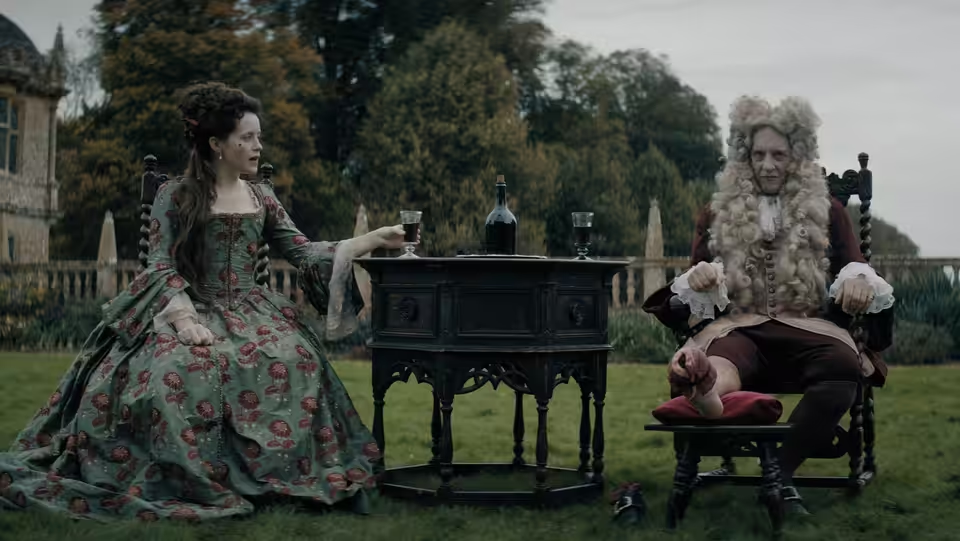
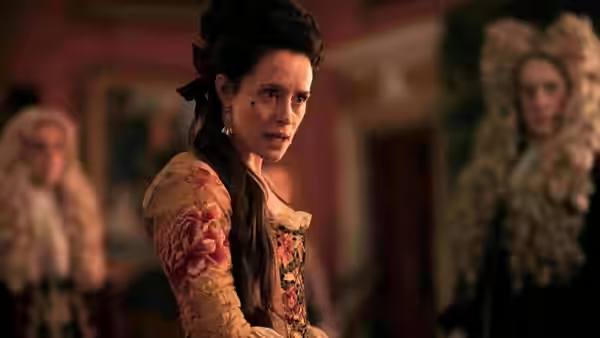
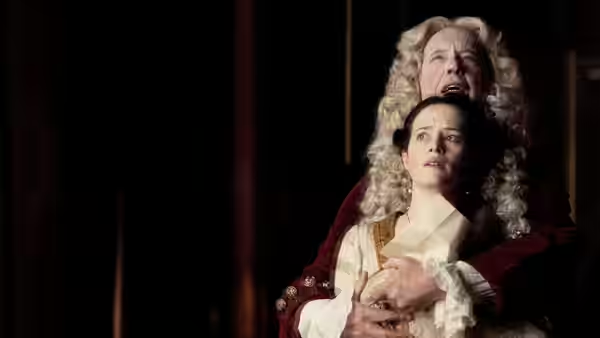
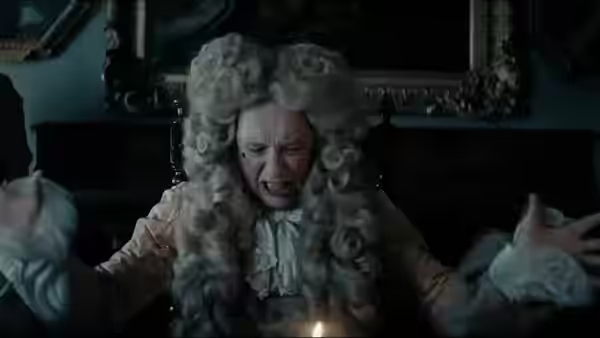
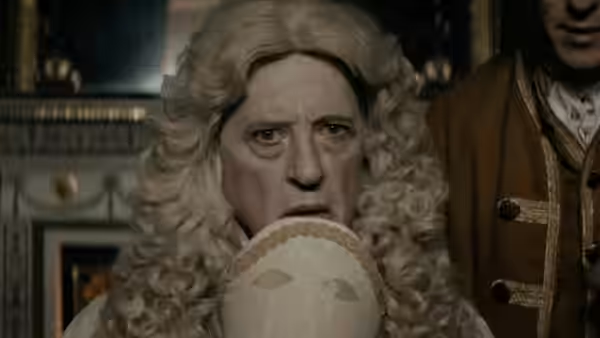
Grant is the reason to see it. He plays Sir Chauncey as something more alarming than the usual aristocratic buffoon: a man held together by title and habit, who twitches when either is questioned and whose smile arrives a beat after it should. It is a fragile, unsettling turn, closer to horror than to farce, and it is far better than the lines he is given. Foy does the harder, less visible job. Her Lady Savage is still and exact where he is loud and loose, and she lets us see the arithmetic going on behind every courtesy. When the two of them are alone in a room, the film has a pulse.
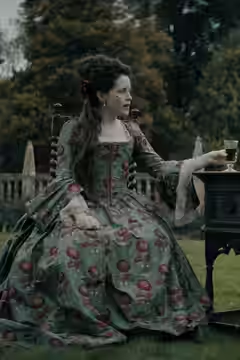
Glanz and his crew have decided that this England should look as rotten as it is. Gary Williamson’s house is all peeling paper, unwashed glass and furniture that has outlived its usefulness, and Jacquetta Levon dresses the family in finery that has not been laundered in a while. Adriano Goldman shoots much of it in close-up: a bowl of fruit gone soft and furred, a wound that has been left to fester, wallpaper shedding dust in the light. We laughed at the first of these, out loud, and then felt slightly ashamed, which we suspect is exactly what Glanz wanted. By the fifth we had worked out the trick. Decay is the film’s whole visual argument, and it is made early and then simply repeated.
The same is true of the comedy. The joke is that polite society is savage underneath, as the tagline helpfully tells us, and the film does not trust us to have got it. Every scene makes the point again, coarser and louder, and the cast around Grant and Foy are left with little to play but reaction. Jack Farthing and Bel Powley, as Reginald Halifax and Dorothy Neville, are decent, watchful presences who deserved a scene of their own. Kíla Lord Cassidy’s Fanny has flashes of something sharper than the family around her. Richard McCabe and Vicki Pepperdine, as the Bennetts, do what they can with being appalled.
Around the hour mark the pace goes slack. Scenes begin and end without moving anyone anywhere, and the narration starts filling gaps the script has left. We were not bored exactly; we were waiting, and a comedy should never leave you waiting. The last stretch takes a turn we will not describe, and we will only say that it arrives without the weight the film has been promising, and that the final minutes left us flat rather than shocked.
The British have been making this film for a long time and usually better. Kind Hearts and Coronets (1949) got through eight murders with less noise than Glanz makes over one dinner, and The Ruling Class (1972) let Peter O’Toole be far madder than Sir Chauncey while still saying something about who runs the country. Savage House has the look and the lead and not the script. See it for Grant, who is doing something strange and good in the middle of all this, and for Foy, who matches him without raising her voice. Sit near the back, where the fruit is further away.