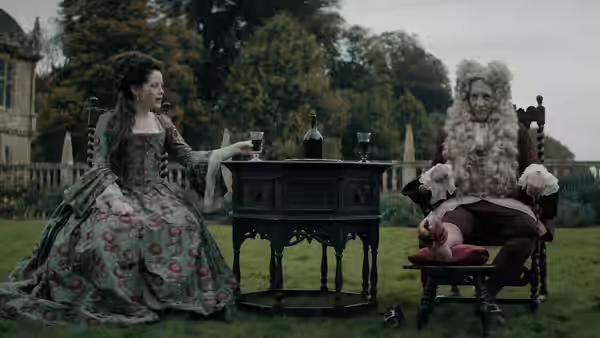
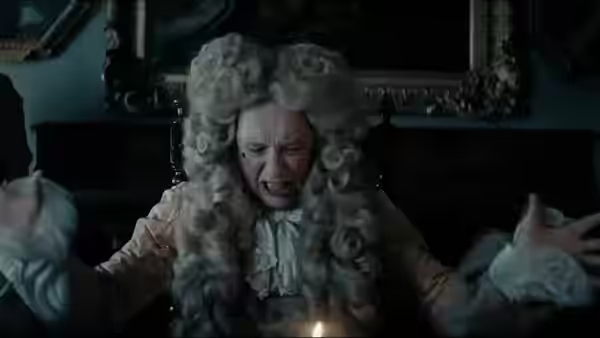
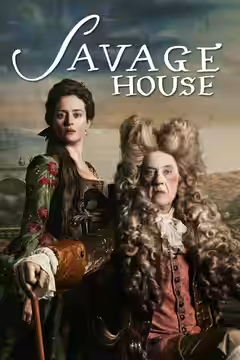
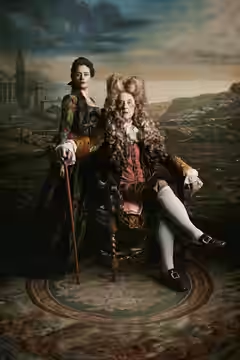
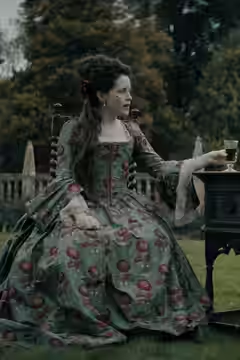
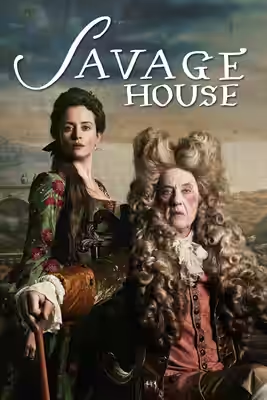
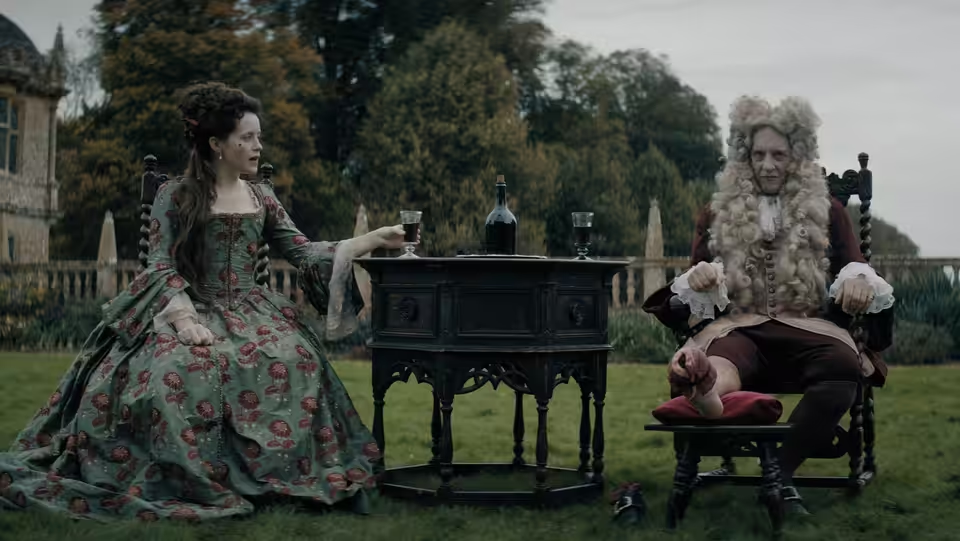
A woman in a floral gown offers a glass to a powdered-wig man in the garden
Film review

Savage House

2026 · Directed by Peter Glanz · 1h 54m

In a sentenceGrant gnaws the scenery and the scenery, to its credit, was already rotting

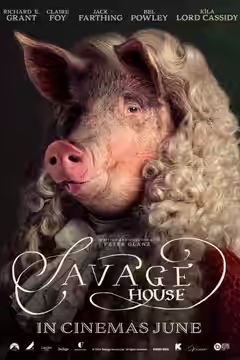
England, in the days of wigs and carriages. Sir Chauncey Savage (Richard E. Grant) and Lady Savage (Claire Foy) keep up appearances at Savage House, a country seat where the wallpaper is dusty, the fruit bowl has turned and the family name still opens doors. Fanny Savage (Kíla Lord Cassidy) is the younger Savage in residence. The family is receiving: Reginald Halifax (Jack Farthing) and Dorothy Neville (Bel Powley) are among the company, along with Mr. Bennett (Richard McCabe) and Mrs. Bennett (Vicki Pepperdine), and a doctor, Dr. Hemmings (Roger Ashton-Griffiths), is never far off. A narrator (Robert Bathurst) introduces the household and its manners with a straight face. What the Savages want is to stay on top, by any means polite society will tolerate and a few it will not, and the dinner table is where they go to work.

Plays from YouTube when you press play; nothing loads from them until then.

Fi1m review

Peter Glanz’s period satire sets Richard E. Grant and Claire Foy loose in a rotting country house and shoots the mould in loving close-up. They are good company; the joke about the upper classes is the same one, made louder, for 114 minutes.

Peter Glanz writes and directs a period comedy about a titled family going to seed and the people foolish enough to accept an invitation to dinner. Sir Chauncey Savage (Richard E. Grant) and Lady Savage (Claire Foy) keep the name up while the house comes down around them, and Robert Bathurst narrates the whole business in the tone of a man reading a will. The idea is a satire of class and of the lengths the well-born will go to in order to stay well-born. Two performances make it worth an evening. The script makes its one point in the first ten minutes and then keeps making it, and by the end we had stopped listening.

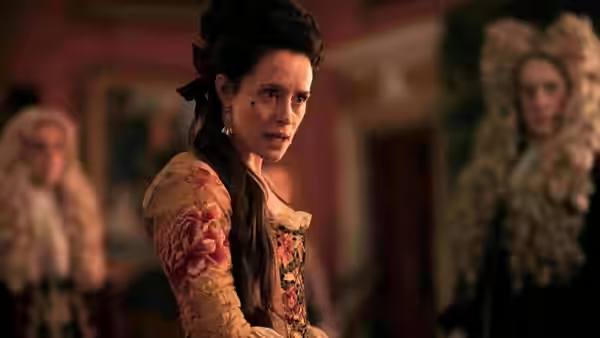
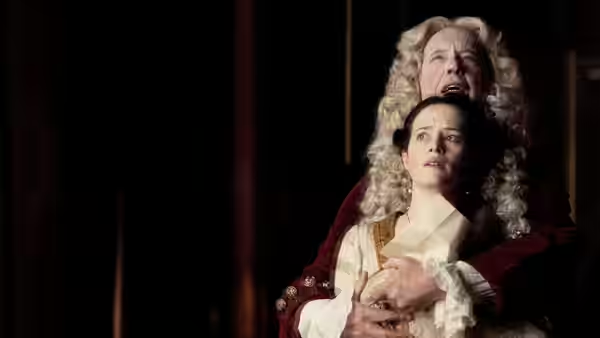
Grant is the reason to see it. He plays Sir Chauncey as something more alarming than the usual aristocratic buffoon: a man held together by title and habit, who twitches when either is questioned and whose smile arrives a beat after it should. It is a fragile, unsettling turn, closer to horror than to farce, and it is far better than the lines he is given. Foy does the harder, less visible job. Her Lady Savage is still and exact where he is loud and loose, and she lets us see the arithmetic going on behind every courtesy. When the two of them are alone in a room, the film has a pulse.

Glanz and his crew have decided that this England should look as rotten as it is. Gary Williamson’s house is all peeling paper, unwashed glass and furniture that has outlived its usefulness, and Jacquetta Levon dresses the family in finery that has not been laundered in a while. Adriano Goldman shoots much of it in close-up: a bowl of fruit gone soft and furred, a wound that has been left to fester, wallpaper shedding dust in the light. We laughed at the first of these, out loud, and then felt slightly ashamed, which we suspect is exactly what Glanz wanted. By the fifth we had worked out the trick. Decay is the film’s whole visual argument, and it is made early and then simply repeated.

The same is true of the comedy. The joke is that polite society is savage underneath, as the tagline helpfully tells us, and the film does not trust us to have got it. Every scene makes the point again, coarser and louder, and the cast around Grant and Foy are left with little to play but reaction. Jack Farthing and Bel Powley, as Reginald Halifax and Dorothy Neville, are decent, watchful presences who deserved a scene of their own. Kíla Lord Cassidy’s Fanny has flashes of something sharper than the family around her. Richard McCabe and Vicki Pepperdine, as the Bennetts, do what they can with being appalled.

Around the hour mark the pace goes slack. Scenes begin and end without moving anyone anywhere, and the narration starts filling gaps the script has left. We were not bored exactly; we were waiting, and a comedy should never leave you waiting. The last stretch takes a turn we will not describe, and we will only say that it arrives without the weight the film has been promising, and that the final minutes left us flat rather than shocked.

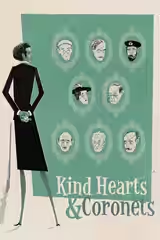
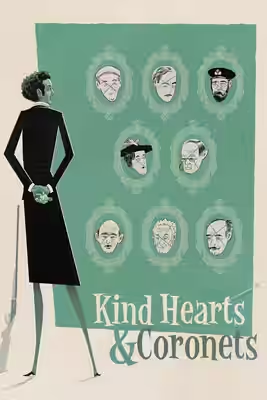
The British have been making this film for a long time and usually better. Kind Hearts and Coronets (1949) got through eight murders with less noise than Glanz makes over one dinner, and The Ruling Class (1972) let Peter O’Toole be far madder than Sir Chauncey while still saying something about who runs the country. Savage House has the look and the lead and not the script. See it for Grant, who is doing something strange and good in the middle of all this, and for Foy, who matches him without raising her voice. Sit near the back, where the fruit is further away.

Critical consensus AI synthesised

57
Positive
2
Mixed
2
Negative
2

The reviews split evenly, two warm, two lukewarm, two cold, and the critics’ score of 57 reflects a film that divides rather than simply disappoints. Where most critics agree is on the performances. Richard E Grant is singled out in nearly every notice, and the warmer reviews credit him and Claire Foy with whatever energy the film has, Foy’s poise read as the right counterweight to Grant’s chaos. Several also admire the look of the thing, the rancid fruit, festering wounds and dusty wallpaper that give its decaying world some bite.

The reservations cluster on the satire. Even the kinder reviews call it one-note or too obvious, with little new to say about class and social mobility. The spread is wide. The Guardian and Radio Times find an entertaining, if strenuous, farce; Eye for Film finds it unpleasant and unamusing, with pacing and story that fail to hold attention. Little White Lies sits between, finding the darker moments land better than the jokes.

The Guardian
3 June 2026 · B · Peter Bradshaw
77

Bradshaw finds the period romp one-note and strenuous, but ultimately watchable. He praises Claire Foy and Richard E Grant for bringing vim and vigour to the film.

Read the full review →
Radio Times
4 June 2026 · Patrick Cremona
75*

The headline presents the film as an entertaining period farce, with Richard E Grant excelling. It singles out Grant’s performance as the film’s strength.

Read the full review →
The Observer
4 June 2026 · Wendy Ide
65*

Ide finds the film a grubby, compelling satire, though it has little new to say about class and social mobility. She praises Richard E Grant and Claire Foy’s committed performances, especially Foy’s poised counterpoint to Grant’s chaotic character.

Read the full review →
The AV Club
3 June 2026 · C · Jacob Oller
57

Oller finds the film too obvious and coarse to entertain, despite its vulgar period detail. He singles out the visceral close-ups of rancid fruit, festering wounds, and dusty wallpaper as disgusting but welcome visual highlights.

Read the full review →
Little White Lies
festival review · Louis Spong
35*

The review finds the film uneven, with its satire often too obvious but its darker moments more effective. It praises Richard E. Grant’s fragile, unsettling performance and the imagery that gives the decaying world an infernal edge.

Read the full review →
Eye for Film
4 June 2026 · Andrew Robertson
20*

The critic finds the film unpleasant, unamusing, and unable to deliver a satisfying resolution. They praise some production design, but say the pacing and story fail to hold attention.

Read the full review →

Straight answers AI written, from our review

Is Savage House worth watching?
Savage House is worth watching for Richard E. Grant and Claire Foy and not much else, and we scored it 56. Grant's twitching, fragile Sir Chauncey is strange and good, and Foy matches him without raising her voice, but Peter Glanz's script makes its one joke about the gentry in the first ten minutes and then repeats it, louder, for 114 minutes.
How long is Savage House, and what is it rated?
Savage House runs 1h 54m. It is a comedy and drama film.
Where can I watch Savage House in Canada?
Savage House is available to rent from Amazon Prime Video from CA$6.99. Availability is checked daily; the links above go straight to each service.
How violent or frightening is Savage House, and is it suitable for children?
Savage House is a 15 in the UK and rated R in the US, and it is not for children. Its menace is mostly in the rot: Adriano Goldman shoots furred fruit, a festering wound and shedding wallpaper in close-up, and Grant's performance sits closer to horror than farce. The squeamish will flinch; teenagers used to grim period comedy will cope.
What should I watch after Savage House?
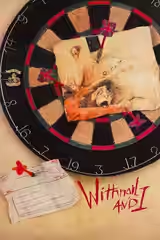
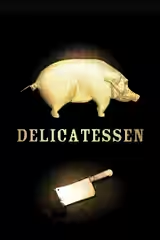
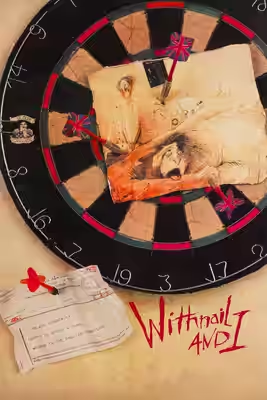
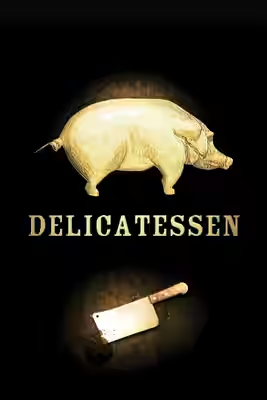
After Savage House, try Kind Hearts and Coronets (1949, Fi1m 91): The same contempt for the gentry, delivered with a murderer’s good manners. Then Withnail & I (1987, Fi1m 88): Grant’s first great squalor, with better lines and a worse kitchen; and Delicatessen (1991, Fi1m 83): A French tenement where dinner is also the problem, shot in mustard and brown.

Cast

If you liked this, try…

  1. Kind Hearts and Coronets (1949, Fi1m 91)The same contempt for the gentry, delivered with a murderer’s good manners.

  2. The Ruling Class (1972) · not reviewed yetPeter O’Toole as a mad earl; wilder, longer and angrier than this.

  3. Withnail & I (1987, Fi1m 88)Grant’s first great squalor, with better lines and a worse kitchen.

  4. Delicatessen (1991, Fi1m 83)A French tenement where dinner is also the problem, shot in mustard and brown.

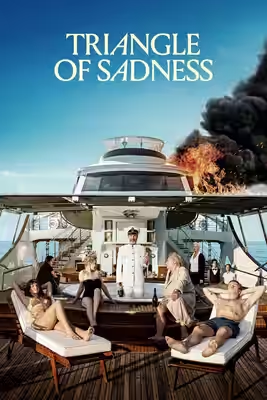
  5. Triangle of Sadness (2022, Fi1m 66)The rich made to suffer at length, with a dinner scene to remember.

Free account

Know what to watch tonight

Two lists that know where things are streaming, collections you can share, your own score beside ours, and Discover that remembers what you have seen.

  • Want to see, sorted by what is streaming now
  • Seen, with your score out of ten
  • No adverts, ever