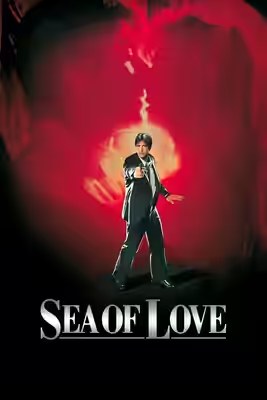
Al Pacino and Ellen Barkin make the attraction convincing enough to carry a familiar thriller. The mystery strains credibility, but the performances give Sea of Love warmth, tension and a reason to care.
Harold Becker’s Sea of Love is a good thriller whenever it lets its actors complicate matters. It attempts something worth doing: making a police investigation and an adult romance interesting at the same time, without setting the relationship aside whenever there is police work to do. Richard Price’s screenplay gives the characters enough wit and discomfort to hold our attention. The plotting needs rather more indulgence, particularly as the film approaches its resolution.
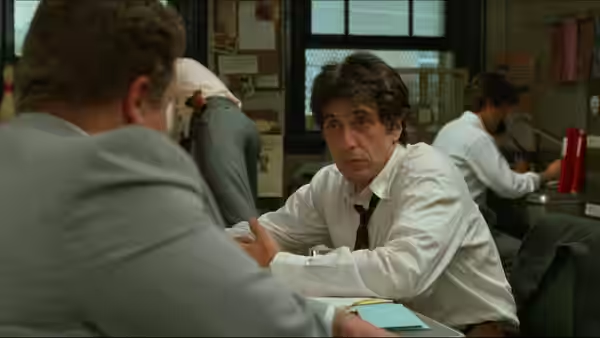
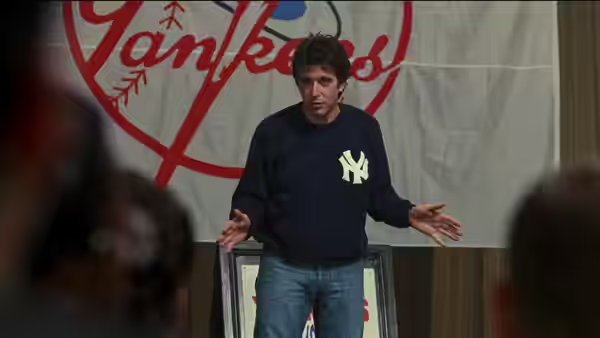
Al Pacino plays Frank Keller with a vulnerability that makes the prospect of romance matter. The burned-out policeman is familiar territory, and the performance could have stopped at exhaustion and professional competence. Instead, he lets us feel how much this man might want company and how poorly equipped he is to accept it. There is pleasure in watching an actor take a stock character seriously enough to find someone worth caring about inside it.
Ellen Barkin, as Helen Cruger, gives him someone sufficiently compelling to make that effort worthwhile. Their attraction feels plausible, which is more useful here than simply making either of them look desirable. We wanted this relationship to work, because their chemistry makes Frank’s weariness seem less permanent. The romance holds our attention even when the investigation is giving us reasons to question the screenplay, and neither performance needs us to mistake these people for innocents.
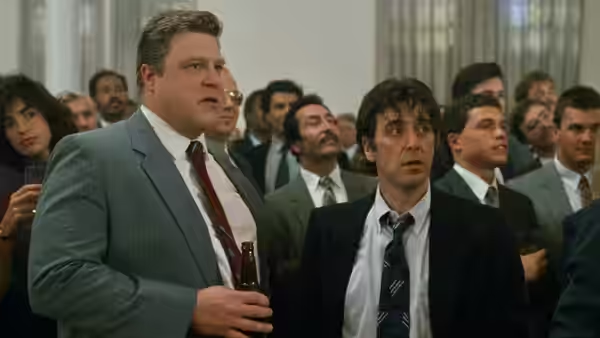
John Goodman, playing Sherman, contributes to the film’s welcome sense that other people exist beyond the central couple. His presence helps the humour sit comfortably alongside the tension rather than feeling like an apology for it. Richard Price’s sharp writing is important here: the film remains entertaining when nobody is supplying another reason to be suspicious. We would gladly spend longer with these performers, which is a useful quality in a mystery that cannot always withstand close examination.
Cinematographer Ronnie Taylor and production designer John Jay Moore support the director’s relatively unshowy approach. Their work keeps the surroundings from competing with the actors, though it leaves us with fewer memorable images than memorable performances. That seems a reasonable choice for material so dependent on attraction and uncertainty. The reservation is that Harold Becker sometimes controls the tension too carefully, making danger feel manageable when a little more disorder would help.
David Bretherton’s editing keeps the thriller moving without making the relationship feel like an interruption. Trevor Jones’s music provides useful unease, although the actors are already doing much of that work themselves. The larger difficulty is the familiar machinery of the mystery, which becomes implausible when it ought to settle our doubts. We will leave the particulars alone. The problem is not that a thriller requires some generosity, but that this one eventually asks for more than its otherwise credible performances prepare us to give.
Within the crime-romance genre, the film earns its place through the attention paid to adult loneliness and desire. It is entertaining, sometimes funny, and sufficiently interested in its characters to survive a shaky explanation. Anyone chiefly concerned with a watertight investigation should lower their expectations. Choose it for the couple, and allow the detectives a little latitude.