Gary Ross’s film about the undersized Depression racehorse is handsome and well acted, and the races are as good as any on film. Between them it keeps stopping to explain what the horse meant to America, and we had got it the first time.
Gary Ross has taken Laura Hillenbrand’s book about a small, bad-tempered racehorse and built it into a 141-minute national portrait. Three men who have each lost something find each other, and a horse nobody wanted, in the California of the Depression, and the country watches. It is a handsome, decent, well-acted film with some of the best horse racing we have seen staged for a camera, and it does not trust any of that to be enough. Every twenty minutes or so it stops to tell us what it means.
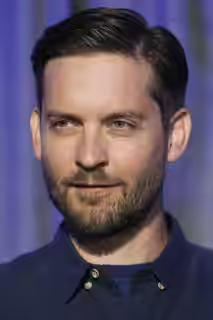
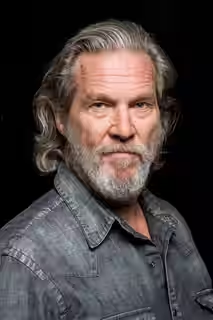
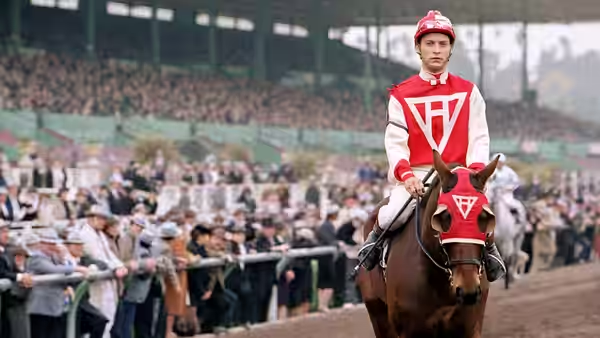
The three men are well chosen. Jeff Bridges plays Charles Howard, a bicycle repairman turned car dealer, as a man who talks in advertising copy and believes every word of it, and Bridges lets us see the grief under the salesmanship without ever pointing at it. Chris Cooper’s Tom Smith, the trainer, barely speaks; he stands at a fence and watches, and Cooper makes watching look like work. Tobey Maguire’s Red Pollard is the loud one, a jockey too tall for the job who boxes in barns for cash and loses, and Maguire plays the anger straight. Elizabeth Banks, as Howard’s second wife Marcela, is given a smile and a hat.
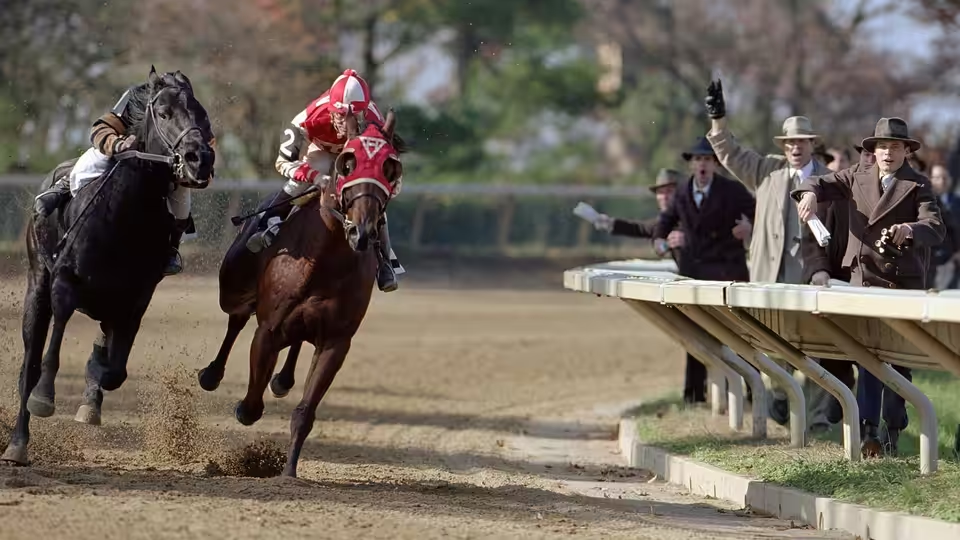
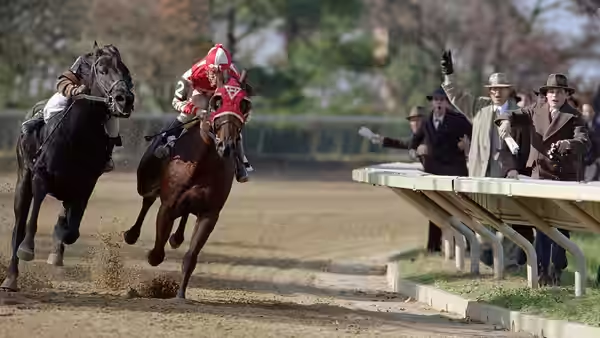
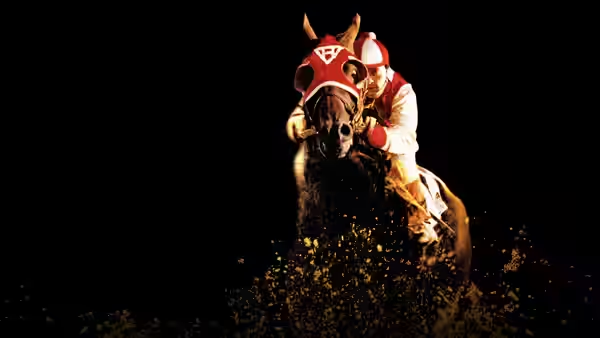
The races are the reason to see it. John Schwartzman puts the camera down among the horses, at stirrup height and sometimes lower, so that we get the mud, the noise, the shoving and the jockeys’ shouted deals and insults mid-race. William Goldenberg cuts them so that at any moment we know which horse is where, which sounds simple and is not; most racing on film is a blur with a commentary telling you what happened. We were gripped, properly, by a two-horse race in the second half whose result we will not give away, leaning forward in our seat with our jaw set, and we were faintly annoyed with ourselves afterwards, because we could see the strings.
The strings are the trouble. David McCullough narrates, in the level voice of a history documentary, over black-and-white photographs of dust storms and soup kitchens, and each time the film builds up some pace it cuts back to him to explain that the country needed something to believe in. We had understood. Randy Newman’s score does the same job in music, warm strings and homely piano rising under every reconciliation so that no moment is allowed to be quiet. Ross’s screenplay gives each of the men a speech about second chances, then has the horse act it out, then has the radio man explain it.
The radio man is William H. Macy’s Tick Tock McGlaughlin, who does his own sound effects from a drawer of props, and he is the film’s one attempt at a joke. Macy is funny for a scene and wearing by the fifth. Gary L. Stevens, as the rival jockey George Woolf, is easy in the saddle and stiff out of it, and we found we did not mind, because when he is riding the film is moving.
Jeannine Oppewall’s sets are the sort you do not notice, which is praise: Howard’s showroom with a single polished car under a skylight, the low wooden barns, the flat tracks with their white rails. Judianna Makovsky puts Howard in cream suits that get paler as he gets richer and Red in silks that always look borrowed. Schwartzman lights it all in late-afternoon honey, even, we suspect, in the mornings. It looks the way the 1930s look in old advertisements, which suits a film that is in the business of making a legend.
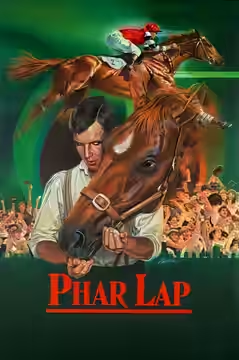
Racing films are usually about one race, and the good ones, Phar Lap among them, keep the horse in the frame. Seabiscuit keeps cutting away to the nation. There is a good, plain, 100-minute film in here about three damaged people and an animal, and it is wrapped in forty minutes of civics lesson. See it for the races, for Bridges and for Cooper, on an afternoon when you do not mind being told how to feel. It runs 141 minutes and carries a PG.