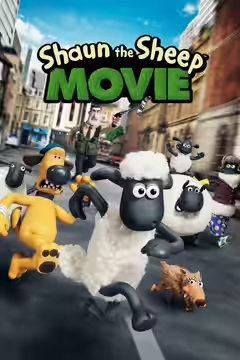
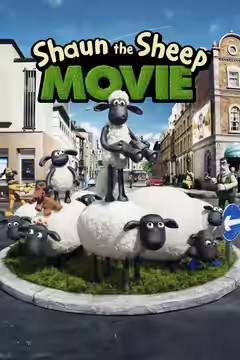
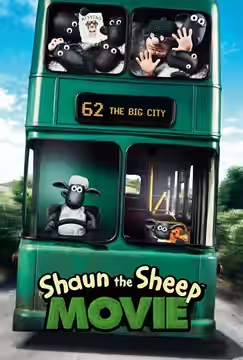
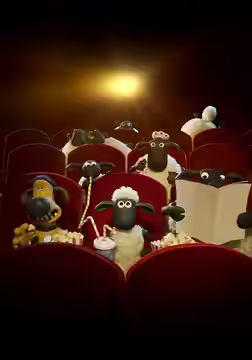
Aardman send the flock to the city after their lost farmer and never let anyone say a word, and most of it is as neatly built as the best television episodes. The middle runs short of ideas; the rest does not.
Shaun first turned up in 1995, in A Close Shave, as a lamb who got mixed up with Wallace and Gromit, and has spent the years since in short television episodes that owe more to silent comedy than to anything else made for children. Mark Burton and Richard Starzak, who write and direct, have taken the obvious risk with a feature: eighty-five minutes, a plot, a whole city, and still not a word of dialogue. The humans mumble, the sheep bleat, and the story is carried by faces made of clay and the people who move them. It works for most of its length, and we recommend it, with one caveat we will come to.
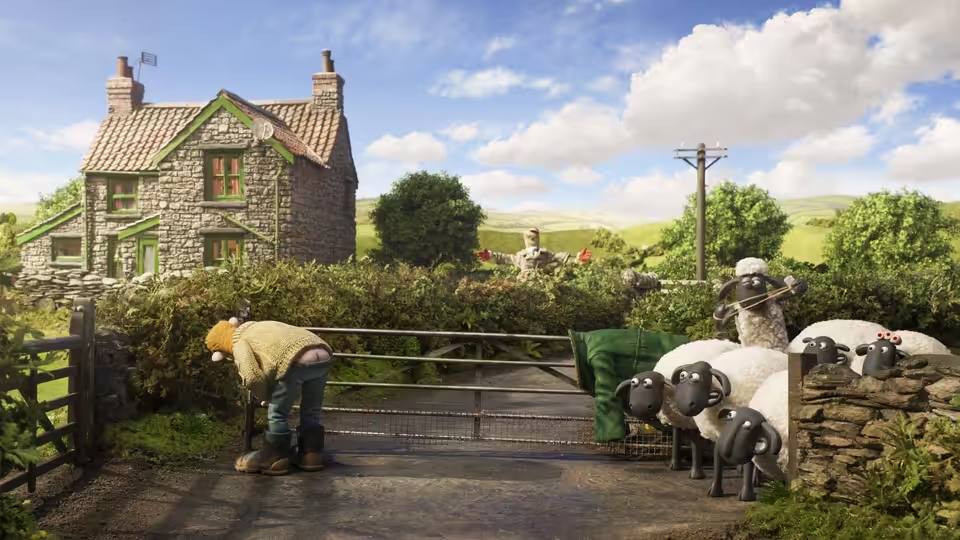
The first twenty minutes are as good as anything Aardman have made. An opening montage, shot like old home-cine footage, shows the Farmer as a young man raising Shaun from a lamb and Bitzer from a pup, and we did not expect to be moved by a photograph of a clay man holding a clay lamb. We were, and we are not going to apologise for it. Then the plan. The flock jump a gate in a loop while the Farmer counts, his eyelids go, Bitzer’s go too, and Sim Evan-Jones cuts the repetitions so that each lap lands a little heavier than the last. We laughed properly, in a cinema where the only other people laughing at that particular beat were about six years old.
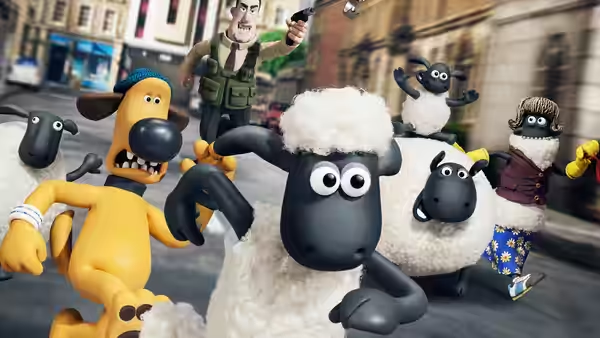
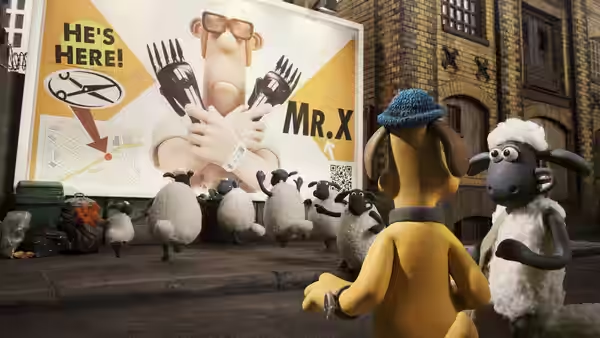
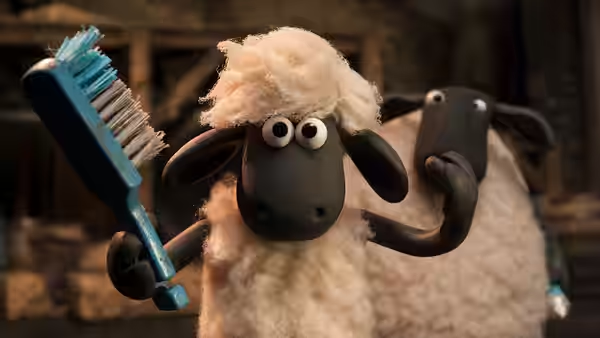
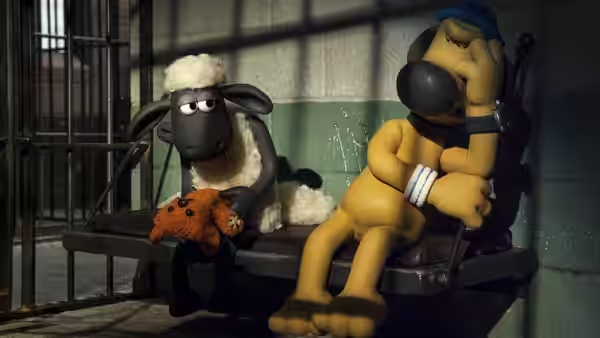
Matt Perry’s Big City is a British town of a recognisable kind: a bus station, a hospital, a department store, a restaurant with white tablecloths, and Trumper’s animal containment centre, which is a lock-up with cells and a noticeboard of wanted animals. Charles Copping and Dave Alex Riddett shoot the farm in soft, warm daylight and the city in flatter, bluer light, so you feel the flock’s homesickness before the film shows it to you. The restaurant is the best sustained sequence: the sheep stacked three high inside one overcoat, Shaun on top working the head, trying to copy the table manners of the diners around them and getting a bread roll badly wrong. The whole gag is built and paid off in looks.
With no words, the voices still matter. Justin Fletcher gets a surprising amount out of a bleat, and John Sparkes does both the Farmer, a grumbler, and Bitzer, a whimperer, without either sounding like the other. Omid Djalili’s Trumper is all snarls and throat-clearing, a man who enjoys his work in a way nobody should. Ilan Eshkeri’s score has to do the talking, and mostly it does, with a soft tune for the farm and marching brass whenever Trumper’s van turns a corner. There is also a pop song that comes back more often than it needs to.
The caveat is the hour mark. The Farmer’s new life in the city, which we will not describe, is funny for one scene and is then run through variations on the same idea, and Trumper’s pursuit of the flock starts to feel like a chase the film is doing because features are supposed to have chases. Trumper himself is a thinner villain than Aardman usually manage: a uniform and a bad temper, no history. There are nods to films the children will not have seen, and they are brief enough not to clutter things, but around here we noticed we were counting them, which is not a good sign.
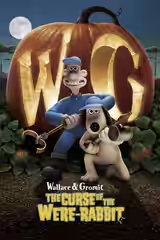
Against the studio’s own standards it is smaller than Chicken Run and Wallace & Gromit: The Curse of the Were-Rabbit, and it knows it. The plot would fit on a postcard. What it offers instead is about as many good jokes per minute as either of those and a steadiness of tone that never tips into noise. The animation is as fine as it has ever been: watch Bitzer, alone in a hospital corridor in a borrowed white coat, trying to decide whether to be a dog or a doctor. At 85 minutes it is finished before the smallest person in the audience has started kicking the seat in front.
Take a child if you have one to hand. If you have not, go anyway and sit near the back, where the adults are, and listen to who laughs first.