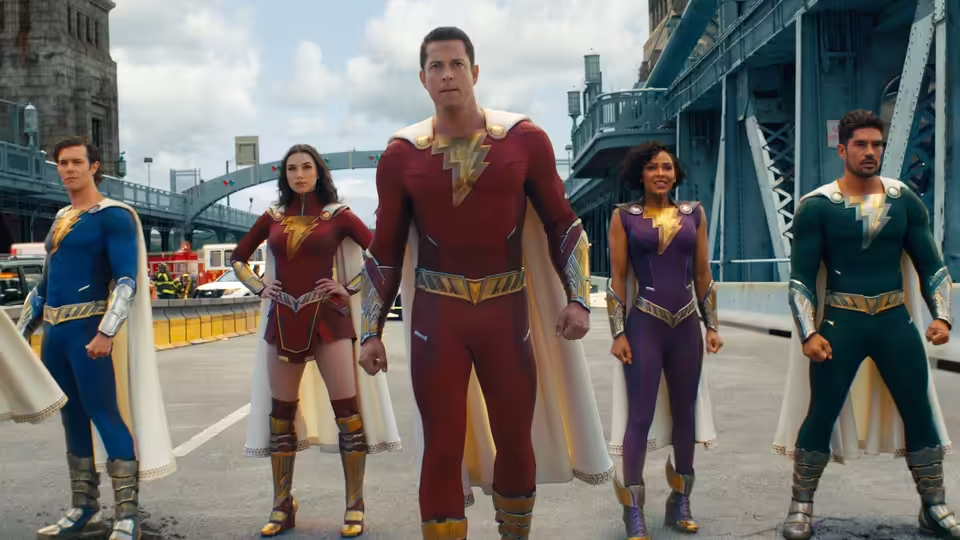
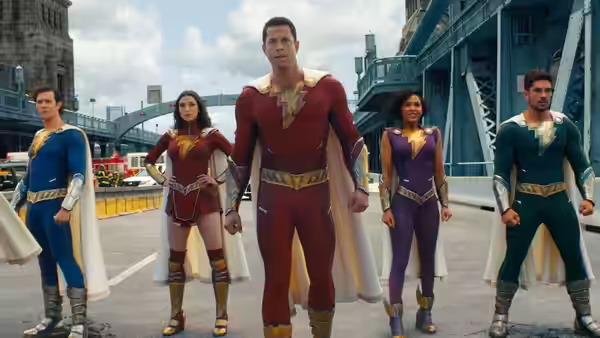
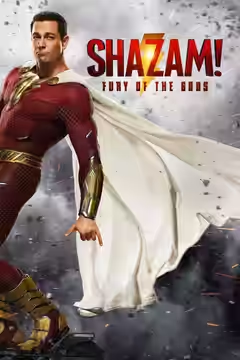
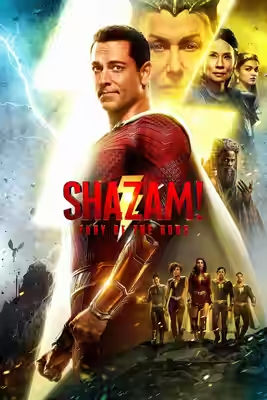
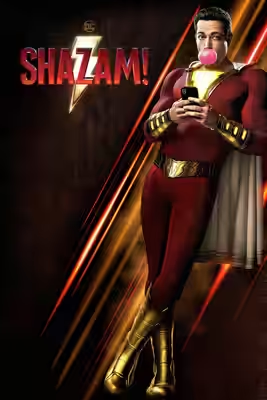
David F. Sandberg’s sequel keeps the foster family and loses the point of them, burying six likeable kids under a grey computer finale. Grazer and Zegler give it a heart for twenty minutes; the rest is noise with a lightning bolt on it.
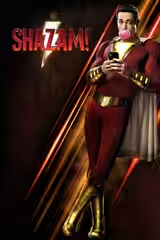
The 2019 original had one idea, and it was a good one: a foster kid with nobody to call says a magic word and gets the body of a grown man. David F. Sandberg’s sequel has the same kid, five more heroes, two goddesses, a stolen staff and 130 minutes, and the idea is somewhere under all of that. The family is still likeable and the film is still, in stretches, funny. But it has swapped the thing that made it different for the things every other superhero film already has, and the trade does not pay.
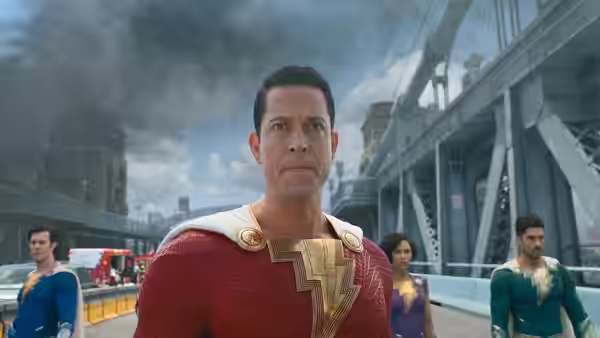
Zachary Levi plays Shazam as he did last time, a fourteen-year-old’s voice coming out of a wrestler’s chest, and the trouble is that Billy Batson is not fourteen any more. Henry Gayden and Chris Morgan’s script makes him nearly eighteen and frightened of ageing out of the foster home, and then hands almost every scene to the big version. Asher Angel, who plays the actual Billy, is barely on screen. So the joke has lost its anchor. Levi mugs, shouts, fumbles a rescue and apologises to the crowd, and we winced at a routine we had laughed at four years ago, because there is no longer a boy behind it to make it touching.
The film is best when it gets away from him. Jack Dylan Grazer’s Freddy is still the motormouth on a crutch, and Rachel Zegler’s Anthea is the new girl at school who has taken an interest in him. Their scenes are small: a corridor, a lunch table, a walk. Gayden and Morgan write them as two teenagers trying to be cooler than they are, and Grazer and Zegler play it without pushing. We were more taken with them than with anything that flies. Djimon Hounsou’s wizard has a good line in weary complaint, and Grace Caroline Currey, playing Mary at both sizes, gives the family a plausible eldest.
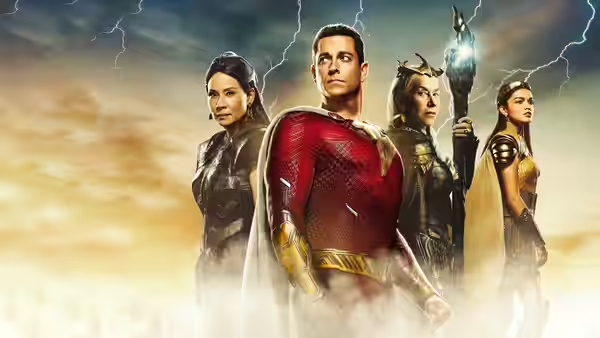
Helen Mirren and Lucy Liu arrive as the daughters of Atlas, come to take back what the wizard took, and Louise Mingenbach dresses them in bronze and gold plate that looks heavy enough to matter. Mirren delivers every line as if reading a will to relatives she dislikes, and it is the right choice. Liu plays Kalypso as pure temper. Neither is given much beyond standing on high things and glaring.
Gyula Pados shoots the daylight scenes bright and clean, and for the first hour Michel Aller keeps all six heroes in view whenever they share a room, which is harder than it sounds. Christophe Beck’s score is brass and drums and does the job. Paul Kirby’s production design is at its best indoors, in rooms that look lived in rather than rendered, and the film gets some of its better gags out of them. Then the effects take over and the picture goes brown.
The last forty minutes are a battle under a grey sky that we will not describe, except to say that everything in it is the colour of wet cement and nothing in it weighs anything. Creatures pour through streets and heroes fly through creatures, and Aller’s cutting, so tidy in the early going, gives up trying to tell us where anyone is. We were bored, and then we were cross about being bored, because the film had already shown us it could stage a scene we could follow.
Sandberg came to this from horror, and Lights Out, from 2016, was built on one idea it never let go of. The first film had the same discipline. This one has a bigger city, more suits and less nerve: it wants to be about a boy afraid of losing his family and keeps interrupting itself with gods. Most critics have landed a little lower than we have, but the school scenes and the first hour’s clarity count for something.
Take children to it; the 12A is fair, the jokes are aimed at them and they will not mind the cement. If you are choosing for yourselves, watch the first film again instead, or watch this one at home, where the finale can be got through with the remote.