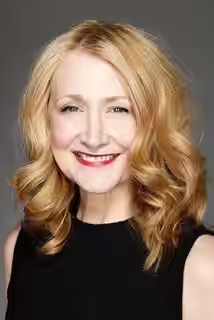
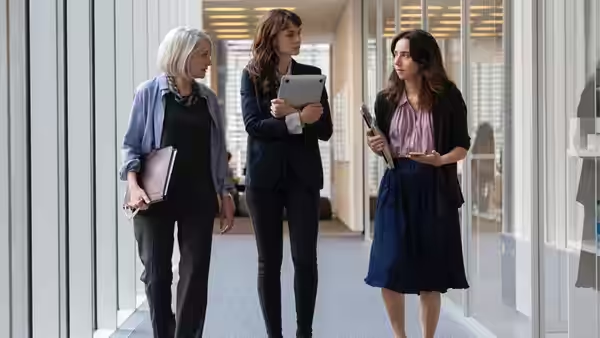
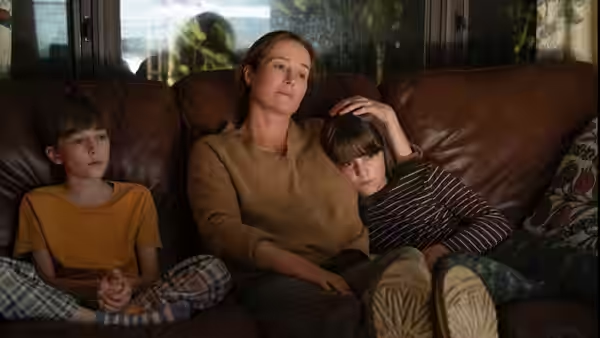
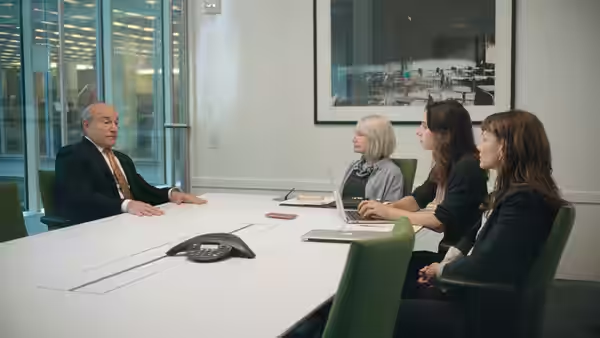
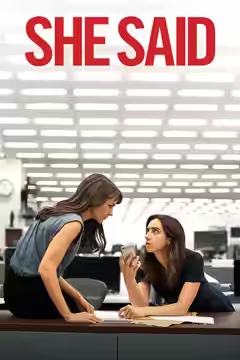
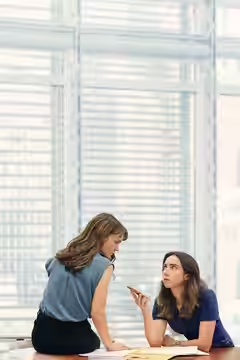
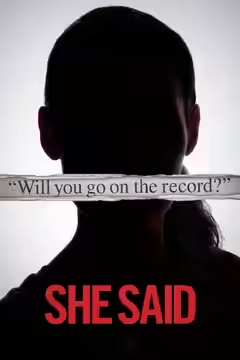
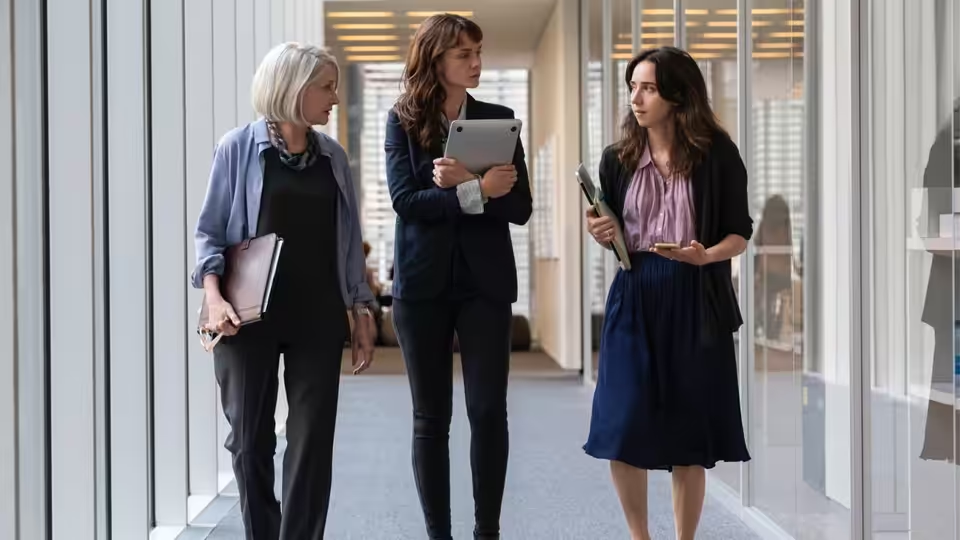
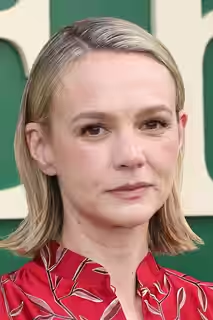
Megan Twohey (Carey Mulligan), Rebecca Corbett (Patricia Clarkson) and a colleague walk through a newsroom corridor
Film review

She Said

2022 · Directed by Maria Schrader · 2h 09m

In a sentenceKnocking on doors is quite enough drama when everyone has good reasons to leave them shut

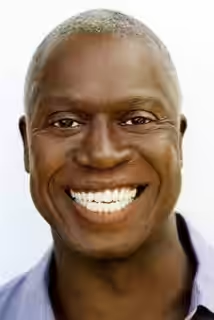
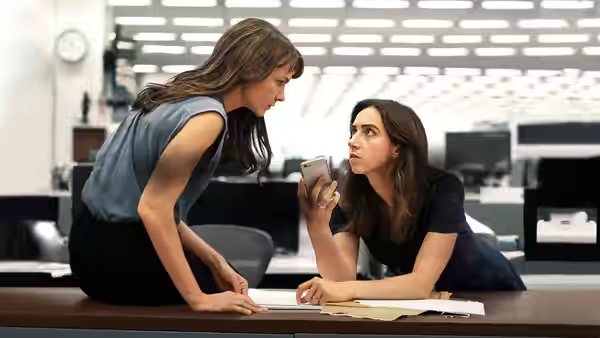
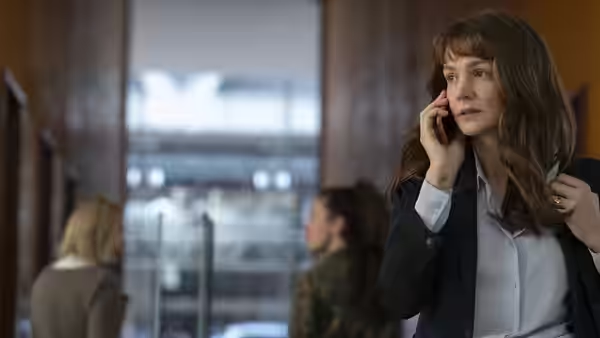
At the Times, reporters Megan Twohey (Carey Mulligan) and Jodi Kantor (Zoe Kazan) investigate allegations of abuse by Weinstein. They knock on doors, follow paper trails and try to persuade women to speak on the record. Fear of the consequences makes each approach uncertain, while the reporters also have families whose needs do not stop for an investigation. The newspaper effort involves Rebecca Corbett (Patricia Clarkson) and Dean Baquet (Andre Braugher). Twohey and Kantor need evidence they can publish, and testimony from people who have reasons to stay silent. Getting an account is only the beginning; getting permission to use it is another matter.

Plays from YouTube when you press play; nothing loads from them until then.

Fi1m review

Maria Schrader’s She Said is a patient, often moving journalism drama, carried by Carey Mulligan and Zoe Kazan. Its attention to the women makes it worth seeing, though it is too easily satisfied with the newspaper’s own conduct.

Maria Schrader’s She Said is a good, sometimes moving journalism drama, strongest when it attends to the difficult business of persuading someone to speak. Its weakness is how readily it accepts the newspaper’s account of its own decency. Megan Twohey and Jodi Kantor investigate Weinstein by knocking on doors, following documents and asking women to make frightening decisions about what they will say publicly. The film allows that work to take time, which is necessary even when it becomes repetitive.

Carey Mulligan gives Megan Twohey’s persistence weight, while Zoe Kazan makes Jodi Kantor’s attention to other people feel active, something that requires effort rather than a sympathetic expression. Neither performance needs to make its reporter unusually heroic. The scenes involving family responsibilities help because the investigation must compete with work that cannot simply be postponed. The women cannot suspend the rest of their lives until the story is ready, and the performances make those competing demands credible.

The women being approached have more to lose than an afternoon, and these encounters give the film its strongest scenes. We were moved by the survivors’ accounts, particularly by the fear of what speaking publicly might cost them. The decision to concentrate on their voices lets that fear come through without turning suffering into an attraction. The reporting becomes compelling when it has to wait for another person’s willingness to continue, and when the reporters’ need for an answer cannot settle the matter.

Natasha Braier’s cinematography stays close enough to the women to hold our attention without making their distress feel available for inspection. Meredith Lippincott’s production design gives the reporting an appropriately unshowy setting, keeping the routine work in view. Hansjörg Weißbrich’s editing makes room for the evidence-gathering, but the steady pace occasionally hardens into a plod. The music, credited to Nicholas Britell and Caitlin Sullivan, is less restrained. It presses for an emotional response in scenes whose voices already give us enough to consider.

Rebecca Lenkiewicz’s screenplay sometimes struggles to find natural ways for the reporters to explain their purpose. Some dialogue sounds prepared for an audience that must be reminded why the work matters. More damagingly, the newspaper’s part in the story is too comfortable: we are invited to admire its resolve without being asked to examine it closely. The film has room for the fear surrounding Weinstein, but gives less attention to the people and arrangements that allowed it to persist.

As a journalism procedural, She Said finds real interest in following a paper trail and approaching a reluctant source. The film trusts the ordinary steps of an investigation more than many dramas would, and that patience is worth something even when it tests ours. The women who must decide whether to speak make the familiar business of gathering a story feel difficult again. It is worth an evening for the performances and those encounters. Do not come expecting the newspaper to face quite the same scrutiny as everyone else.
Critical consensus AI synthesised

68
Positive
13
Mixed
9
Negative
3

The reviews lean positive, with praise clustering around Carey Mulligan and Zoe Kazan’s performances and the sensitive treatment of survivors’ testimony. Most critics find something moving or compelling in the investigation, particularly its attention to the risks women face in speaking out. Several also value the patient depiction of reporting alongside family life. Samantha Morton’s supporting performance draws particular notice, including from critics less persuaded by the film around her.

The disagreement concerns how much drama that careful approach produces. Admirers find restraint and tension; others find sluggish pacing, explanatory dialogue and familiar storytelling that adds little to the reported events. Views of the visual storytelling also vary, from sensitive to uninspired. The spread is broad: The New Yorker objects to the frictionless investigation and idealised portrayal of the newspaper, while Slant Magazine argues that the film fails to examine the system enabling Weinstein’s abuse.

IndieWire
13 October 2022 · A- · Kate Erbland
90

The critic calls the film an artful, incendiary and definitive account of the reporting that helped bring down Weinstein. She praises its emotional depth and the performances of Zoe Kazan and Carey Mulligan, while noting a few stilted early scenes.

Read the full review →
Los Angeles Times
17 November 2022 · Katie Walsh
85*

Walsh finds the film powerful and moving, though its careful approach can feel clinical and methodical. She praises Schrader’s visual storytelling and thoughtful focus on the women’s voices.

Read the full review →
Empire
24 November 2022 · Ella Kemp
80*

Kemp finds the film a sensitive, galvanising account of the investigation and its impact on the women involved. She especially praises Carey Mulligan and Zoe Kazan for grounding the story with powerful performances.

Read the full review →
Evening Standard
25 November 2022 · ★★★★ · Charlotte O'Sullivan
80

O'Sullivan calls the film a marvel despite occasional sluggishness and uninspired visuals. She especially praises Carey Mulligan’s performance and the film’s attention to the people who helped expose Weinstein.

Read the full review →
Little White Lies
23 November 2022 · 3/4/3 · Laura Venning
80

Venning finds the film pedestrian in style but compelling, deeply moving at times, and never sensational. She praises its compassionate account of the investigation and the working mothers balancing reporting with family life.

Read the full review →
Radio Times
★★★★ · James Mottram
80

The critic calls it a tense and moving drama, with a methodical approach that recalls investigative-journalism classics. They praise its depiction of how the journalists gather evidence while Weinstein remains a shadowy presence.

Read the full review →

Straight answers AI written, from our review

Is She Said worth watching?
She Said is worth watching for its performances and patient attention to the women asked to speak publicly about abuse; we score it 73 out of 100. We find the survivors’ accounts moving, though the reporting occasionally becomes repetitive and the newspaper escapes the scrutiny the film applies elsewhere. It suits viewers who enjoy the ordinary work of investigation.
How long is She Said, and what is it rated?
She Said runs 2h 09m. It is a drama and history film.
Where can I watch She Said in New Zealand?
She Said is available to rent from Amazon Prime Video from NZ$5.99. Availability is checked daily; the links above go straight to each service.
How violent or frightening is She Said, and is it suitable for children?
She Said has a UK 15 certificate and is not suitable for children under 15; its accounts of abuse and the fear surrounding speaking publicly make it emotionally difficult material. The film concentrates on survivors’ voices rather than turning their suffering into an attraction. We would recommend caution for viewers sensitive to accounts of abuse, including older teenagers.
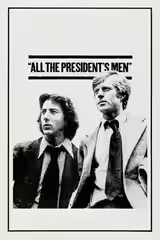
How does She Said compare to All the President's Men?
She Said is a worthwhile journalism drama, but we recommend All the President's Men more broadly for making patient reporting consistently gripping. Both find drama in persistence and checking evidence; She Said is strongest in encounters with women weighing the cost of speaking publicly. The earlier film offers more institutional unease, while She Said is too comfortable with the newspaper’s conduct.
What should I watch after She Said?
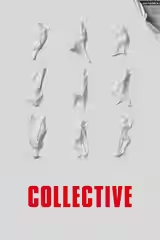
After She Said, try All the President's Men (1976, Fi1m 90): Patient reporting becomes gripping drama through missed leads, persistence and institutional unease. Then Collective (2019, Fi1m 88): A documentary investigation that subjects powerful institutions to sustained, necessary scrutiny; and The Assistant (2019, Fi1m 81): Workplace routines reveal the fear and complicity surrounding an abusive boss.

Cast

If you liked this, try…

  1. All the President's Men (1976, Fi1m 90)Patient reporting becomes gripping drama through missed leads, persistence and institutional unease.

  2. Collective (2019, Fi1m 88)A documentary investigation that subjects powerful institutions to sustained, necessary scrutiny.

  3. The Assistant (2019, Fi1m 81)Workplace routines reveal the fear and complicity surrounding an abusive boss.

  4. The Insider (1999, Fi1m 89)The personal cost of speaking publicly receives the attention it deserves.

  5. The Night of the 12th (2022) · not reviewed yetAnother methodical investigation, alert to the assumptions men make about women.