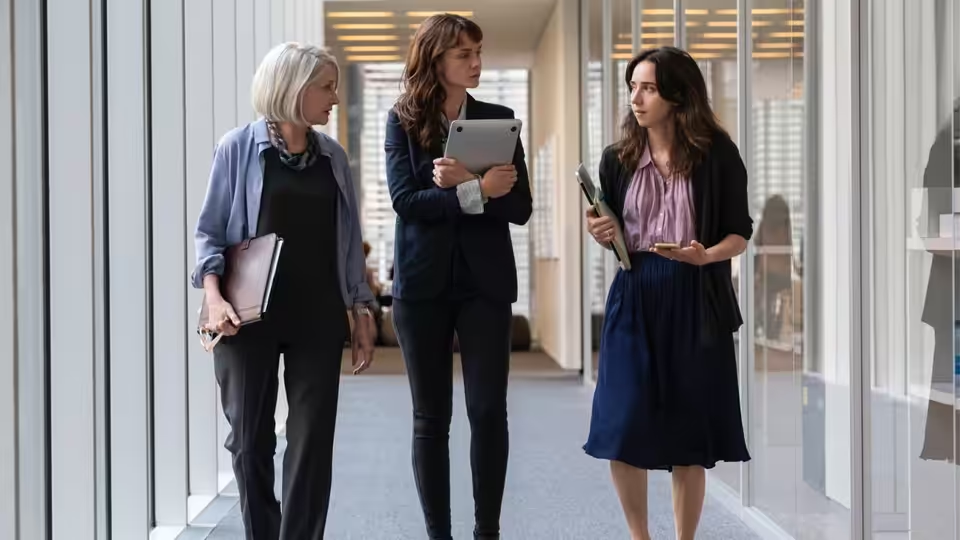
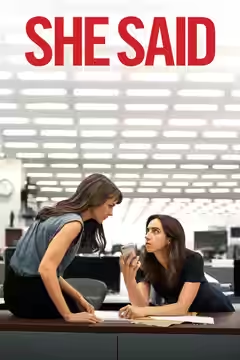
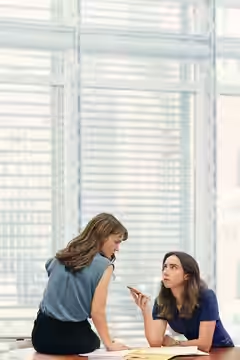
Maria Schrader’s She Said is a patient, often moving journalism drama, carried by Carey Mulligan and Zoe Kazan. Its attention to the women makes it worth seeing, though it is too easily satisfied with the newspaper’s own conduct.
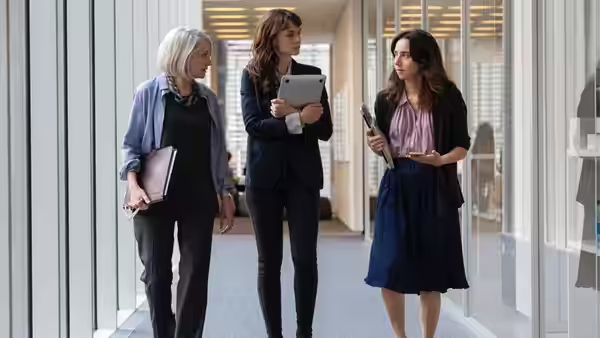
Maria Schrader’s She Said is a good, sometimes moving journalism drama, strongest when it attends to the difficult business of persuading someone to speak. Its weakness is how readily it accepts the newspaper’s account of its own decency. Megan Twohey and Jodi Kantor investigate Weinstein by knocking on doors, following documents and asking women to make frightening decisions about what they will say publicly. The film allows that work to take time, which is necessary even when it becomes repetitive.
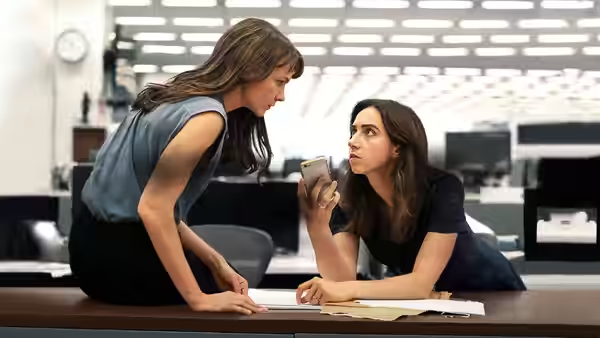
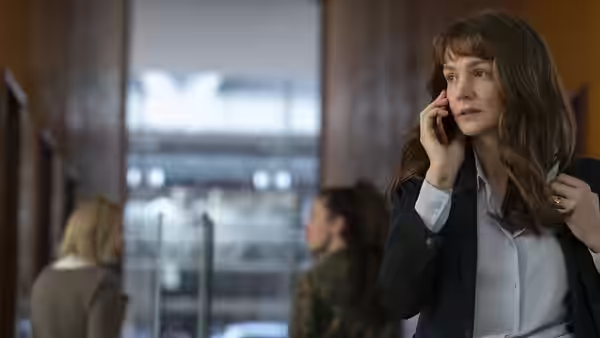
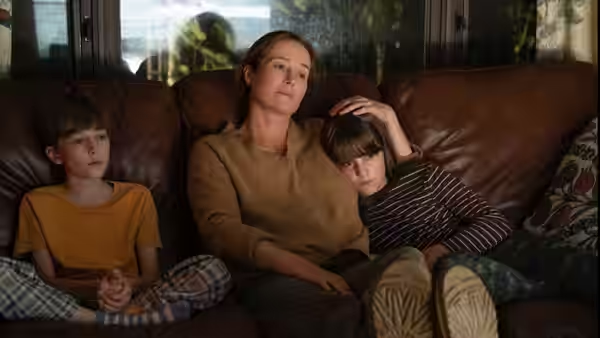
Carey Mulligan gives Megan Twohey’s persistence weight, while Zoe Kazan makes Jodi Kantor’s attention to other people feel active, something that requires effort rather than a sympathetic expression. Neither performance needs to make its reporter unusually heroic. The scenes involving family responsibilities help because the investigation must compete with work that cannot simply be postponed. The women cannot suspend the rest of their lives until the story is ready, and the performances make those competing demands credible.
The women being approached have more to lose than an afternoon, and these encounters give the film its strongest scenes. We were moved by the survivors’ accounts, particularly by the fear of what speaking publicly might cost them. The decision to concentrate on their voices lets that fear come through without turning suffering into an attraction. The reporting becomes compelling when it has to wait for another person’s willingness to continue, and when the reporters’ need for an answer cannot settle the matter.
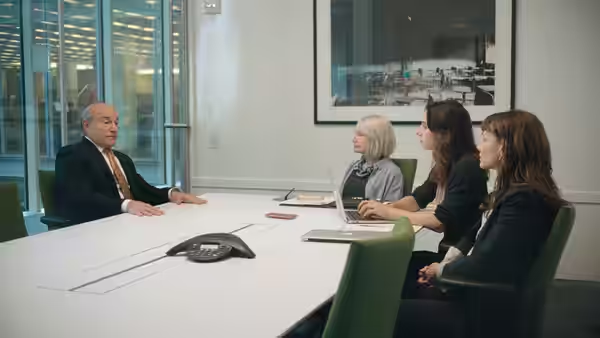
Natasha Braier’s cinematography stays close enough to the women to hold our attention without making their distress feel available for inspection. Meredith Lippincott’s production design gives the reporting an appropriately unshowy setting, keeping the routine work in view. Hansjörg Weißbrich’s editing makes room for the evidence-gathering, but the steady pace occasionally hardens into a plod. The music, credited to Nicholas Britell and Caitlin Sullivan, is less restrained. It presses for an emotional response in scenes whose voices already give us enough to consider.
Rebecca Lenkiewicz’s screenplay sometimes struggles to find natural ways for the reporters to explain their purpose. Some dialogue sounds prepared for an audience that must be reminded why the work matters. More damagingly, the newspaper’s part in the story is too comfortable: we are invited to admire its resolve without being asked to examine it closely. The film has room for the fear surrounding Weinstein, but gives less attention to the people and arrangements that allowed it to persist.
As a journalism procedural, She Said finds real interest in following a paper trail and approaching a reluctant source. The film trusts the ordinary steps of an investigation more than many dramas would, and that patience is worth something even when it tests ours. The women who must decide whether to speak make the familiar business of gathering a story feel difficult again. It is worth an evening for the performances and those encounters. Do not come expecting the newspaper to face quite the same scrutiny as everyone else.