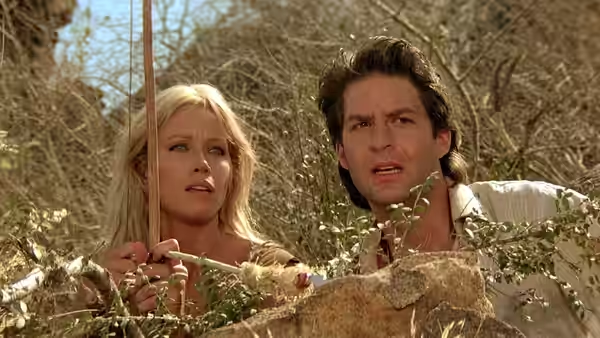
We found too little pleasure in this stiff fantasy adventure, despite its animal performers and some capable action. Tanya Roberts needs a lighter touch from John Guillermin, whose seriousness makes the silliness harder to enjoy.
Sheena is a poor adventure with enough enjoyable business to make its failings irritating. John Guillermin appears willing to take the fantasy seriously, which is a reasonable place to start: an adventure need not apologise for itself before it can entertain us. But taking it seriously means giving its characters conviction and its dangers some urgency. Too often, the film simply proceeds solemnly, expecting our interest to look after itself.
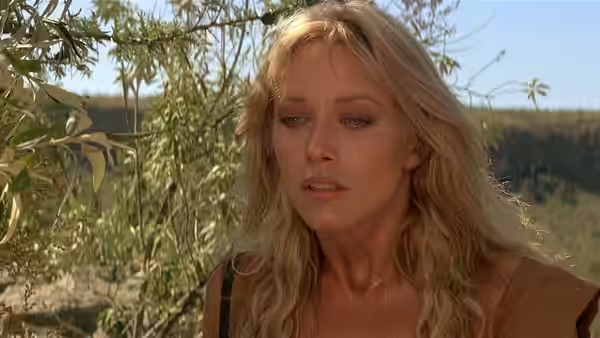
Tanya Roberts has the difficult job of making Sheena persuasive without making her ordinary. We can see the appeal of a direct, unembarrassed performance here, and the role would hardly improve with constant knowing looks at the audience. Nevertheless, Roberts seems stranded by the tone, unable to make the solemn passages compelling or the lighter ones reliably funny. The character needs a director who can establish how much disbelief we should suspend, then keep us occupied enough to forget the question.
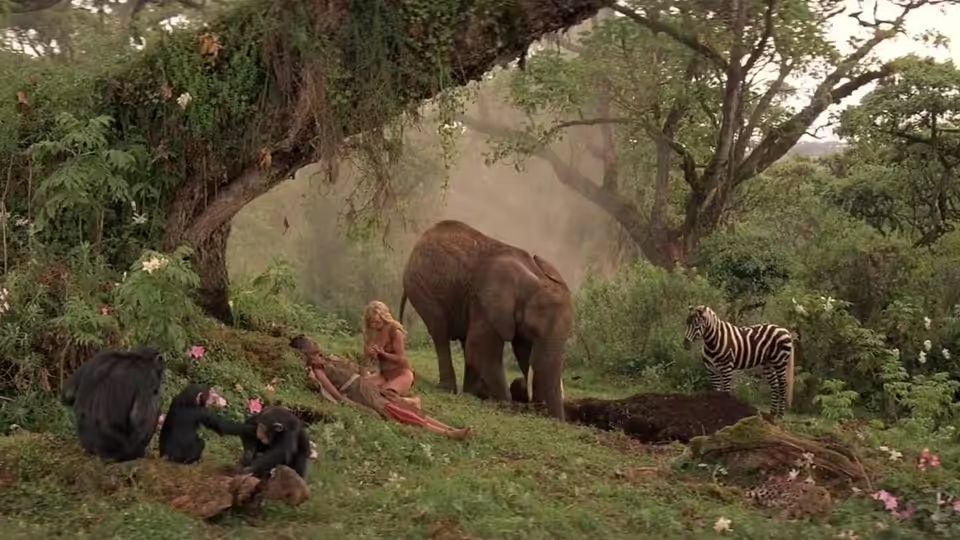
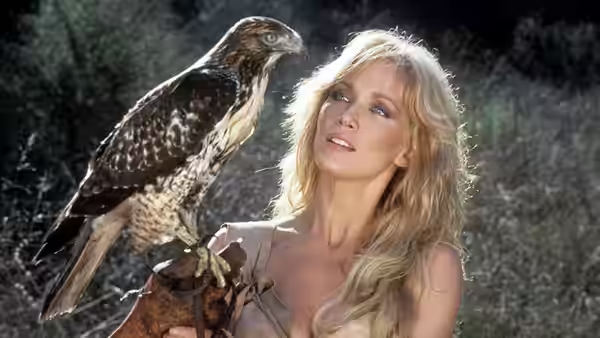
The animal performers provide the clearest pleasure. We smiled when the animals took over our attention; their unselfconscious presence gives the film an ease that its human performances struggle to find. These passages also suggest that a more playful approach need not have reduced the adventure to a joke. There is room for delight within this sort of fantasy, and Guillermin allows too little of it elsewhere.
The screenplay credits belong to Lorenzo Semple Jr. and David Newman, but the comedy never settles into a dependable rhythm. Some moments invite laughter without making it clear what, precisely, we are meant to find funny. That uncertainty can be entertaining briefly, especially when the surrounding action is so earnest, but it becomes tiring across 117 minutes. Ray Lovejoy’s editing does not give the uneven material enough momentum to carry us through the weaker passages.
There is capable action here, and it deserves acknowledgement even when the intervening drama feels inert. Pasqualino De Santis’s cinematography offers more visual interest than the performances consistently supply, though attractive images cannot make the stakes matter on their own. Peter Murton’s production design likewise has to support a fantasy whose credibility depends heavily on the people occupying it. We find too little in those surroundings to distract us for long from the uncertain performances and humour.
Richard Hartley’s music faces much the same difficulty: the film needs excitement without having its awkwardness underlined. To our ears, the score cannot establish the confidence missing from the drama, although it would be unfair to expect music to repair the script. Against the basic standards of fantasy adventure, Sheena falls short on pace and sustained involvement. Its occasional pleasures remain too widely separated to make the waiting worthwhile.
Most critics find substantial faults here, and we share their frustration with the uncertain tone. There is effort on screen, and there are stretches where Guillermin’s handling of action briefly supplies the entertainment the dialogue cannot. But anyone hoping that the awkwardness will make a consistently enjoyable comedy should lower their expectations. We would save this one for a determined interest in the stranger corners of fantasy adventure.