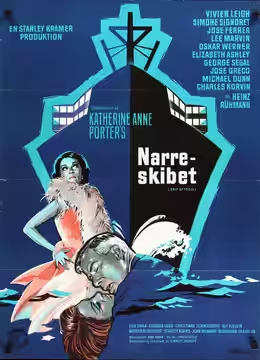
Stanley Kramer’s voyage from Veracruz to Bremerhaven in 1933 carries as fine a cast as the decade assembled and a script that explains each of them twice. Simone Signoret and Oskar Werner are worth the fare; the allegory around them is worth rather less.
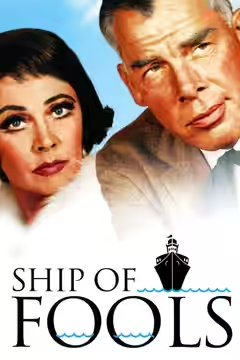
Stanley Kramer made films about what was wrong with the century, and in 1965 he put most of it on a boat. Ship of Fools, from Katherine Anne Porter’s novel, sails a German liner from Veracruz to Bremerhaven in 1933, six years before the war, and fills its first-class deck with people who each stand for something: the drunk divorcée, the failed athlete, the quarrelling young artists, the anti-Semite, the Jew who will not believe him. Abby Mann’s screenplay gives each of them a speech. The cast is as good as any assembled in that decade; the script trusts none of them to make a point without saying it aloud. At 149 minutes, that is a lot of saying.
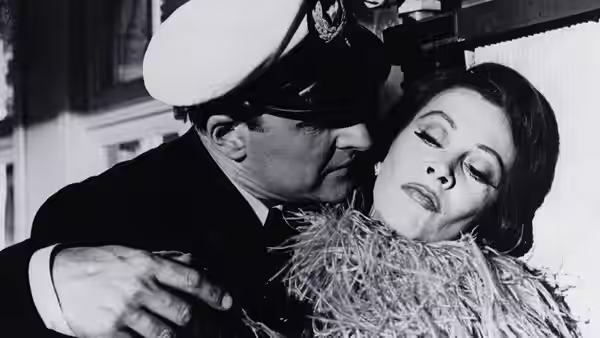
The middle of the film, and the reason to see it, is Simone Signoret and Oskar Werner. She plays La Condesa, a Spanish countess being taken under guard to Tenerife and dependent on the drugs the ship’s doctor controls; he plays Dr. Schumann, who has a bad heart and a wife at home and knows exactly what he is doing when he sits down on the edge of her bunk. Neither of them raises a voice. Signoret lets her face go slack and amused when the doctor lectures her, and Werner answers with a stillness that says he has already lost the argument with himself. They moved us more than we expected, and the reason is simple: they are the only two people on board who are not making a case. They are tired, and fond of each other, and running out of time.
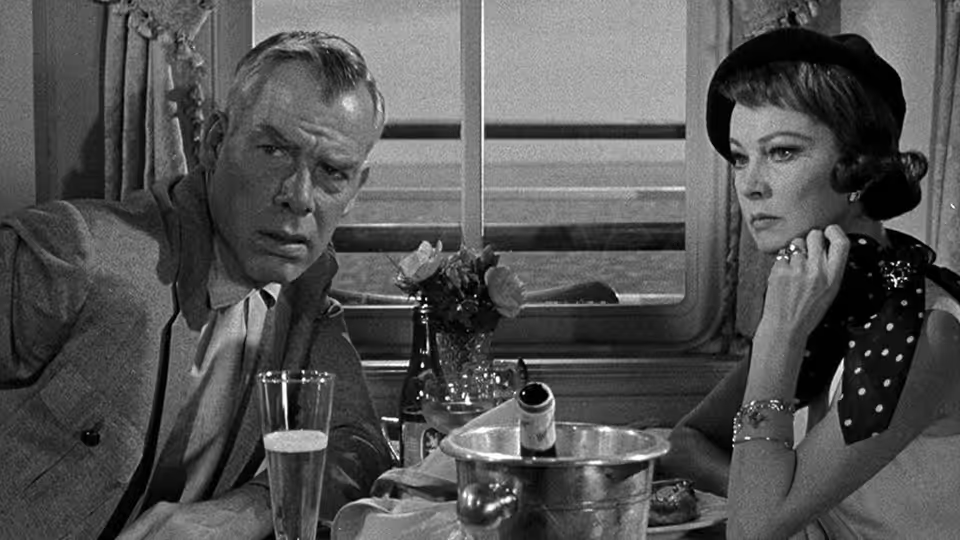
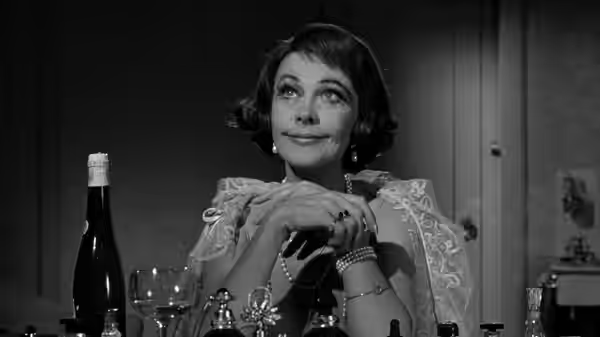
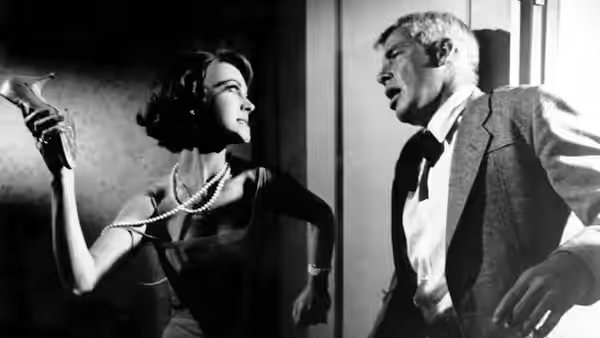
Vivien Leigh, in her last film, plays Mary Treadwell as a woman who has decided to be brittle because the alternative is worse. She has a scene alone in her cabin, in front of a mirror, that tells us more about the character than Mann’s dialogue manages in an hour. Lee Marvin’s Tenny, a ballplayer who could never hit a curve and cannot stop telling people so, is coarse and sad and better than the film deserves. Michael Dunn’s Glocken opens the picture by speaking to us from the rail, and he is the one person on board allowed to be clever without being punished for it.
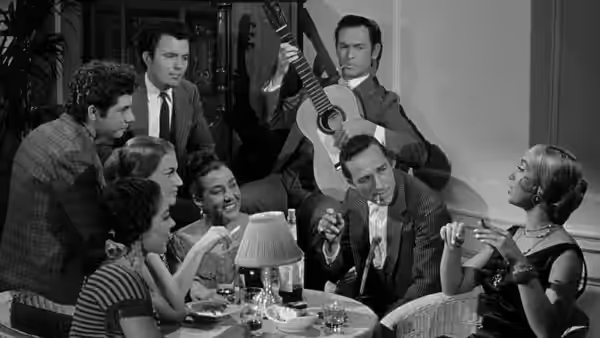
The trouble is everything the film wants to be about. José Ferrer’s Rieber announces at the captain’s table that Germany’s difficulties are the work of the Jews, and Heinz Rühmann’s Lowenthal, a salesman with a good line in jokes, keeps insisting the Germans will come to their senses. We know what is coming and so does Kramer, and he nudges us every ten minutes in case we have forgotten. Below decks the Spanish labourers are visited the way a charity visits, briefly and with music. Elizabeth Ashley and George Segal, as Jenny and David, fight about his painting and her body in scenes with the rhythm of a play and the insight of a magazine quiz. By the second hour we were weary, not of the ideas, which are sound, but of being told them again.
Ernest Laszlo shoots in black and white and stays close to faces, so the ship is mostly a set of expressions with a rail behind them. When he pulls back for the dining saloon or the deck at night, Robert Clatworthy’s sets are handsome and a little too clean, a liner that has never met salt water. Bill Thomas puts Leigh in evening gowns cut for a younger woman, which is the point. Ernest Gold’s score leans on the ship’s band, waltzes and tangos drifting in from the saloon, and is best when it is nearly not there. Robert C. Jones cuts between the couples with a fairness that becomes a problem: every affair gets its turn, in order, like guests at a wedding.
Kramer and Mann made Judgment at Nuremberg four years earlier, and that film had a courtroom, which gave the speeches somewhere to be. Here they happen over soup. Most critics at the time were warm, and the cast explains why; the one dissenting voice since calls the allegory heavy-handed, and it is. Both are right, which is why we land in the middle.
See it for Signoret and Werner, who could have carried a smaller film about two people in a cabin, and for Leigh, who is saying goodbye and seems to know it. The scenes in which a man tells you what Germany is about to do can be endured; you already know, and so did everyone in the cinema in 1965. It runs 149 minutes, and about ninety of them are good.