Oliver Laxe sends a father and son looking for a missing daughter into a convoy of ravers and across the desert. It is loud, patient and frightening, and it earns nearly all of it; only a late surprise felt written rather than fated.
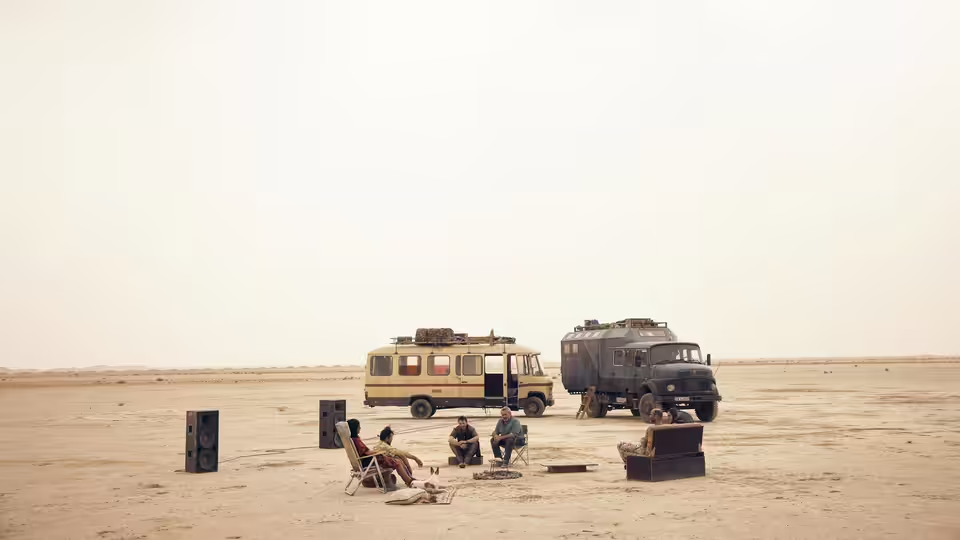
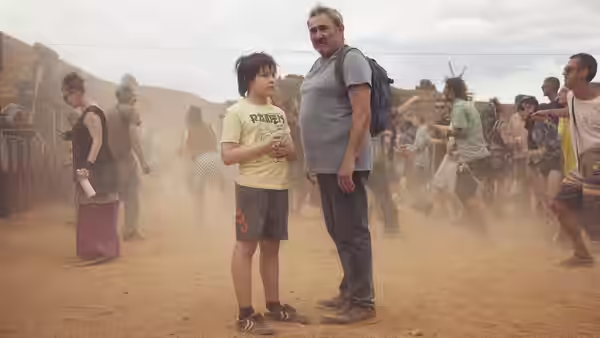
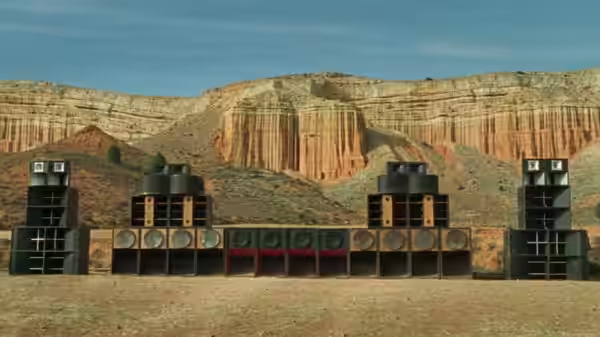
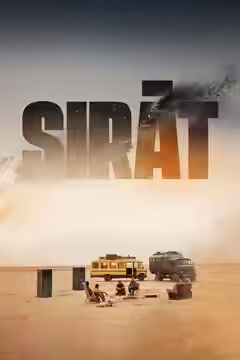
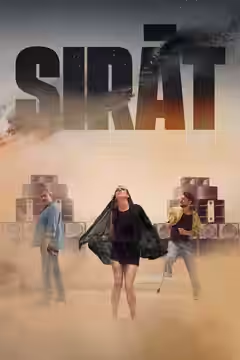
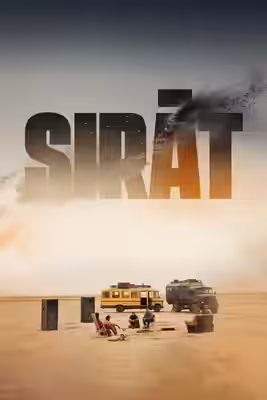
Sirāt opens with a speaker stack being bolted together in the middle of nowhere. Cables, sub-woofers, a generator, then the first kick drum, then people, dancing in the dust. Somewhere among them a middle-aged Spaniard, Luis (Sergi López), is handing out flyers with his daughter’s photograph, his young son Esteban (Bruno Núñez) beside him. Nobody has seen her. Oliver Laxe, who wrote the film with Santiago Fillol, spends a long time at this party, and he is right to. Everything that follows depends on our believing in it.
It is very good, and we recommend it with one caveat we will get to. For most of its 115 minutes it is the most physically frightening thing we have sat through in some time, and it gets there without much of what usually counts as plot. A radio carries reports of a war. Soldiers arrive and clear the site. Luis hears of another party further south and, having nothing else, follows a handful of ravers in their trucks. That is the story, or as much of it as we will describe.
Mauro Herce shoots on 16mm, and the grain does a lot of the work: the desert looks hot and unkind, and the trucks look small on it. He shoots the dancers close, at hip height, so we are among bodies rather than watching them from a distance. Kangding Ray’s score is techno built almost entirely from the bottom up, kick and sub-bass with little on top, and in a cinema we felt it in the sternum before we heard it. Cristóbal Fernández cuts the party slowly, holding on faces long past the point a music video would, until the dancing stops looking like fun and starts looking like work.
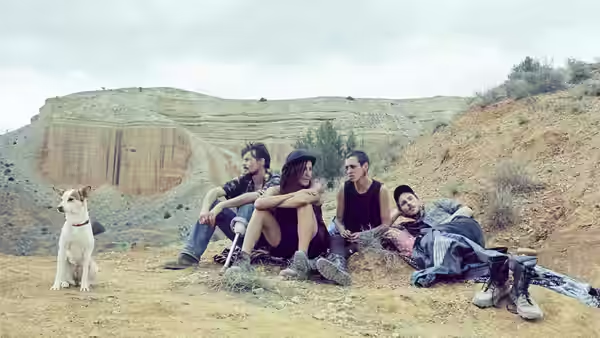
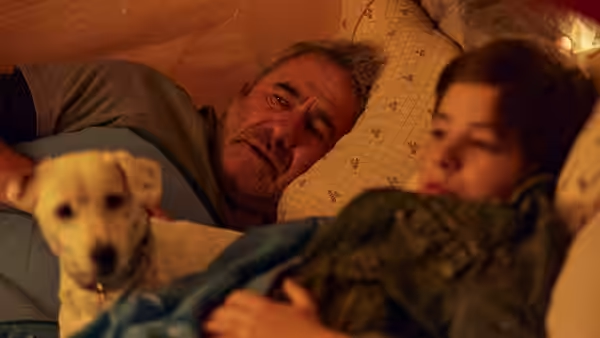
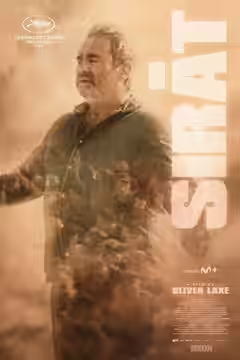
The ravers, Steff (Stefania Gadda), Josh (Joshua Liam Henderson), Bigui (Richard Bellamy), Tonin (Tonin Janvier) and Jade (Jade Oukid), are played by performers most critics take to be non-professionals, and they behave like people who have lived in these trucks for years. Laia Ateca’s production design gives each vehicle a history: bunks, spare parts, speakers wedged where the cargo should be. Nadia Acimi dresses them in salt-stained clothes that have plainly been slept in, and puts López in the sort of fleece a man packs for a weekend. He is the film’s anchor. López plays Luis as decent, tired and completely out of his depth, and the scenes where the ravers decide, without discussing it, to look after him and the boy moved us more than we expected. Nobody makes a speech about it. Someone passes him a bottle of water.
We were horrified more than once, and at one point we were angry with the film for a few minutes, because it had done something to us we had not agreed to. The anger did not last. Laxe has set every stage of it up, and looking back you can see him doing it; the film has been telling you what kind of world this is since the first radio report. A few critics have not forgiven him, and one or two think it mean-spirited. We do not. The film’s gentlest scenes come after its hardest ones, and they only work in that order.
Our caveat is the last stretch. The tension, once it takes hold, plays one note for a long time, and a late surprise felt less like fate than like a screenwriter. It is a small part of a long film and it does not undo the rest. It does make us think a braver cut would have stopped five minutes earlier.
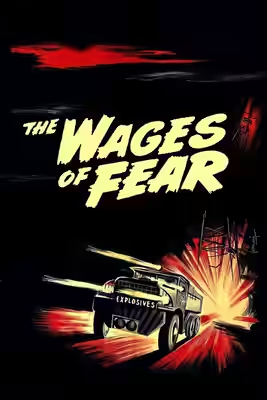
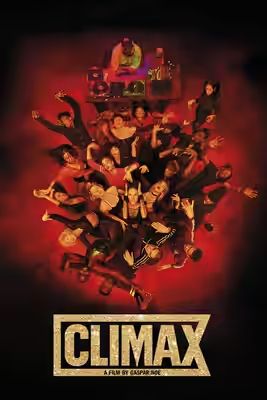
Several critics have reached for Clouzot’s The Wages of Fear (1953), and the comparison holds for the trucks and the nerves. What Laxe adds is the party, and the idea that the people best equipped for the end of things might be the ones who never planned for anything.
See it in a cinema, the biggest you can find, and sit where the sub-bass is. At home the opening will be a scene you watch. In a room with proper speakers it is a scene you are at, and the rest of the film depends on the difference.