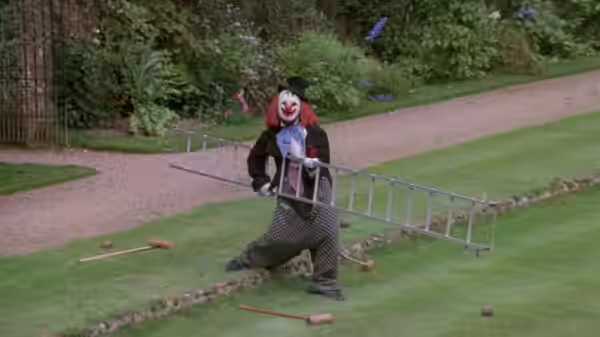
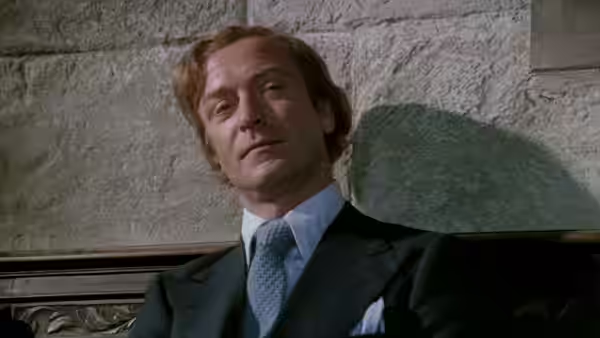
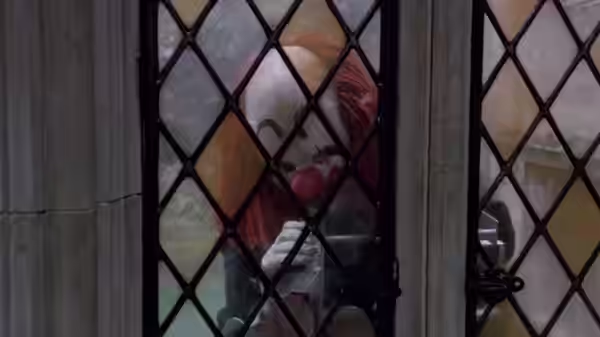
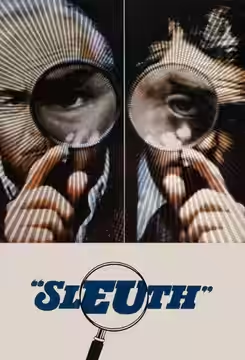
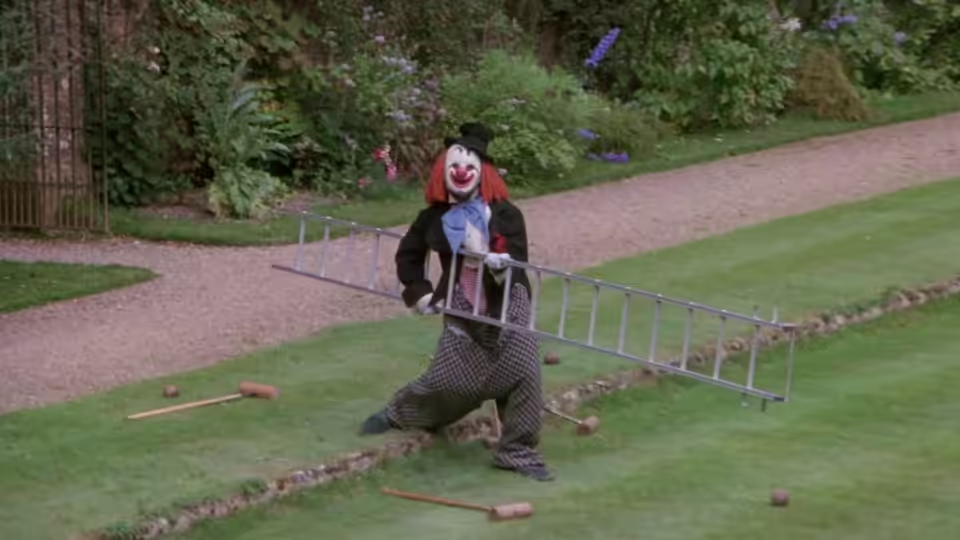
Milo Tindle (Michael Caine) as clown carrying a ladder on the lawn
Film review

Sleuth

1972 · Directed by Joseph L. Mankiewicz · 2h 18m

In a sentenceTwo men, one mansion, and enough competitive cleverness to make separate dinner invitations advisable

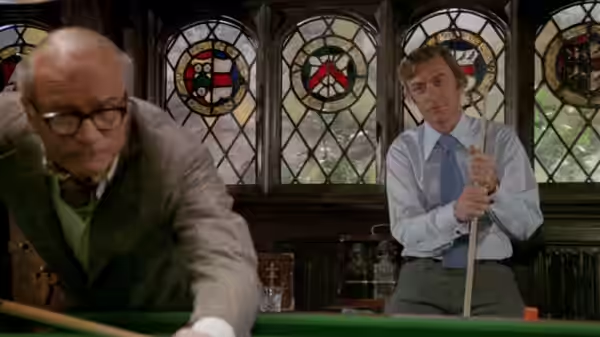
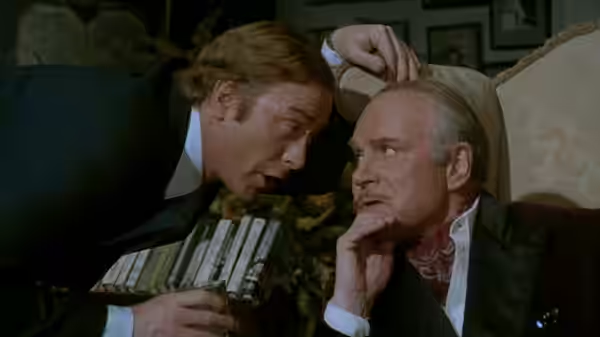
Andrew Wyke (Laurence Olivier) and Milo Tindle (Michael Caine) confront each other in Wyke’s mansion, surrounded by the house’s gadgets. Their conversation becomes a contest in which each tries to outwit the other, with social standing as much at issue as the games themselves. Wyke wants the advantage on his own ground; Tindle is there to challenge him. The house gives the two men a confined space in which to test each other’s nerve. As their exchanges become more elaborate, each must decide how much of the other’s performance to believe.

Fi1m review

Laurence Olivier and Michael Caine make Sleuth a sharp, funny and increasingly unpleasant contest of wills. The plotting occasionally overdoes the cleverness, and the film runs long, but their performances make it well worth the time.

Sleuth is a thoroughly enjoyable thriller about two men who cannot leave a contest alone. Joseph L. Mankiewicz trusts Laurence Olivier and Michael Caine to make the talk worth listening to, and for most of the film they do. The pleasure comes from watching each man weigh up the other while trying to make his own position look secure. Anthony Shaffer’s screenplay sometimes asks us to applaud its cleverness a little too insistently, but the actors keep the hostility worth caring about.

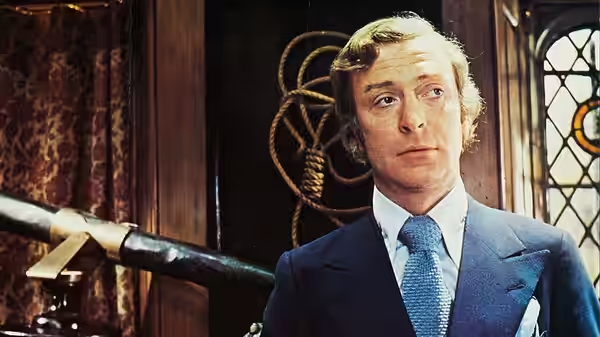
Olivier plays Andrew Wyke with a grandeur that would be exhausting to encounter across a dinner table. Here it is funny, because the performance lets us see how much effort goes into maintaining the upper hand. Caine gives Milo Tindle enough resistance to prevent the encounter becoming a long exhibition of Wyke’s superiority. We laughed at Olivier’s swagger, then felt uneasy about how much pleasure Wyke takes in making an opponent uncomfortable. The actors make that discomfort register even when the business of the plot grows elaborate.

Ken Adam’s production design gives their antagonism somewhere suitably oppressive to develop. Wyke’s mansion and its gadgets are entertaining to inspect, but spending time there begins to feel like being detained by a host who has decided that everyone is enjoying themselves. Oswald Morris’s photography makes the house feel enclosing without letting it overwhelm the performers. The setting keeps drawing our attention back to the man who owns it, and to the advantage of making someone else play on home ground.

Mankiewicz does not seem embarrassed by the theatrical scale of the acting. That is sensible: a more subdued treatment would strip much of the fun from two people working so hard to wrong-foot one another. He allows the class resentment to remain visible beneath the display of ingenuity, which gives the exchanges a nastiness that mere puzzle-solving could not supply. We are interested in who gets to talk down to whom, long before we need an explanation of how anything has been arranged.

Richard Marden’s editing is most effective when it gives the exchanges room to develop instead of hurrying towards the next surprise. John Addison’s music helps sustain the air of a game, though the voices provide the more compelling accompaniment. There is enough confidence in the performances to make stretches of talk feel eventful. The dialogue remains the main attraction, as it should in a contest whose participants are so determined to sound in control.

At 138 minutes, it is longer than this material comfortably needs. Some of the tricks feel imposed on the audience, and the repeated invitation to admire them starts to wear thin. This is where a puzzle thriller needs restraint: once we begin looking for the writer’s next manoeuvre, the people can become less interesting. Caine and Olivier repeatedly recover our attention, but a tighter film would leave less work for them to do.

We would recommend it most readily to anyone who enjoys listening to people compete. There is a good deal of pleasure in being allowed to watch Caine challenge Olivier at such close quarters, even when the plotting tries our patience. Allow for the length, and settle in for two actors being extravagantly unpleasant to one another.

Critical consensus AI synthesised

77
Positive
8
Mixed
0
Negative
1

Most critics find Sleuth an engrossing battle of wits, with praise centred on Laurence Olivier and Michael Caine’s sparring and their ability to make theatrical performances compelling on screen. The reviews also credit Mankiewicz’s assured direction with sustaining the intricate mystery, while the mansion’s detailed sets and unsettling atmosphere give the verbal contest a persuasive setting. For the majority, the tricks remain entertaining, with several reviews finding something disturbing in the gamesmanship and class hostility.

The reservations concern how fairly those tricks treat the audience and how well the play’s deceptions survive the move to film. Enthusiasm varies, but eight of the nine reviews are positive, making the spread broad rather than evenly divided. The New Yorker supplies the lone negative assessment: it acknowledges the accomplished filmmaking but finds the material unworthy of Olivier’s intensity, and the cleverness tiresome once the early exchanges are over.

Time Out
10 September 2012 · GA
90*

Mankiewicz adapts Anthony Shaffer's two-hander with admirable style and intelligence, turning the labyrinthine plot into a gripping howdunit. The superb performances and detailed exploration of the set and perverse power play make it thoroughly entertaining.

Read the full review →
Variety
31 December 1972 · Variety Staff
90*

The critic calls Mankiewicz's film version terrific, highlighting topnotch performances by Olivier and especially Caine, along with outstanding production design that enhances the cat-and-mouse game.

Read the full review →
Empire
21 March 2007 · Emma Cochrane
80*

The critic praises the film's claustrophobic mystery and the brilliant sparring between leads Laurence Olivier and Michael Caine. Mankiewicz's direction, technical trickery and the creepy house setting are highlighted as keeping the audience engaged in this genuinely disturbing thriller.

Read the full review →
Radio Times
★★★★ · David Parkinson
80

Olivier and Caine deliver delicious hamming in this engrossing sleight-of-hand mystery adapted from Shaffer's play. The corkscrew plot ensures it remains a thundering good watch, even if the theatrical duplicity loses some impact on screen.

Read the full review →
The AV Club
27 July 2015 · Nick Schager
80*

The critic calls it a sterling adaptation of the Tony-winning play, highlighting the battle of wits between Laurence Olivier and Michael Caine as the core appeal. Mankiewicz's assured direction and the leads' theatrical yet compelling performances are singled out for praise in this two-hander about gamesmanship and class warfare.

Read the full review →
The New York Times
11 December 1972 · Vincent Canby
70*

The critic praises the performances of Laurence Olivier and Michael Caine in this entertaining adaptation of the play, noting the fun and gadgetry while acknowledging some high-handed tricks on the audience.

Read the full review →

Straight answers AI written, from our review

Is Sleuth worth watching?
Sleuth is worth watching for anyone who enjoys two actors competing at close quarters, and we scored it 82. Laurence Olivier and Michael Caine make the long conversation in Wyke's mansion sharp, funny and increasingly nasty, though Anthony Shaffer's plotting admires its own cleverness a little too often. Allow for the 138-minute running time and settle in.
How long is Sleuth, and what is it rated?
Sleuth runs 2h 18m. It is a thriller and mystery film.
Where can I watch Sleuth in Panama?
Sleuth is not on any streaming or rental service in Panama at the moment. It is available in 4 other countries; change your country at the top of the page to see where. Availability is checked daily.
How violent or frightening is Sleuth, and is it suitable for children?
Sleuth is rated 15 in the UK, and its unpleasantness is psychological rather than bloody: two men humiliating and wrong-footing each other in a closed house, with class resentment showing beneath the games. There is little here to frighten the squeamish, but the cruelty is adult in tone, and younger children would find little in two hours of talk to hold them.
How does Sleuth compare to Interview with the Vampire?
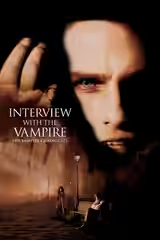
Sleuth is the tighter and more consistently entertaining of the two, a single confined contest between Laurence Olivier and Michael Caine, where Interview with the Vampire spreads its malice across a gothic drama of centuries. Both films are strongest in their domestic quarrels; Sleuth stays with its argument, while Jordan's film keeps pausing for remorse.
What should I watch after Sleuth?
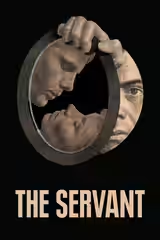
After Sleuth, try The Servant (1963, Fi1m 89): A household becomes a battleground over class, dependence and who gives the orders. Then The Interview (1998, Fi1m 79): An enclosed Australian thriller that makes every shift in conversational advantage count; and The Handmaiden (2016, Fi1m 85): Elaborate deception and class resentment, with desire given far more room.

Cast

Awards

Academy Awards, 1973

Nominated
Best Actor
Nominated
Best Director
Nominated
Best Original Dramatic Score

If you liked this, try…

  1. Deathtrap (1982) · not reviewed yetAnother taste for theatrical deception, with writers behaving worse than their characters.

  2. The Servant (1963, Fi1m 89)A household becomes a battleground over class, dependence and who gives the orders.

  3. The Last of Sheila (1973) · not reviewed yetA wealthy host, organised games and guests who would rather keep their secrets.

  4. The Interview (1998, Fi1m 79)An enclosed Australian thriller that makes every shift in conversational advantage count.

  5. The Handmaiden (2016, Fi1m 85)Elaborate deception and class resentment, with desire given far more room.

Free account

Know what to watch tonight

Two lists that know where things are streaming, collections you can share, your own score beside ours, and Discover that remembers what you have seen.

  • Want to see, sorted by what is streaming now
  • Seen, with your score out of ten
  • No adverts, ever