Eva Victor’s first film, which she wrote and leads, is about the years after a sexual assault at a small college, and it is dry, patient and often funny. It goes slack in the middle, and Naomi Ackie holds it up whenever it does.
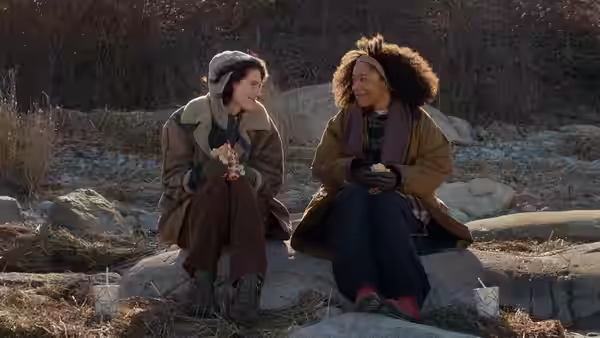
Eva Victor’s first film opens with a visit. Agnes (Eva Victor) still lives in the small New England college town where she did her graduate degree, and now teaches in the department that taught her. Lydie (Naomi Ackie) comes back from New York for a weekend and the two fall into the private language of people who have shared a bathroom. Then the film goes back to their last year as students, and to the afternoon Agnes went to her advisor’s house to talk about her thesis. Victor, who also wrote it, has made a film about a sexual assault that spends almost no time on the assault, and she holds to that.
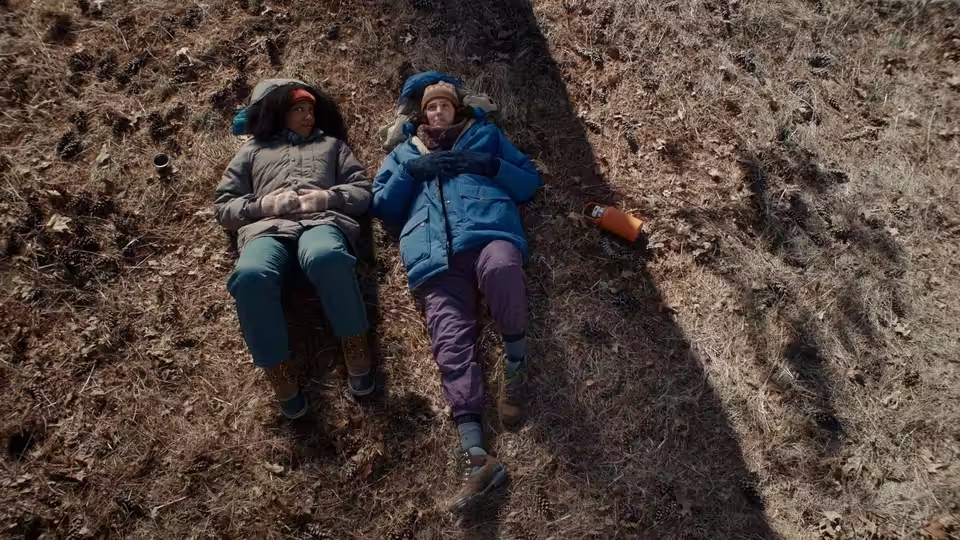
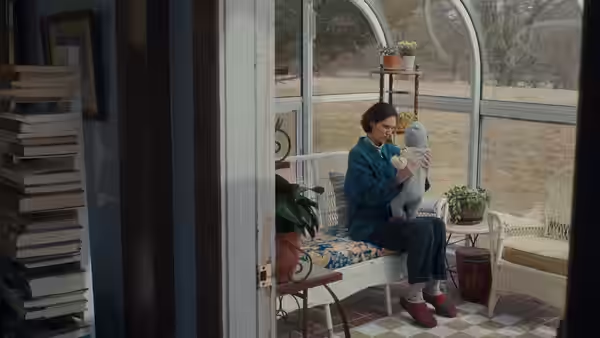
It comes in chapters, one a year, each with a title card, and they are out of order. Alex O’Flinn and Randi Atkins cut between them without a dissolve or a date, so the years after look like the years before. Caity Birmingham’s production design keeps the same books and mugs on the same shelves throughout, and Emily Costantino dresses Agnes in the same oversized jumpers whether she is a student or a lecturer. Only the people change.
The scene that decides the film is the house. Mia Cioffi Henry puts the camera across the road from the home of Preston Decker (Louis Cancelmi) and leaves it there. Agnes walks in with the sun still up, and the shot holds while the afternoon goes, a lamp comes on inside and the windows turn from white to yellow to black. Then she comes out, gets into her car, and the camera goes with her in one take as she drives home. Nothing is shown, and we sat through it counting the light like someone waiting outside a hospital.
Then the bath. Lydie sits on the floor and Agnes, in the water, tells her what happened, in order, going back to correct a detail, laughing once at something that is not funny. It moved us more than we were ready for, because Victor plays it as reportage: Agnes is trying to get the facts right, as if that will help. Ackie’s face does the rest, and she has the harder job throughout. Lydie is loud, quick and warm, and must be the well person by consensus without turning into the film’s conscience, which she manages by being funny at Agnes rather than about her.
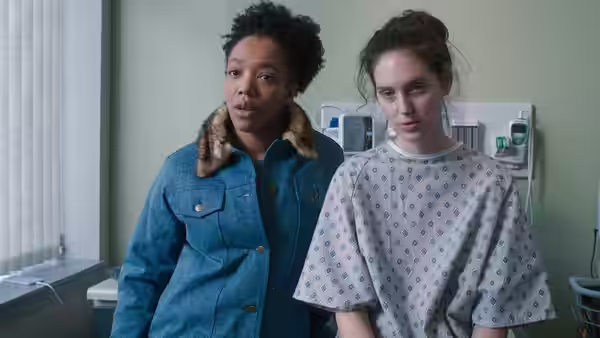
Victor is good on the people who are no use. A doctor examines Agnes with the manner of a man checking a boiler. Two women from the college explain, kindly, that Decker has already left, that there is a process, and that the process cannot now be started. Nobody is a villain; everyone says the correct thing in the correct order and none of it does anything. We laughed in the doctor’s office and were not sure we were meant to.
Not all of it holds. Kelly McCormack’s Natasha, the jealous classmate, is drawn broad enough to belong in a different film, and Lucas Hedges’s Gavin, the neighbour Agnes takes to bed, is a decent man written as a placeholder. The two middle chapters slacken, and there are stretches where Cioffi Henry’s stillness starts to look like a director unwilling to move the camera. Lia Ouyang Rusli’s score is used sparingly, which is right, but when it arrives it tends to tell us what to feel a beat before the scene has got there.
The best thing in it is five minutes of John Carroll Lynch. Pete runs a sandwich shop, finds Agnes in her car unable to breathe, and sits with her on the kerb. He asks her nothing, gives her a sandwich, and she eats it. Victor names a whole chapter after this and she is right to; it is the most useful account of what helps that we have seen in a film on this subject.
Most films about this build to a confrontation, a courtroom or a speech. This one is not interested, and we will not say what it does instead beyond noting that Victor, with Barry Jenkins and Adele Romanski producing, has the nerve to keep the last chapter small. It is a 15 and runs 103 minutes. Watch it with the friend you would have rung from the bath.