Alejandro Monteverde has made a sincere, carefully built thriller about a real horror and cannot stop telling us how to feel about it. Bill Camp and a well-shot Cartagena are the reasons to stay; Jim Caviezel’s whisper is the reason you may not.
Alejandro Monteverde’s film is about the trade in children, and it has decided that the way to be serious about that is to be solemn about everything else. Monteverde and Rod Barr’s script follows Tim Ballard (Jim Caviezel), a Homeland Security agent, from a desk in Calexico to the streets of Cartagena and eventually into the jungle. It runs 131 minutes and carries a 15 certificate, and it is more careful about what it shows than the subject might lead you to fear. Nobody could accuse it of exploiting the children. The trouble is what it does instead.
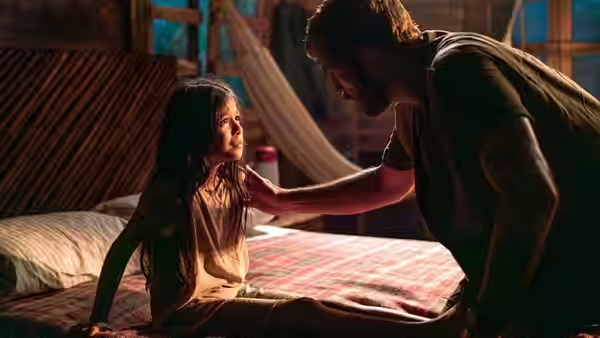
The first twenty minutes are the best in it. In Tegucigalpa a father, Roberto (José Zúñiga), takes his daughter and small son to a photo shoot run by a smiling woman called Giselle (Yessica Borroto Perryman), who poses the children against a white sheet and tells the parents to collect them at seven. He comes back to a locked door and a room with nothing in it. Monteverde plays this quietly, with nobody raising a voice, and we were frightened in the plain way a parent is frightened, by an empty chair. It is the one passage in which the film trusts us to feel something without help.
Then Caviezel arrives, and the whispering begins. He plays Ballard with wet eyes and a bowed head, every line delivered as though it were the last thing a dying man would want said. The performance has one setting. When he tells a superior that “God’s children are not for sale”, the line is meant as a creed and lands as a slogan, and the script hands him a dozen more like it. Kurt Fuller, as his boss John Bryant, has the thankless job of saying no to a saint. Mira Sorvino, as Katherine Ballard, is given a kitchen, a telephone and permission to look worried.
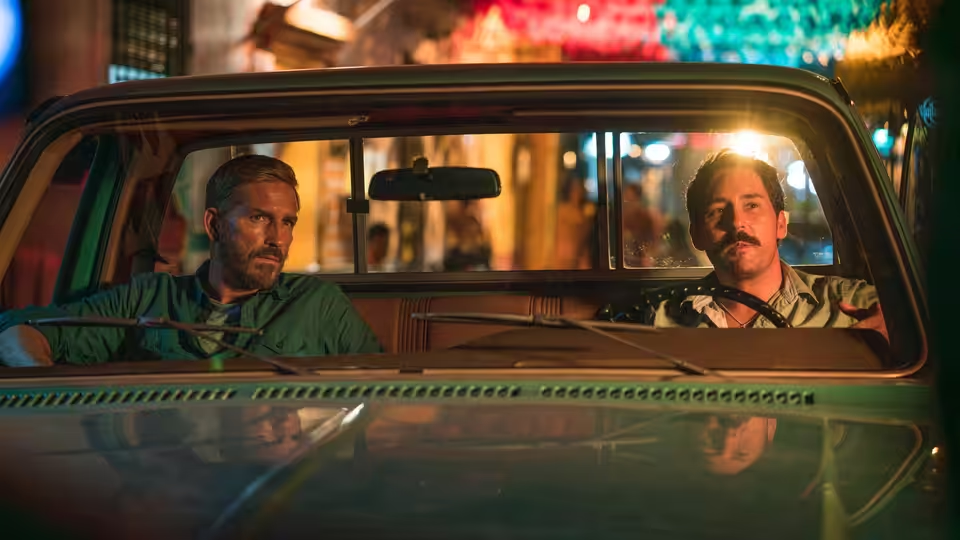
Bill Camp saves the middle hour. His Vampiro is a former cartel accountant who now buys children out of the trade, and Camp plays him loose and profane, a man who talks too much because he has seen too much. He gets one long speech about the night he understood what he had been paying for, delivers it flat and looking away, and it is the only speech in the film we believed. Gorka Gómez Andreu shoots his Cartagena in hot yellow light, colonial balconies and harbour glare, and for a stretch the film is a proper undercover thriller, with Eduardo Verástegui’s Pablo playing the rich man and Camp doing the talking.
What the film will not show is the abuse, and that restraint is right. What it puts in the gap is reaction shots. Brian Scofield’s editing returns again and again to Caviezel’s face as he takes in a photograph or a doorway, and Javier Navarrete’s score arrives each time with strings and a choir to tell us what the face means. Carlos Lagunas’s production design and Juliana Poveda’s costumes do quiet, accurate work, and the film around them keeps stopping to underline.
The last act goes up river into rebel-held jungle, and we will not describe it, except to say that the pursuit is staged in a flat, tidy way that a thriller about this subject cannot afford. The danger is announced rather than felt. Gerardo Taracena’s El Alacrán is a real presence for a scene or two and is then used as a door for Ballard to walk through. By this point we were no longer frightened, only impatient, and impatient is the wrong thing to feel in a film about a stolen child.
The film ends with a direct appeal we will not describe. We understand why it is there. We also felt handled by it, and we had felt handled for most of the two hours before it. Whether the events happened as shown is a matter for reporters rather than for us. We can only say that the film assumes its good intentions will do the work, and they do not.
Monteverde’s Bella was a small, gentle film about people watching one another. This one is larger and never lets anyone watch for long before telling them what to think. See it for the opening in Honduras and for Camp, who deserves a better film and behaves as if he were in one. Most critics split down the middle on it, and we come down just below the line.