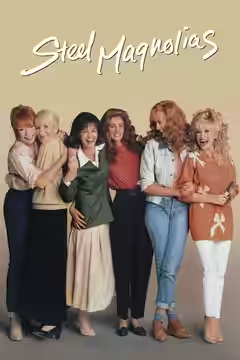
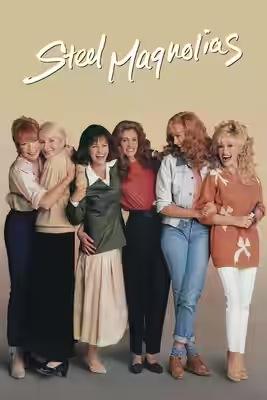
The company is better than the drama in Steel Magnolias. Its six leading actresses give the humour bite, but the sentimentality and awkward changes of mood make this a qualified pleasure.
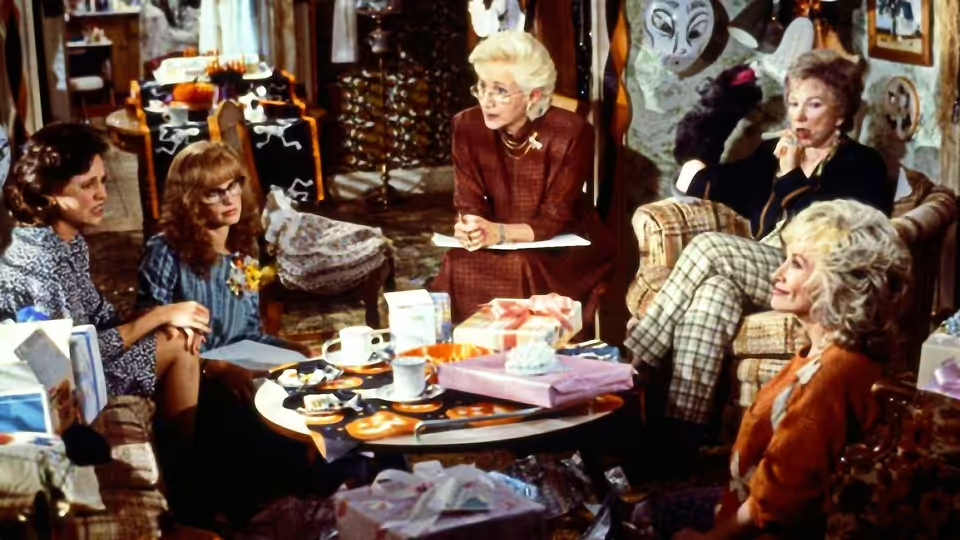
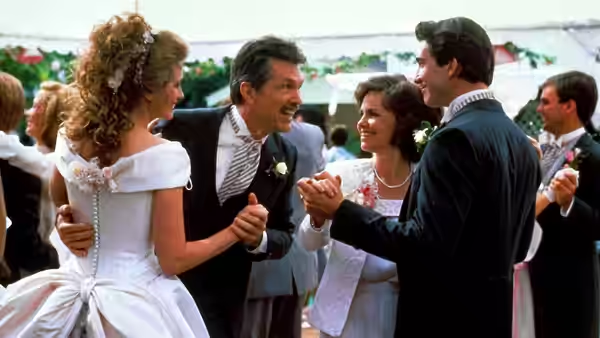
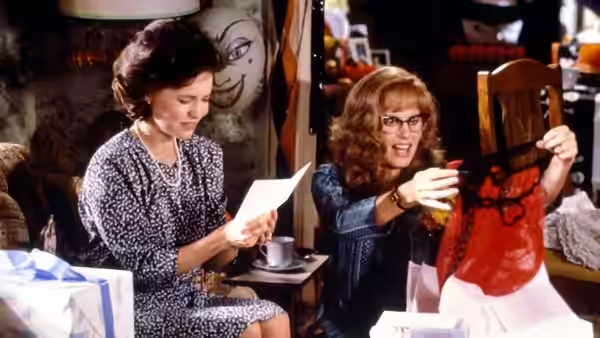
Herbert Ross’s Steel Magnolias is a decent ensemble comedy-drama whose actresses make a stronger case for an evening’s attention than its determined sentimentality does. Robert Harling’s screenplay gives its six friends humour and warmth, then presses rather hard for tears. At 117 minutes, it offers plenty of time to enjoy the company and notice the unevenness. The cast keeps it watchable through changes of mood that do not always feel earned.
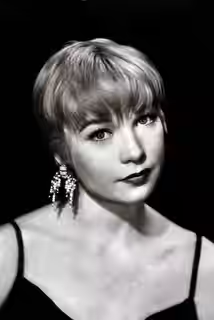
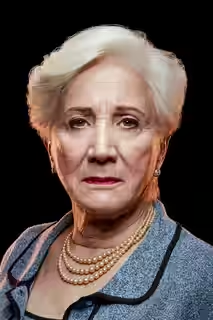
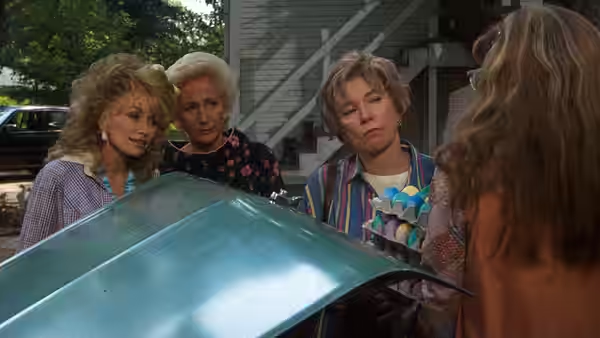
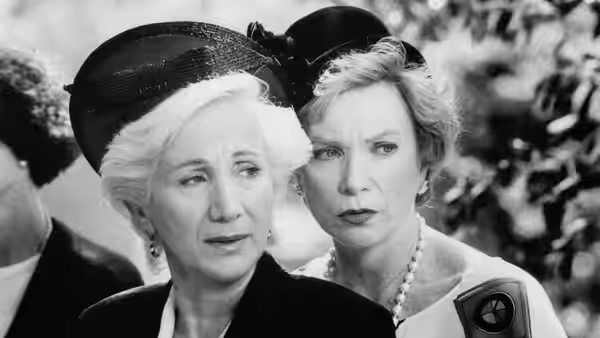
We laughed at Clairee Belcher and Ouiser Boudreaux’s exchanges, because Olympia Dukakis and Shirley MacLaine make their affection sound impatient. Olympia Dukakis is particularly good at letting a remark seem casual rather than prepared for applause. Shirley MacLaine works harder for her laughs, occasionally too hard, though the sharpness gives the friendship a welcome rough edge. Their scenes allow these women to be difficult company without asking us to stop liking them.
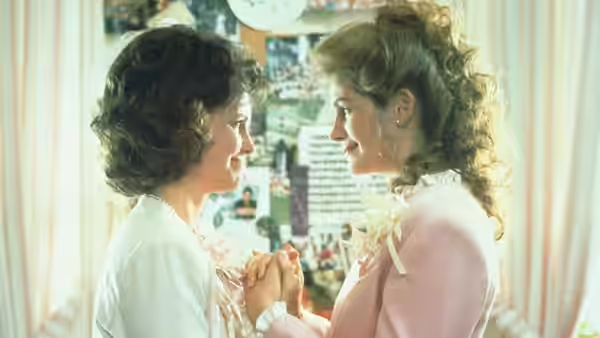
Sally Field, as M’Lynn Eatenton, supplies an emotional steadiness that the film itself sometimes lacks. Her restraint is useful here: when the material grows emphatic, she does not always join in. Dolly Parton brings a gentler ease to Truvy Jones, and her sweetness seldom feels like an instruction to find the character lovable. Together, they help make the friendship credible even when the writing seems too determined to make it touching.
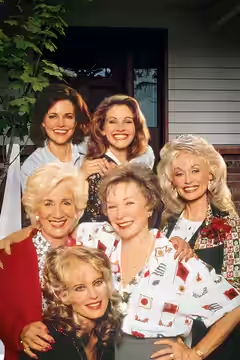
Julia Roberts is less persuasive as Shelby Eatenton Latcherie, although the writing gives her little help. The emotion can feel prescribed, leaving too little room for a response that is awkward or surprising. Daryl Hannah’s Annelle Dupuy belongs to an ensemble whose collective warmth is more convincing than every individual performance. That rapport keeps the drama going, but it cannot make every appeal for sympathy effective.
John A. Alonzo’s cinematography is agreeable, though it leaves us with little sense of the images doing much beyond accommodating the performances. The production design by Edward Pisoni and Gene Callahan makes a similarly modest impression. An ensemble drama need not draw attention to its surroundings, and visual restraint can be welcome. Here we wanted the setting to contribute more to our understanding of the women, rather than simply leave the actresses to supply it.
The awkwardness becomes harder to overlook in the pacing, where Paul Hirsch’s editing does not quite persuade us that laughter and distress belong so close together. Georges Delerue’s music is too sweet for material that already needs little encouragement in that direction. Within the ensemble comedy-drama, the test is whether we recognise the same people in the funny passages and the painful ones. Too often, the film’s wish to move us becomes more noticeable than the characters.
There is still something appealing about a friendship that permits irritation, and the sharper performances prevent the women from becoming merely admirable. They are the reason to consider a film whose handling of emotion can otherwise feel rather bossy. Choose it for the cast, provided a few firmly indicated opportunities to reach for a tissue will not spoil the evening.