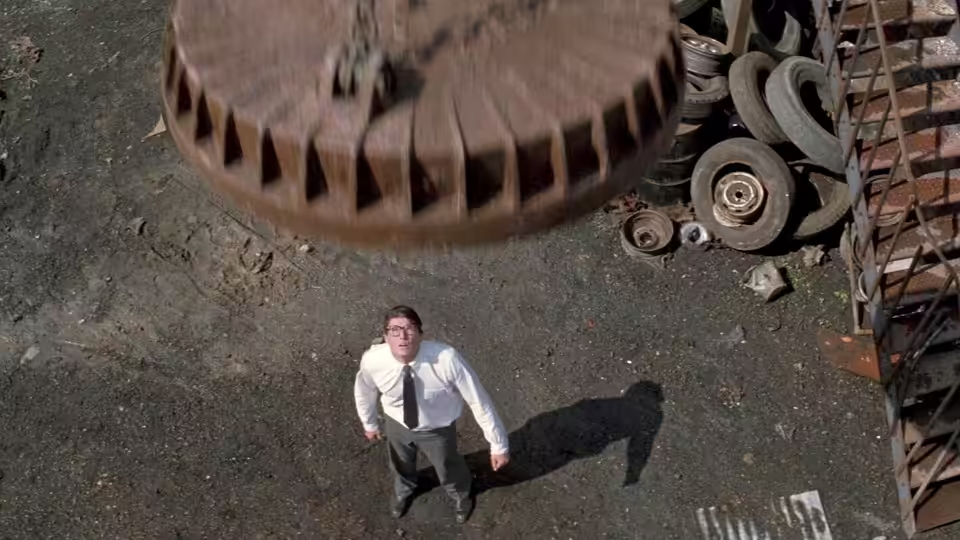
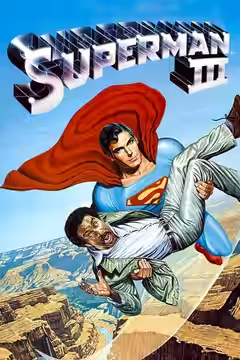
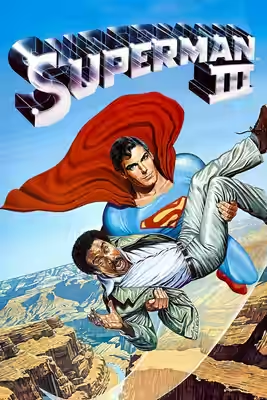
Christopher Reeve and Annette O’Toole bring warmth to Superman III, but Richard Lester’s broad comedy keeps getting in their way. There are pleasures here, though not enough to make the muddle worth recommending.
Richard Lester treats Superman III as a comedy with a superhero available when required. That is a reasonable way to vary the formula, and the film is promising when it lets ordinary awkwardness interrupt Superman’s importance. Too often, though, it settles for broad comic business that is neither sharp enough nor funny enough to justify the interruption. Christopher Reeve gives it more care than the uneven screenplay deserves, but we cannot recommend the whole film on the strength of his performance.
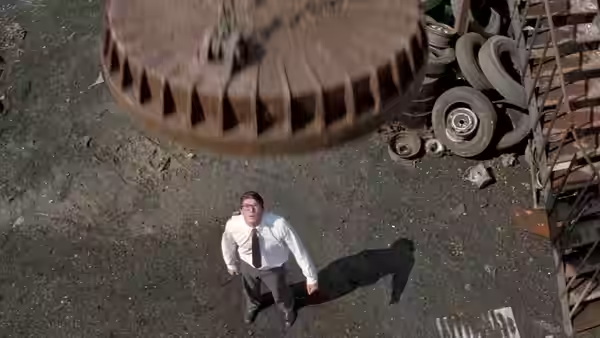
The opening slapstick suggests this approach might work. Richard Lester arranges comic mishaps with a confidence the rest of the film does not consistently share, and John Victor Smith’s editing makes their timing count. We can see why comedy seemed worth pursuing: there is pleasure in watching a superhero film busy itself with ordinary things going wrong. Unfortunately, the opening also sets a standard for the jokes that follow, and too many fall short.
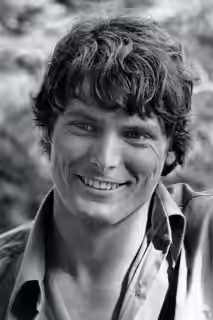
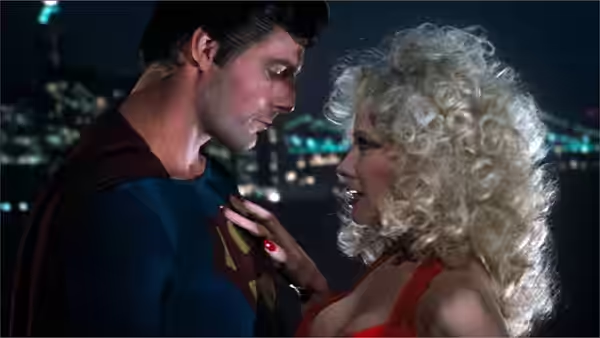
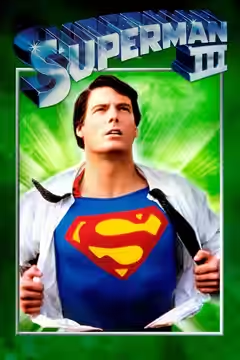
Smallville gives the film something more dependable. Christopher Reeve makes Clark’s awkwardness appealing without treating him as an idiot, while Annette O’Toole makes Lana good company without having to insist upon her charm. We were touched by Clark and Lana’s scenes together, because his hesitancy and her warmth make their affection seem worth taking seriously. Robert Paynter’s cinematography gives their exchanges an unshowy directness that suits the performances, allowing this quieter part of the film to hold our attention without straining for another joke.
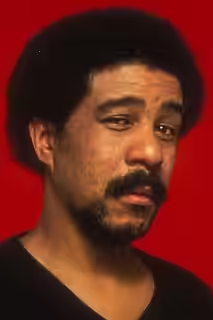
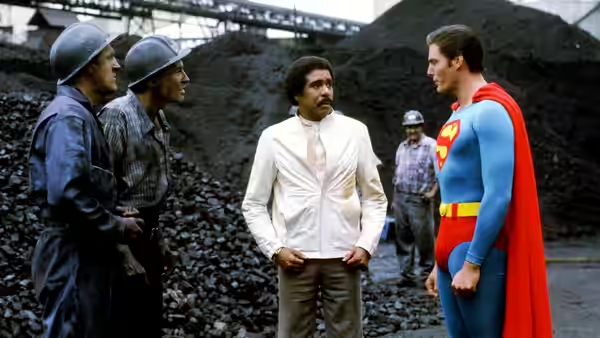
Richard Pryor is less fortunate. August ‘Gus’ Gorman receives so much comic attention that the performance needs a freedom the screenplay by Leslie Newman and David Newman does not provide. The jokes feel prescribed, and the effort to keep them coming becomes tiring before the film stops making it. There is nothing wrong with allowing someone other than Superman to be funny, but this material repeatedly makes a gifted comic seem like an awkward guest.
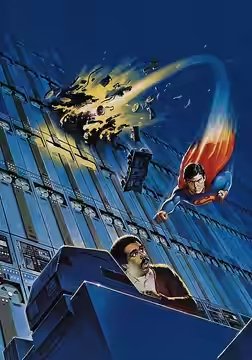
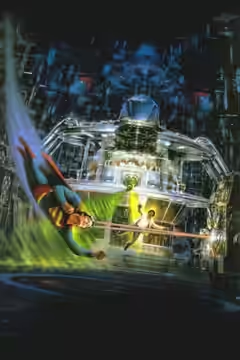
The computer threat has a similar problem: it supplies something for Superman to confront without giving us much reason to worry. Peter Murton’s production design gives the machinery enough presence, but the scenes around it struggle to hold our interest. Ken Thorne’s music is more persuasive when supporting the adventure than when accommodating the comic detours. Their work helps keep the film watchable, although it cannot repair the uncertain balance between danger and fooling about.
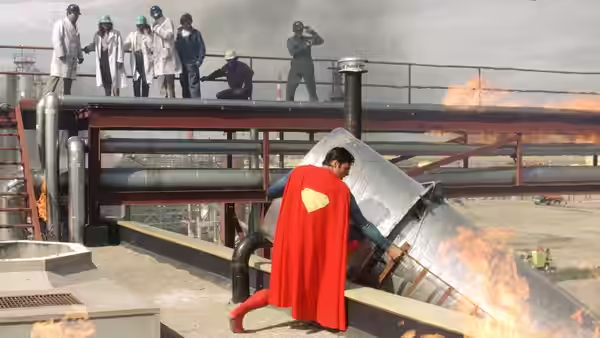
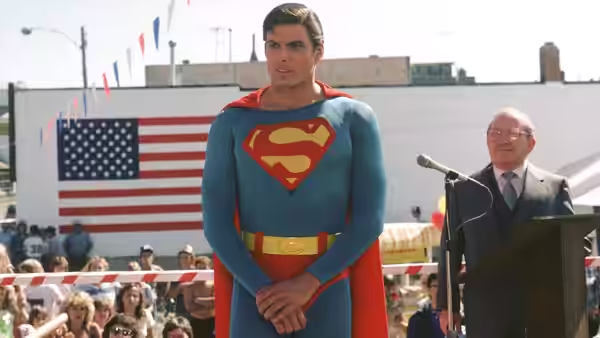
There is good action here, and Christopher Reeve retains the conviction needed to make the heroic business work. A superhero comedy should be able to take its central character seriously while finding his circumstances funny. This one too often interrupts our interest in Superman to pursue a gag of doubtful value. The problem is repetition rather than any objection to a lighter tone.
At 125 minutes, there is too much waiting for the next stretch that works. The Smallville scenes show how much can be gained by giving Clark someone we enjoy watching him talk to, which makes the diversions especially wearing. Return for Christopher Reeve if affection for his Superman is already firmly established; otherwise, there are better uses of an evening.