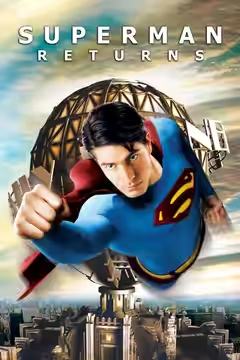
Bryan Singer’s Superman is handsome, respectful and solemn to a fault. Brandon Routh is a fine, gentle Man of Steel and the plane rescue is as good as the genre gets, but the film around him is 154 minutes of mourning for 1978.
Bryan Singer has made a sequel to a film from 1978 and skipped everything in between. The fanfare is John Williams’s, the credits swoop through space in the same blue lettering, and Marlon Brando’s Jor-El speaks from footage shot for Richard Donner nearly thirty years earlier. Superman Returns is a tribute act, done with love and a great deal of money. Whether anybody asked for one is a question the film never raises.
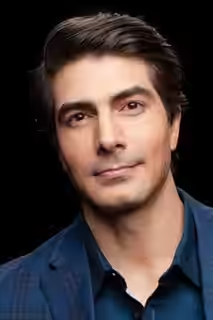
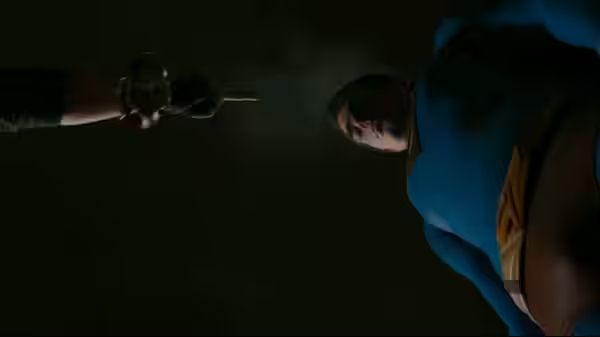
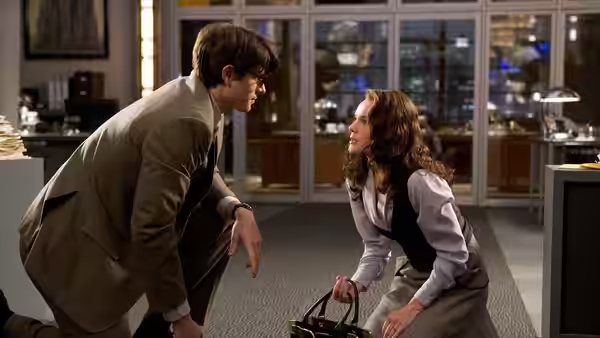
Brandon Routh is the reason to see it. He has Christopher Reeve’s jaw and much of his gentleness, and he plays Clark as a man plainly glad to be back in a newsroom with a tie on, dropping things and apologising. As Superman he does something harder: he is quiet. He hangs above the city with his eyes shut, listening, and lets us see a man who has come home to find nobody saved his seat. It is a careful, modest performance and the film leans on it for everything.
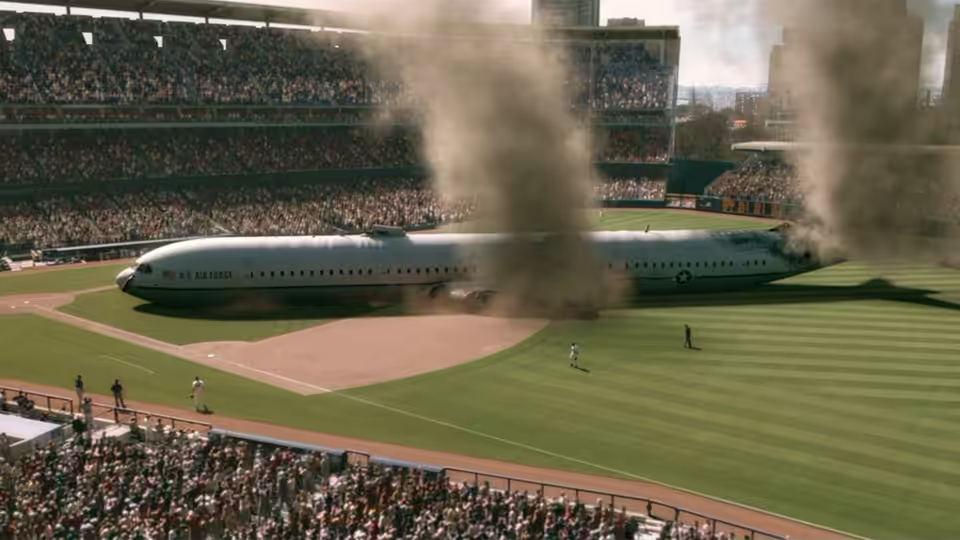
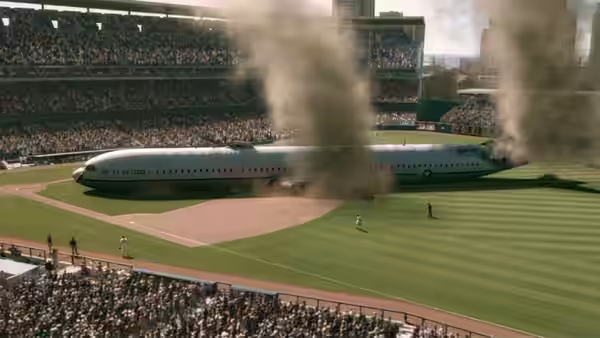
The set piece everyone remembers comes early and deserves to. A shuttle launch strapped to an airliner goes wrong, and Superman has to catch the plane, lose its wings and set the fuselage down in a baseball stadium in front of a crowd that has no idea what it is looking at. Newton Thomas Sigel shoots the fall from inside the cabin, where Lois is thrown against the ceiling, and from outside, where a small blue figure strains against something far bigger than himself. We were gripped, and when Routh walked down the aisle afterwards to assure the passengers that flying is still the safest way to travel, we laughed out loud with relief. Nothing in the next hour and three-quarters comes close.
Guy Hendrix Dyas builds a Metropolis out of the 1940s, Art Deco cornices and a brass globe on the Daily Planet, with flat-screen televisions bolted on as if nobody had told the architects. The Fortress of Solitude is white crystal from floor to roof; Luthor’s yacht is dark wood and leather. Louise Mingenbach darkens the suit to maroon and navy and shrinks the shield, which looks sober and oddly small. Sigel lights everything in warm gold or cool blue and keeps the camera drifting, and John Ottman, who writes the score and cuts the film with Elliot Graham, favours long slow passes over the city with strings beneath them. The film is never ugly. At 154 minutes it is also never in a hurry.
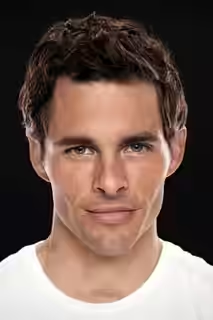
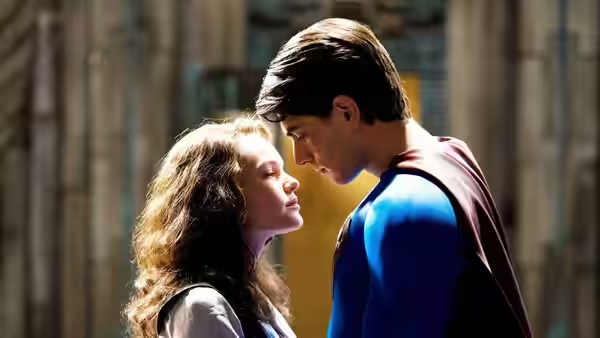
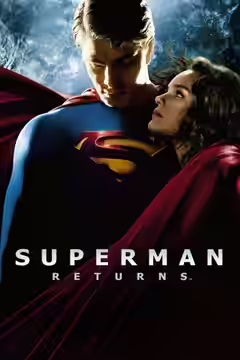
The trouble is the story Singer, Dan Harris and Michael Dougherty have chosen, a love triangle in which nobody speaks. Lois has moved on: a fiancé, Richard White (James Marsden), who is decent and flies a seaplane, and a son, Jason (Tristan Lake Leabu), who has asthma. Superman’s response is to float outside their house at night and listen through the walls. The film shoots this as yearning. We watched it with growing unease, because the man we were being asked to pity was, in plain terms, spying on a family, and nobody on screen or behind the camera seemed to notice. Kate Bosworth plays Lois as brittle and wounded, which is the right note, but she and Routh have little warmth between them, and the best reporter in Metropolis spends most of the film being carried.
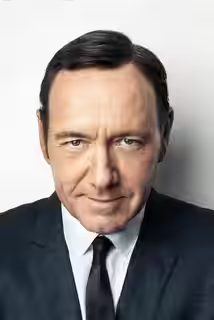
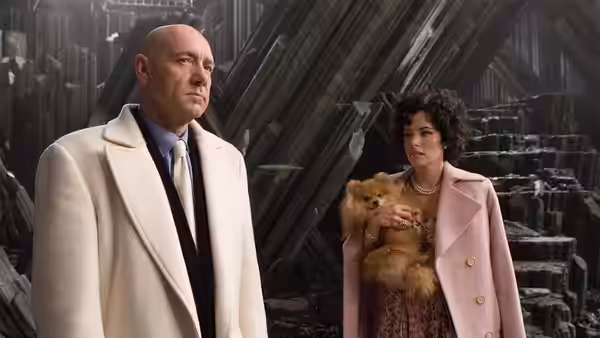
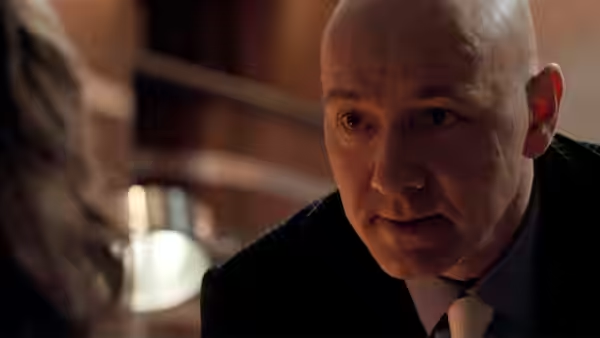
Kevin Spacey enjoys himself as Luthor, and his plan is the usual one, land and lots of it, explained to Parker Posey’s Kitty Kowalski with the patience of a man going through a tax return. Posey is the film’s only comic performer and gets the few lines that land. Kal Penn stands at the back as a henchman called Stanford and says almost nothing. Frank Langella’s Perry White asks the right question, whether Superman still matters, and the script never gets round to answering him.
Donner’s film was funny. Reeve tripped over things and the romance was played as screwball with a cape. Singer has kept the look and dropped the lightness, and what remains is a Superman film in which the hero is sad for two and a half hours and we are asked to be sad with him. Most critics have been kinder than we are, and we understand why: it is sincere, and sincerity about this character is rare. See it for Routh, for the plane, and for the sight of a studio spending a fortune to say it is sorry about the eighties. Then put the 1978 film on and remember what a smile looks like.