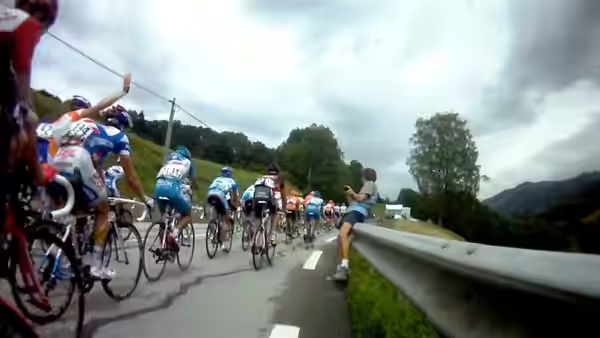
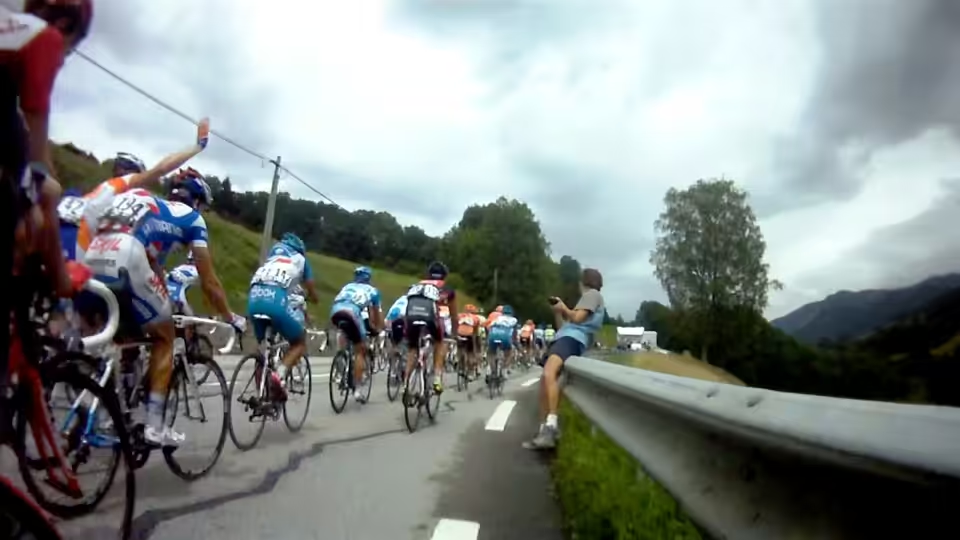
A peloton of cyclists races along a mountain road past a spectator
Film review

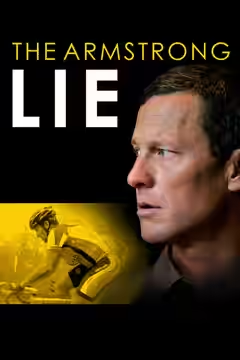
The Armstrong Lie

2013 · Directed by Alex Gibney · 2h 04m

In a sentenceLance Armstrong can make a denial sound like a complaint about the question

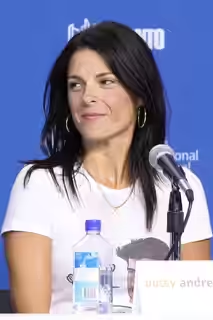
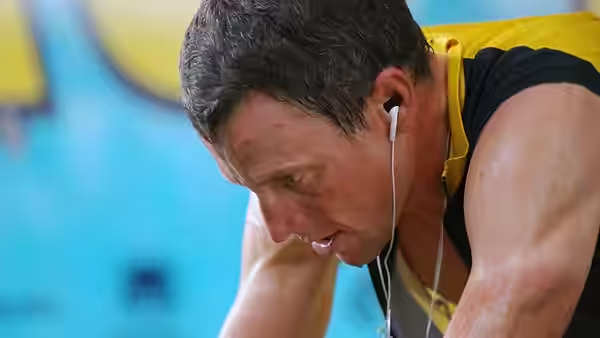
In footage of his 2009 cycling comeback, Lance Armstrong is the subject of a documentary intended to celebrate his return. Director and narrator Alex Gibney revisits that material while examining the doping and deception surrounding its central figure. The cyclist wants his version of events accepted; the film sets his denials beside accounts of the hostility faced by those who challenge him. Betsy Andreu and Frankie Andreu appear as themselves as race footage and interviews widen the story beyond the cyclist. The camera has access to him, but its closeness also raises questions about the story it was helping him tell.

Plays from YouTube when you press play; nothing loads from them until then.

Fi1m review

Alex Gibney’s documentary makes gripping use of his access to Lance Armstrong, especially when self-assured denials meet accounts of intimidation. Repetition blunts the questioning, but the cycling footage and uncomfortable scrutiny of the filmmaker’s own involvement make it worth watching.

The Armstrong Lie is a good documentary with an awkward advantage: its director was already close to the story he needed to reconsider. Alex Gibney had filmed Lance Armstrong’s 2009 comeback for what began as a celebration. That earlier purpose matters, because the footage lets us see the attraction of a sporting story built around one commanding personality. We recommend it for that access and for its account of how deception is defended. The questioning does become repetitive.

Maryse Alberti’s cinematography gives the cycling footage an immediacy that explains some of the filmmaker’s enthusiasm. Those passages are exciting to watch, even within a film asking us to reconsider our admiration for its subject. The physical achievement remains visible, which is important: simply making him look ridiculous would spare us the harder business of understanding why people wanted to believe him. The race footage also gives the film a welcome break from interviews about what was said and what was concealed.

The archive interview with Oprah Winfrey is particularly uncomfortable: Lance Armstrong remains a commanding presence even while his account is being examined. In the earlier footage of his denials, he looks like someone who expects his confidence to settle the matter. We were angry at the accounts of intimidation directed towards people who challenged him. Set beside that composure, their experiences make the deception feel nastier than a breach of sporting rules. Alex Gibney is persuasive when he keeps attention on the damage done to other people.

Andy Grieve, Tim Squyres and Lindy Jankura have the difficult editing job of bringing earlier footage into an investigation that changes how we understand it. Their combination of interviews and cycling holds the attention, and the explanations of doping give the accusations useful substance. The account of the sport around him also prevents this from becoming a simple exercise in blaming one man for everything. Yet repeated evasions start to yield little further insight. At 124 minutes, the film gives us more opportunities to recognise his behaviour than we need.

Alex Gibney’s presence as narrator is necessary, because his own involvement needs examining. A filmmaker granted this sort of access has something to explain when the flattering account he began turns into an inquiry into dishonesty. We welcome his acknowledgement that he helped promote the comeback story, though the narration sometimes tells us what to make of material that has already made its point. There is room for more searching self-questioning here, particularly about the pleasures of getting close to a persuasive subject.

David Kahne’s music leaves little impression beside the interviews and the racing. It supplies accompaniment without making the difficult passages more affecting, and we would not miss much of it. More useful is the film’s willingness to put doping within the culture of professional cycling. A sporting documentary can settle for exposing a cheat; this one spends enough time on the surrounding pressures to make that explanation look inadequate.

None of this quite gets us inside Lance Armstrong’s thinking, and the film occasionally mistakes another encounter with him for another discovery. Still, access to someone so practised at defending himself has value when the footage gives us grounds to question what he says. The accounts of hostility towards his critics provide the strongest reason to stay with it. Watch it for those accounts and the race footage, with patience for questions that keep producing much the same response.
Critical consensus AI synthesised

73
Positive
15
Mixed
5
Negative
1

Most critics find The Armstrong Lie compelling and informative, with praise centred on Gibney’s access to Armstrong, the cycling footage and the examination of deception within professional sport. The interviews and race material make the story engrossing even for reviewers who find few fresh revelations. Several reviews value the attention to intimidation and institutional corruption, placing Armstrong’s conduct in a wider cycling culture rather than treating him as an isolated cheat.

Reservations concern repetition, occasionally confusing chronology and how far the film explains Armstrong’s motives. Critics also differ over Gibney’s personal involvement: The AV Club praises his acknowledgement of helping promote the comeback myth, while Slant Magazine finds his self-scrutiny incomplete and his narration heavy-handed. The spread is broadly favourable but includes a sharp dissent from The Wrap, which finds the documentary too detached to probe Armstrong’s deception or confront his lack of remorse.

Variety
2 September 2013 · festival review · Justin Chang
85*

Chang finds the documentary authoritative, fascinating, and penetrating in its examination of Armstrong and the culture around him. He particularly praises Gibney’s scientific research and the film’s vivid, well-edited cycling footage.

Read the full review →
IndieWire
8 November 2013 · B+ · Eric Kohn
83

Kohn finds the documentary compelling and nuanced, though not fully revelatory. He praises Gibney’s careful analysis of Armstrong’s rise and fall and the psychology behind his fabrications.

Read the full review →
Little White Lies
30 January 2014 · 4/4/3 · Emma Simmonds
80

Simmonds finds the film compelling and worthwhile, though it does not fully illuminate Armstrong. She praises the force of the Oprah interview footage and the film’s scrutiny of his deception.

Read the full review →
Los Angeles Times
7 November 2013 · Kenneth Turan
80*

Turan finds the documentary engrossing and more revealing than expected, bringing it close to explaining Armstrong’s complicated story. He praises its integration of earlier footage and interviews that place Armstrong’s doping and deception in cycling’s broader culture.

Read the full review →
Radio Times
★★★★ · Jeremy Aspinall
80

Aspinall calls the documentary a breathtaking portrait of Lance Armstrong. He particularly praises Gibney’s unprecedented access to the famously abrasive cyclist.

Read the full review →
Time Out
28 January 2014 · ★★★★ · Cath Clarke
80

The review presents the documentary as revealing why Armstrong’s enemies despise him. It singles out its account of the hostility surrounding his doping and deception.

Read the full review →

Straight answers AI written, from our review

Is The Armstrong Lie worth watching?
The Armstrong Lie is worth watching for its revealing access to Lance Armstrong and its account of how deception is defended; we score it 75 out of 100. We recommend it to viewers interested in sporting dishonesty and the filmmaker’s own involvement, though repeated evasions make its 124 minutes feel longer than necessary.
How long is The Armstrong Lie, and what is it rated?
The Armstrong Lie runs 2h 04m. It is a documentary film.
Where can I watch The Armstrong Lie in Saudi Arabia?
The Armstrong Lie is not on any streaming or rental service in Saudi Arabia at the moment. It is available in 48 other countries; change your country at the top of the page to see where. Availability is checked daily.
How violent or frightening is The Armstrong Lie, and is it suitable for children?
The Armstrong Lie carries a UK 15 certificate, making it unsuitable for children under 15, and its accounts of intimidation are disturbing. We find the hostility towards people who challenge Armstrong more troubling than the sporting deception itself; that makes it better suited to older teenagers and adults comfortable with an uncomfortable factual investigation.
How does The Armstrong Lie compare to Senna?
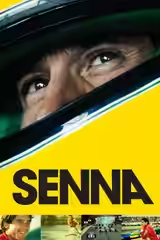
The Armstrong Lie is more searching about its subject than Senna, though we find Senna more gripping as a racing documentary. Both use race footage to explain their subjects’ appeal, but Gibney examines deception and his own involvement, while Kapadia’s devotion limits the scrutiny; choose The Armstrong Lie for questioning, with patience for repetition.
What should I watch after The Armstrong Lie?
After The Armstrong Lie, try Senna (2010, Fi1m 84): Another sporting documentary whose racing footage makes the attraction of its subject clear. Then Collective (2019, Fi1m 88): Reporters follow a scandal beyond individual wrongdoing into the institutions protecting it; and Touching the Void (2003, Fi1m 87): For the physical danger and disputed decisions beneath a sporting survival story.

Cast

If you liked this, try…

  1. Senna (2010, Fi1m 84)Another sporting documentary whose racing footage makes the attraction of its subject clear.

  2. F for Fake (1973) · not on Fi1m yetA playful examination of fraud that keeps the storyteller’s reliability in question.

  3. Collective (2019, Fi1m 88)Reporters follow a scandal beyond individual wrongdoing into the institutions protecting it.

  4. The King of Kong: A Fistful of Quarters (2007) · not on Fi1m yetCompetitive obsession and disputed achievement, with smaller prizes and comparably stubborn egos.

  5. Touching the Void (2003, Fi1m 87)For the physical danger and disputed decisions beneath a sporting survival story.