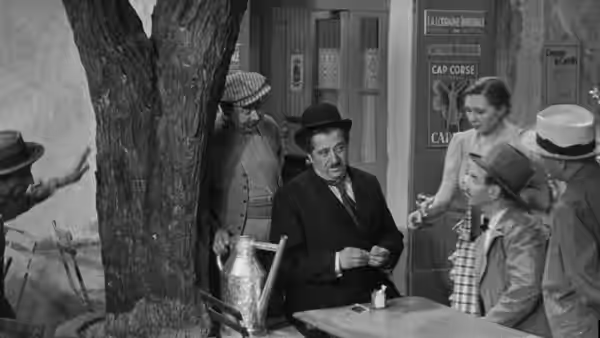
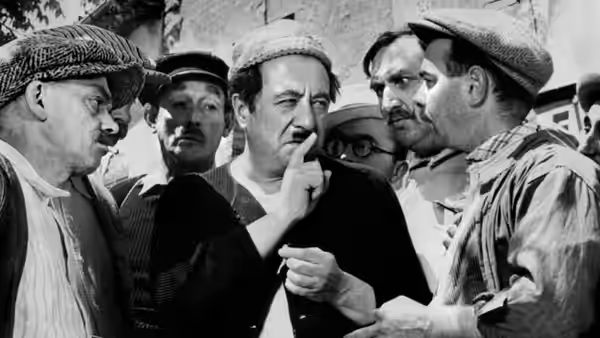
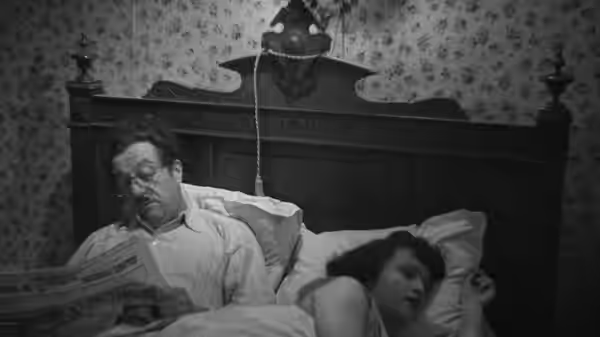
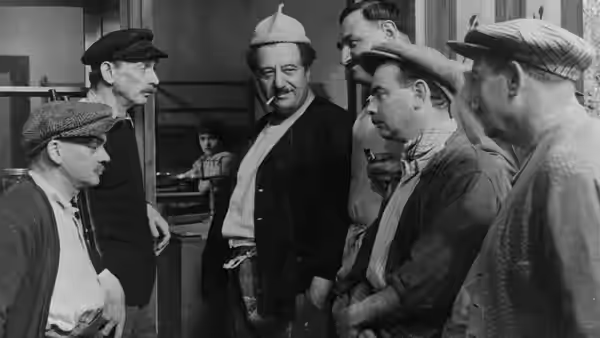
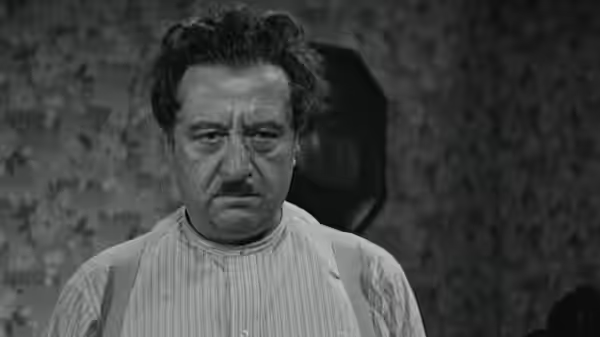
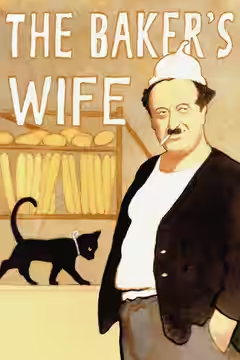
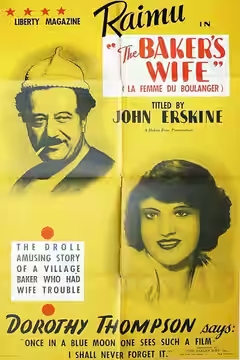
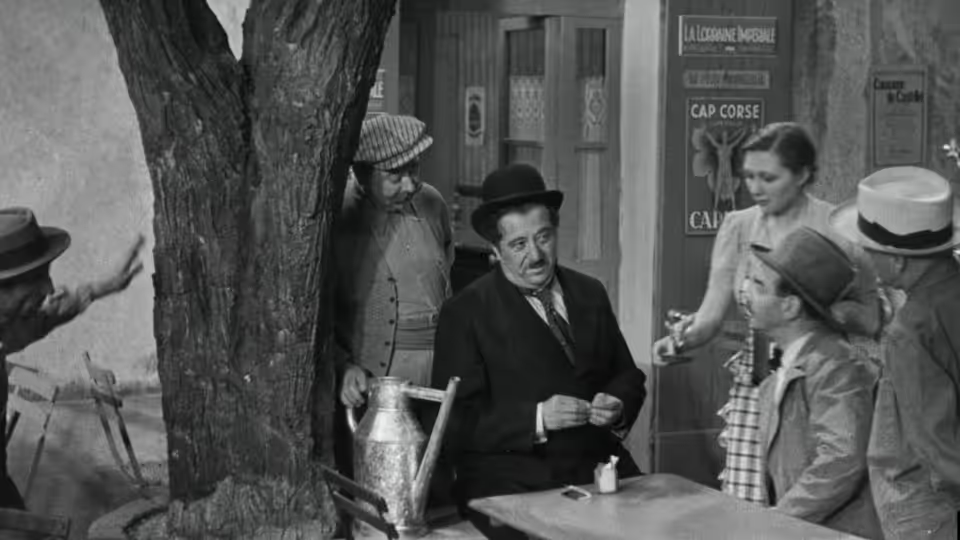
Aimable Castanier (Raimu) sits at a table in the bakery as villagers gather around him
Film review

The Baker's Wife

1938 · Directed by Marcel Pagnol · 2h 13m

In a sentenceWe came for Raimu and occasionally wished the rest of the village had somewhere else to be

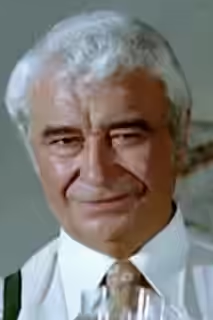
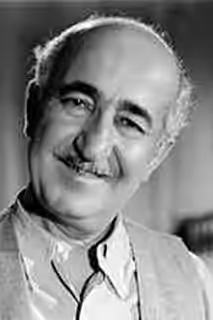
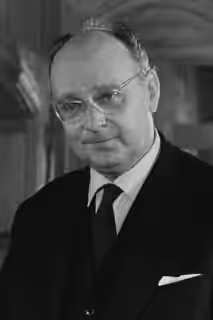
Baker Aimable Castanier (Raimu) is heartbroken, and his unhappiness plays out within a rural community. Around him are Aurélie Castanier (Ginette Leclerc), shepherd Dominique, le berger (Charles Moulin), the Marquis Castan de Venelles (Fernand Charpin), the priest (Robert Vattier) and the teacher (Robert Bassac). The baker’s distress becomes part of a village life that continues around him, with neighbours whose interests extend beyond his troubles. His private unhappiness sits among the competing concerns of this small society, where the baker and the people around him each have their own part to play.

Plays from YouTube when you press play; nothing loads from them until then.

Fi1m review

Marcel Pagnol’s rural comedy earns its warmth through Raimu’s funny, wounded baker. The filmmaking is conservative, and some of the village humour wears thin, but the central performance makes the unhappiness matter.

The Baker’s Wife is a warm, funny comedy carried by an actor who makes its occasional thinness worth tolerating. Marcel Pagnol takes a heartbroken baker seriously while allowing him to be absurd, and the combination gives the film much of its appeal. There is no need to pretend that everything around Raimu is equally distinguished. We recommend it for the care with which he makes Aimable Castanier’s distress matter, even when the film invites us to laugh.

Raimu gives the comedy an awkward human consequence: we can enjoy Aimable’s foolishness and then feel uncomfortable about having enjoyed it. We were moved by the baker’s heartbreak, because the performance makes his pain felt without dropping the comic absurdity that first catches our attention. The sadness belongs to the same man. He does not have to become sensible or dignified before we can care about him, and Raimu never makes sympathy feel like an obligation imposed on the audience.

Marcel Pagnol’s screenplay treats the rural community as a collection of people worth attending to individually. The priest, played by Robert Vattier, and the teacher, played by Robert Bassac, belong to the same social picture as the baker and Aurélie Castanier, played by Ginette Leclerc. The writing’s affection does not require everybody to be admirable, which helps keep the warmth tolerable. Even so, some of the village comedy interests us less than the baker’s predicament, and the difference is noticeable.

Georges Benoît’s cinematography belongs to the film’s conservative side, and Marcel Pagnol’s direction gives us little reason to overlook that limitation. We do not need elaborate camera movements in a comedy, but we do want images that contribute something beyond accommodating good acting. Here the visual approach seldom commands our attention on its own. That leaves the performers carrying a considerable share of the responsibility for keeping us interested, a task Raimu handles more persuasively than the film as a whole.

Our response to Suzanne de Troye’s editing and Vincent Scotto’s music is similarly restrained: neither is a principal reason to seek this out. The film runs 133 minutes, a substantial commitment when its strongest attraction is so concentrated in one performance. Its warmth helps, but cannot make every stretch equally engaging. When our interest slackens, the modest filmmaking offers little compensation, and we become conscious of how much we are waiting for the baker to claim our attention again.

Still, Marcel Pagnol avoids making rural life an automatic claim on our affection. The comedy leaves room for hurt, embarrassment and foolishness, rather than asking us to find a whole community delightful simply because it is small. That distinction matters in a genre prone to treating troublesome neighbours as decorative local colour. Raimu supplies enough discomfort to prevent the sympathy from becoming too easy, and enough humour to keep the suffering from overwhelming the evening.

We would choose this for an evening when acting matters more than pace. Its compassion feels persuasive because the baker remains a comic figure even when his unhappiness becomes difficult to laugh at. Allow for the unadventurous filming and the generous running time. Give Raimu the evening, provided the village can come too.
Critical consensus AI synthesised

72
Positive
2
Mixed
2
Negative
0
Radio Times
★★★★ · David Parkinson
80

The review finds the film witty and warm despite its cinematically conservative style. It particularly praises Raimu’s performance as the heartbroken baker.

Read the full review →
Slant Magazine
25 July 2019 · ★★★★ · Derek Smith
80

Smith praises Pagnol’s comedy as a compassionate, sharply observed portrait of rural life with a deft balance of farce and emotional drama. He especially singles out Raimu’s layered performance, which gives the heartbroken baker both comic absurdity and genuine pathos.

Read the full review →
The New York Times
7 April 1989
64*

The URL identifies a review of Marcel Pagnol’s 1938 film, but the article text is unavailable. The critic’s verdict and any specific praise or complaint cannot be determined from the accessible page.

Read the full review →
Time Out
· GB
64*

Time Out identifies this as a review of the specified film, but the review text is unavailable. The accessible material does not disclose the critic’s verdict or what they praise or criticize.

Read the full review →

Straight answers AI written, from our review

Is The Baker's Wife worth watching?
The Baker's Wife is worth watching for Raimu’s funny, wounded performance, and we score it 78 out of 100. We recommend it when acting matters more than pace: the baker’s heartbreak gives the comedy weight, but the conservative filmmaking and uneven village humour make 133 minutes feel generous.
How long is The Baker's Wife, and what is it rated?
The Baker's Wife runs 2h 13m. It is a comedy and drama film.
Where can I watch The Baker's Wife in Croatia?
The Baker's Wife is not on any streaming or rental service in Croatia at the moment. It is available in 1 other country; change your country at the top of the page to see where. Availability is checked daily.
How does The Baker's Wife compare to Local Hero?
The Baker's Wife is our choice for a compelling central performance, while Local Hero offers broader pleasures in its supporting characters and scenery. We find the village humour around Raimu less consistently engaging; Local Hero rewards its gentle pace more widely, though its fondness for eccentricity sometimes softens the questions it raises.
Is The Baker's Wife based on a true story or a book?
The Baker's Wife is based on a novel by Jean Giono, rather than presented as a true story. The baker’s heartbreak and the competing concerns of village life give us a straightforward way into the film without prior reading; our recommendation rests on Raimu’s performance, not on fidelity to the book.

Cast

If you liked this, try…

  1. The Shop Around the Corner (1940) · not on Fi1m yetAnother comedy that lets wounded pride complicate our affection for ordinary people.

  2. Local Hero (1983, Fi1m 86)A small community proves more complicated than its visitor first allows.

  3. Tampopo (1985) · not on Fi1m yetFood brings people together, though good intentions will not improve the noodles.

  4. The Lunchbox (2013) · not on Fi1m yetMeals and private unhappiness connect in a quieter, more tentative romance.

  5. Le Havre (2011) · not on Fi1m yetNeighbourly kindness gets a dry comic treatment, with sentiment kept under supervision.

The Baker’s Wife (1938) review: Raimu carries a warm, plain comedy (Croatia) | Fi1m