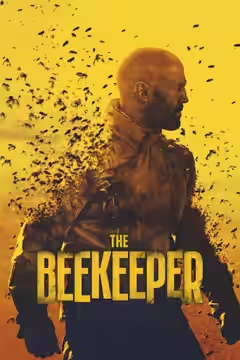
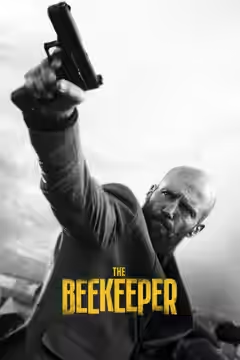
David Ayer’s revenge thriller hands Jason Statham a cap, a jerry can and a grievance, and he is exactly as good as the job requires. The film around him is clean, brutal and dim, and it explains its one metaphor until it wears through.
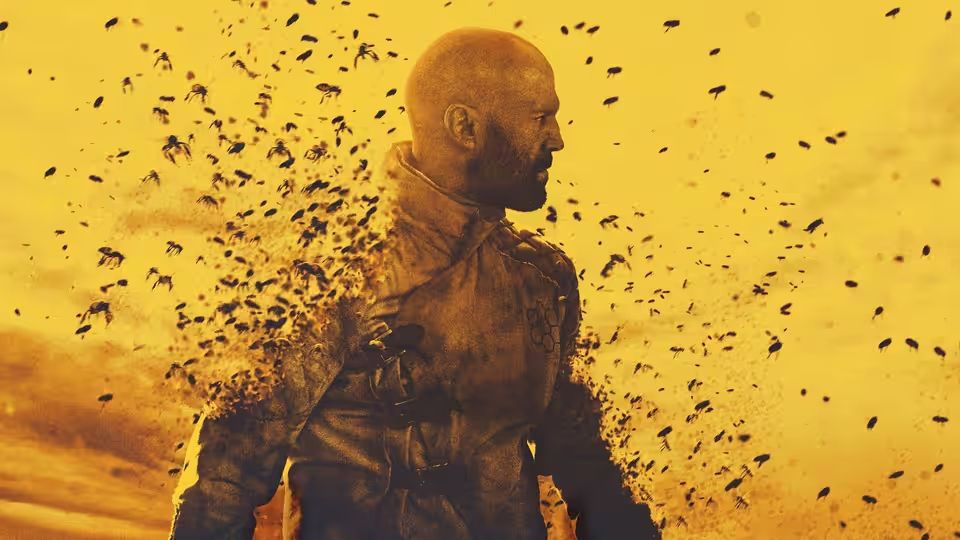
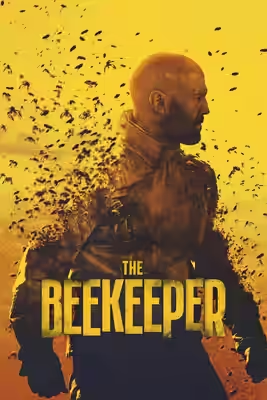
Adam Clay keeps bees. He rents a barn from Eloise Parker, a retired teacher played by Phylicia Rashād. Then a warning pops up on her screen, a pleasant young man at a call centre walks her through emptying her accounts, and by the next morning she is dead and her daughter Verona (Emmy Raver-Lampman), an FBI agent, is standing in the kitchen. Clay, it emerges, was once something other than a beekeeper. The Beekeeper is a B film that knows exactly what it is, made with more care than it needed and less brain than it wanted. If you like Jason Statham it is one of his better recent evenings.
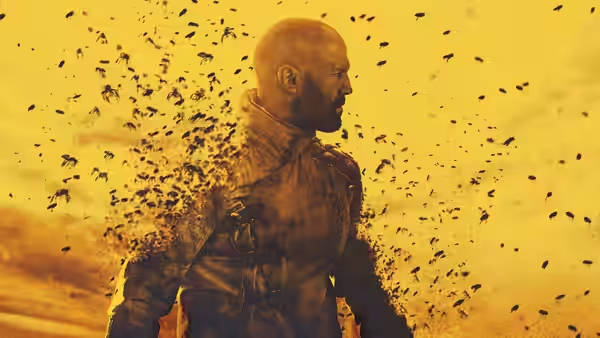
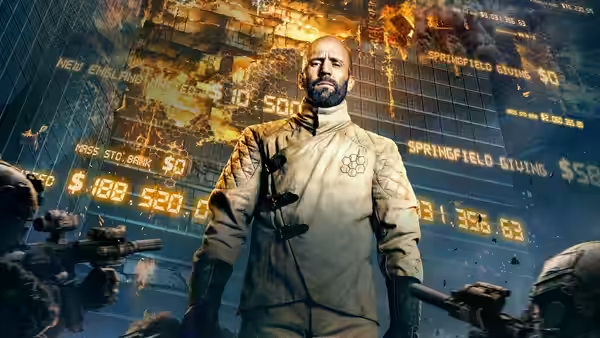
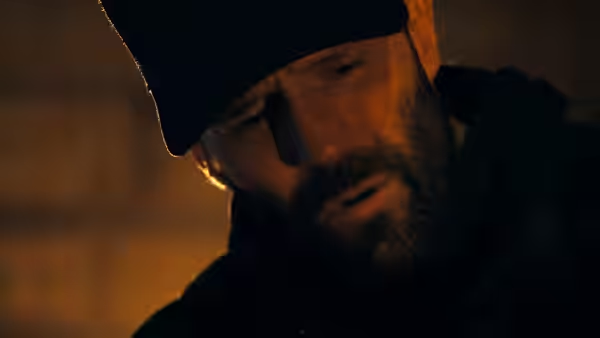
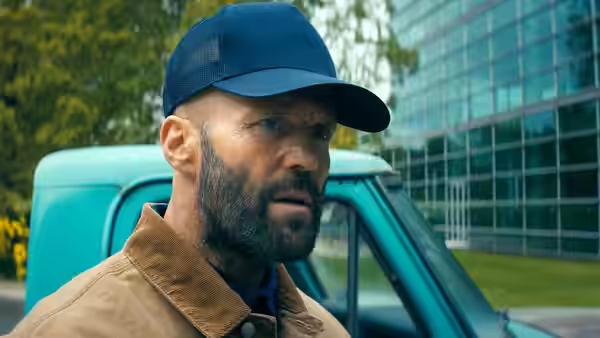
Statham plays Clay in a canvas jacket and a cap and hardly moves his face. He speaks in short sentences about hives, and David Ayer keeps him standing still for long enough that the stillness becomes the joke. When he does move, Geoffrey O’Brien cuts the fights so that we can see who is hitting whom and with what. A reckoning at a petrol station, a raid on a second call centre and a long one-against-many in a big house are all staged with clear geography and a fondness for the sound of bone. It earns its 15 certificate.
The best scene has no fighting in it. Rashād sits at her computer while the voice on the phone keeps her calm and her balance drains, and her face goes from embarrassment to fear to something worse. We were angrier than a Statham film has any right to make us. So when Clay walks into the call centre twenty minutes later carrying two jerry cans, we were pleased, and then a little ashamed of how pleased. Ben Munro’s call centre is an open floor of young people in headsets cheering as the money arrives, Gabriel Beristain lights it pink and purple like a nightclub, and their boss Mickey Garnett (David Witts) works them up like a compère.
The villains are cast with wit. Josh Hutcherson plays Derek Danforth, the rich boy who owns the call centres, as a jittery brat, and Kelli Jones puts him in shirts louder than his lines. Jeremy Irons is Wallace Westwyld, the old intelligence hand paid to keep the boy alive, and he delivers the briefing on what a Beekeeper is with the weary precision of a man who has read the file twice and wishes he had not. Jemma Redgrave is the President. Minnie Driver and Don Gilet, as the FBI’s Director Harward and Deputy Director Prigg, mostly frown at telephones.
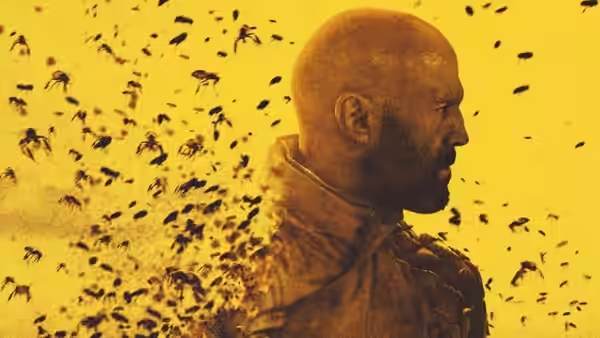
Now the metaphor. Kurt Wimmer’s script has decided that society is a hive, that the Beekeepers are a secret order who protect it outside the law, and that all of this must be explained. Clay explains it. Irons explains it. There are speeches about the queen, the drones and what happens when a hive goes wrong, and the film treats each one as if it were the first. The actual bees get about four minutes near the start and are not seen again. The plot under the speeches is the usual ladder, one thug leading to a bigger thug, and nobody on any rung stops to ask a question a viewer would ask.
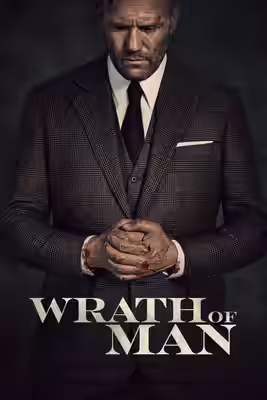
Ayer’s own record shows what is missing. End of Watch (2012) put two men in a patrol car and made their talk the film. Here the talk belongs to Raver-Lampman and Bobby Naderi, as Agent Matt Wiley, trading jokes about hangovers, and it is the flattest writing in the picture. David Sardy and Jared Michael Fry’s score, a low electronic pulse that thickens whenever Statham stands up, carries those scenes better than the dialogue does. Statham’s Wrath of Man (2021) had the same stone face and rather more going on behind it.
It runs 106 minutes and arrived in cinemas on 12 January 2024, which is when films like this arrive to be enjoyed and forgotten. Watch it with someone who wants a fight and forgives a script. Do not watch it with a beekeeper.