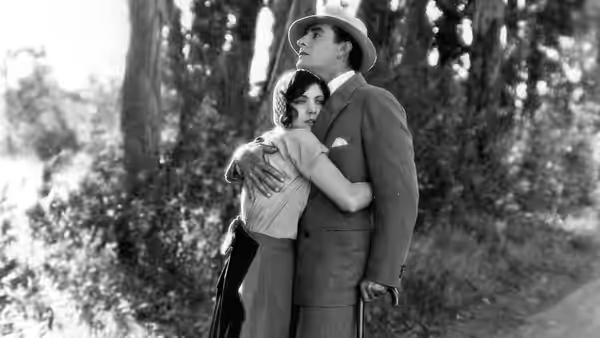
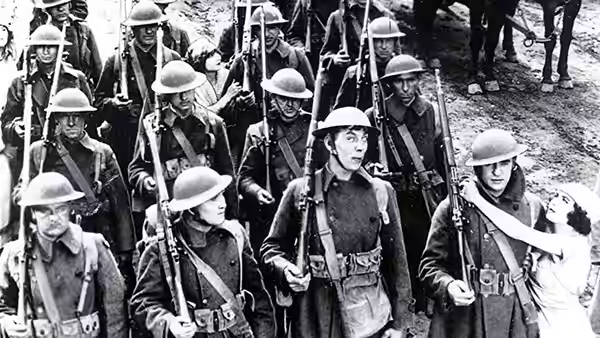
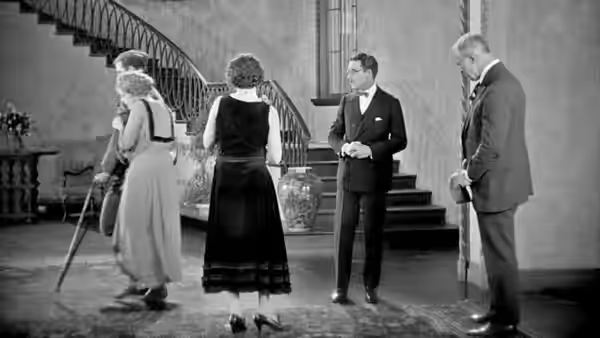
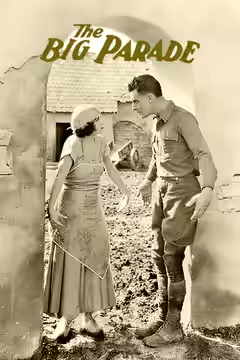
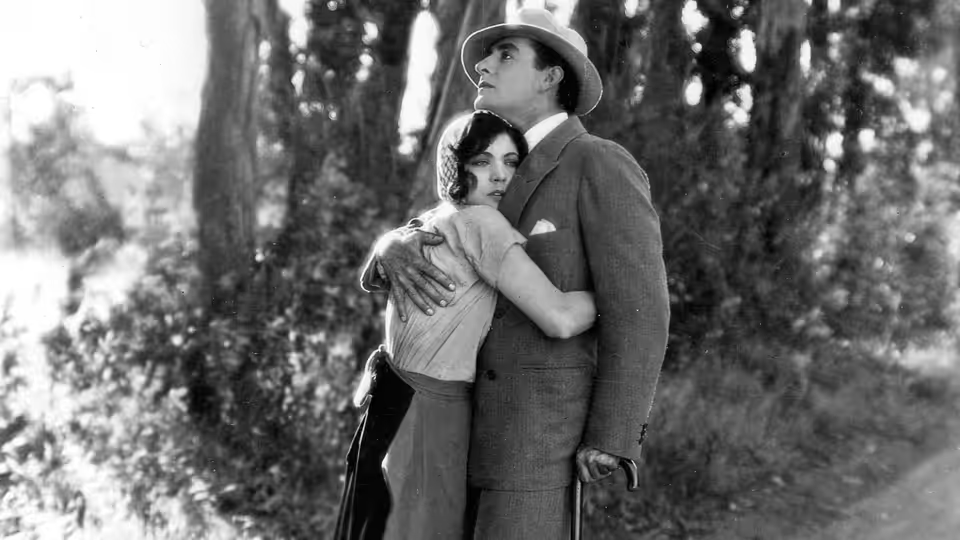
A man in a suit and hat embraces a woman beneath the trees
Film review

The Big Parade

1925 · Directed by King Vidor · 2h 31m

In a sentenceTwo and a half hours, and the faces have done most of the talking

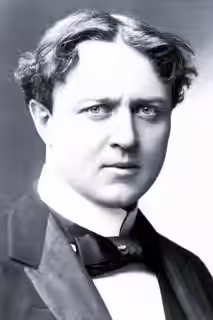
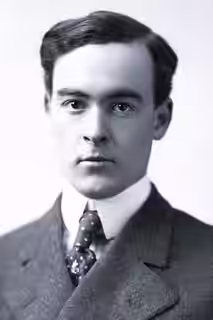
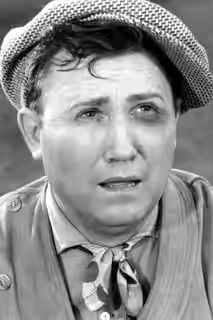
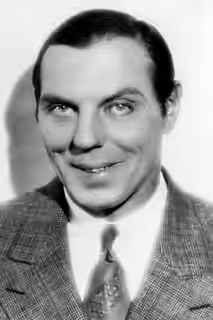
The Big Parade centres on James ‘Jim’ Apperson (John Gilbert), with Melisande (Renée Adorée) and Justyn Reed (Claire Adams) among the principal figures in its story of romance and war. Mr. Apperson (Hobart Bosworth), Mrs. Apperson (Claire McDowell) and Harry Apperson (Robert Ober) form part of the surrounding cast of characters. Michael Olysius ‘Bull’ O’Hara (Tom O’Brien) and ‘Slim’ Jensen (Karl Dane) also feature in the drama. Directed by King Vidor from a screenplay by Harry Behn, the film brings together an ensemble across a running time of 151 minutes.

Fi1m review

King Vidor’s war romance is moving because it takes its people seriously, especially when they have little to say. Its patience sometimes becomes indulgence, but the performances make the long evening worthwhile.

King Vidor takes his time in The Big Parade, and the time is mostly well spent. At 151 minutes, this war romance gives patience a substantial workout, but its interest in people is strong enough to reward it. We recommend it with a reservation about the stretches that linger after the feeling has registered. The director wants affection, laughter and distress to belong in the same film, and his handling of the performers makes that possible.

John Gilbert, as James ‘Jim’ Apperson, gives the film a centre that can support those changes of mood. His performance accommodates humour without making the emotional passages feel as though somebody else has taken over. Renée Adorée’s Melisande makes the quieter passages worth waiting for, and her performance benefits from the director’s willingness to take his time. The romance asks us to attend closely to the actors, and both repay that attention without needing to force their feelings upon us.

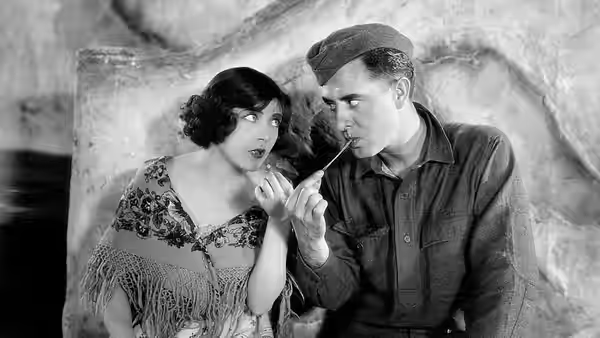
We were moved by the wordless exchanges, because the feeling between the actors is allowed to develop without being hurried into a declaration. The director trusts that watching people pay attention to one another can hold our interest in a war film. That trust is justified. These passages give us time to become interested in the relationships for their own sake, and the romantic material has enough weight to deserve that attention.

Charles Van Enger and John Arnold share the cinematography credit, and their work is most persuasive when our attention settles on the performers. There is room to watch a performance develop without feeling that every change of expression requires immediate emphasis. Hugh Wynn’s editing supports that patience, letting a quiet exchange carry its own interest. There are also passages where we wanted a firmer cut, once the feeling was clear and the film was still attending to it.

Music is credited to Maurice Baron, David Mendoza and William Axt, though it is the actors’ work that stays with us most strongly. The accompaniment is effective without becoming the principal reason to remember a passage. We are already watching closely enough to understand what these people feel. Where the film becomes insistent, it is the extra time spent confirming an emotion that causes the trouble.

Harry Behn’s screenplay allows more than one kind of pleasure. The comedy matters, since a war drama in which nobody is ever amusing can make its people seem solemnly prepared for their own importance. The weaker stretches come when the film seems reluctant to leave people whose company it has taught us to enjoy. At this length, repeating an emotional point is costly, and warmth sometimes becomes an excuse for staying put when the story needs to move.

A war film needs to make its people matter before asking us to worry about them. This one passes that test comfortably, even when the storytelling needs a little less indulgence. Its deliberate pace will frustrate anyone looking chiefly for action, and a distracted evening would do the performances no favours. Set aside the full 151 minutes, and do not treat the quiet passages as an invitation to put the kettle on.
Critical consensus AI synthesised

74
Positive
3
Mixed
0
Negative
1
The New York Times
20 November 1925 · Mordaunt Hall
90*

The headline presents the film as a superlative war picture, suggesting a strongly favorable verdict. The article text is inaccessible, so its specific praise cannot be determined.

Read the full review →
Variety
31 December 1924 · Variety Staff
85*

The review is strongly positive, saying the film rises far above the ordinary and delivers laughter, tears, and thrills. It singles out the cast’s performances and Vidor’s handling of the story for praise.

Read the full review →
Slant Magazine
30 September 2013 · ★★★★ · Jake Cole
80

Cole praises the film’s patient, humanistic storytelling and pioneering war-film craft. He especially singles out Warner’s exceptionally clean transfer and the film’s quiet, wordless moments of connection.

Read the full review →
Time Out
· TM
40*

The review suggests the film has not aged especially well. It singles out its blend of artistic ambition and box-office success as notable.

Read the full review →

Straight answers AI written, from our review

Is The Big Parade worth watching?
The Big Parade is worth watching for its patient, moving performances and substantial romance, and we score it 80 out of 100. John Gilbert and Renée Adorée reward close attention, especially in their wordless exchanges. The 151-minute running time includes stretches that linger too long, so we recommend it more readily for a quiet evening than for anyone chiefly seeking action.
How long is The Big Parade, and what is it rated?
The Big Parade runs 2h 31m. It is a romance and war film.
Where can I watch The Big Parade in Argentina?
The Big Parade is not on any streaming or rental service in Argentina at the moment. It is available in 5 other countries; change your country at the top of the page to see where. Availability is checked daily.
How violent or frightening is The Big Parade, and is it suitable for children?
The Big Parade has no UK certificate supplied and is listed as NR in the US, so those classifications offer no reliable age guidance for children. We cannot establish how graphic or frightening its war material is from the available detail. Its emotional distress and deliberate 151-minute pace warrant consideration, but an unrated listing should not be taken as reassurance about suitability.
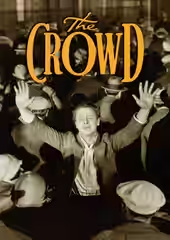
How does The Big Parade compare to The Crowd?
The Big Parade offers romance and war, while The Crowd gives an ordinary clerk, his wife and their small flat the same patient attention from King Vidor. We favour The Crowd for its honesty about everyday life and its stronger emotional hold, despite a slow stretch at Coney Island. Choose The Big Parade for the romance and the expressive central performances.
What should I watch after The Big Parade?
After The Big Parade, try The Crowd (1928, Fi1m 90): King Vidor gives ordinary lives the same patient attention, without the battlefield. Then The Cranes Are Flying (1957, Fi1m 87): Romance and war meet again, with greater urgency in the camera’s movements.

Cast

If you liked this, try…

  1. The Crowd (1928, Fi1m 90)King Vidor gives ordinary lives the same patient attention, without the battlefield.

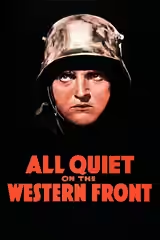
  2. All Quiet on the Western Front (1930) · not on Fi1m yetAnother war film that makes individual soldiers matter before anything else.

  3. The Cranes Are Flying (1957, Fi1m 87)Romance and war meet again, with greater urgency in the camera’s movements.

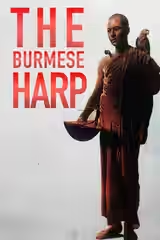
  4. The Burmese Harp (1956) · not on Fi1m yetA quieter war drama concerned with what soldiers owe the dead.

  5. A Very Long Engagement (2004) · not on Fi1m yetA wartime romance for anyone more interested in the lovers than the fighting.