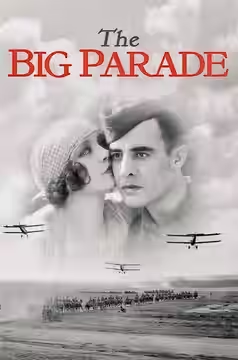
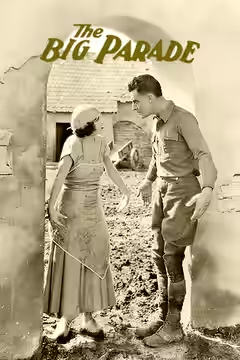
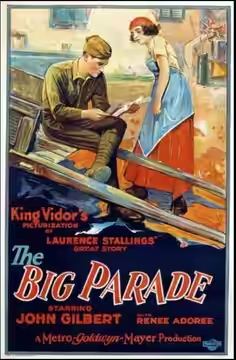
King Vidor’s war romance is moving because it takes its people seriously, especially when they have little to say. Its patience sometimes becomes indulgence, but the performances make the long evening worthwhile.
King Vidor takes his time in The Big Parade, and the time is mostly well spent. At 151 minutes, this war romance gives patience a substantial workout, but its interest in people is strong enough to reward it. We recommend it with a reservation about the stretches that linger after the feeling has registered. The director wants affection, laughter and distress to belong in the same film, and his handling of the performers makes that possible.
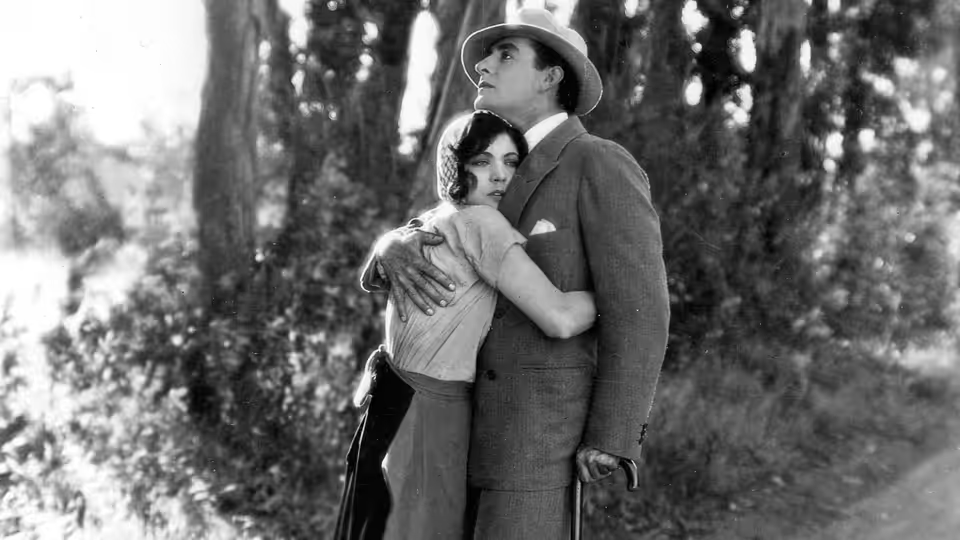
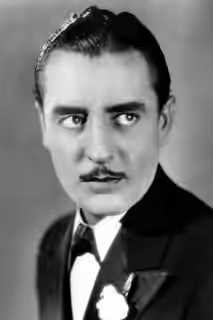
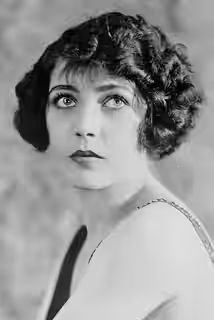
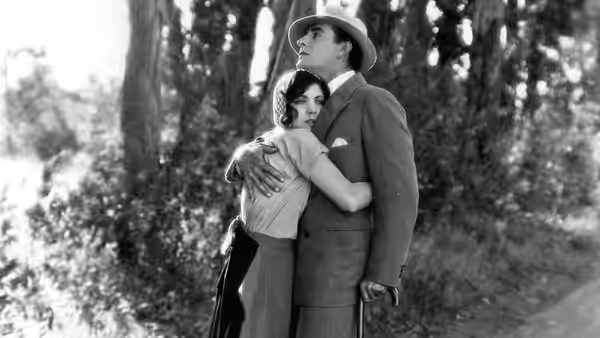
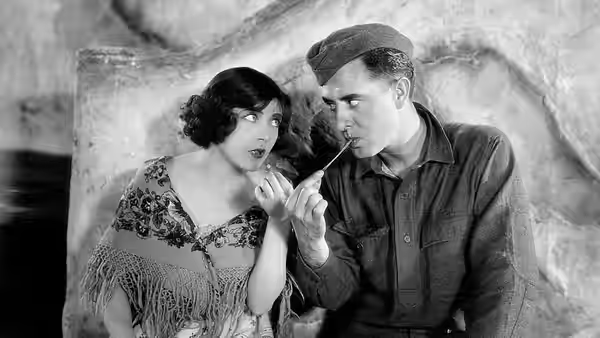
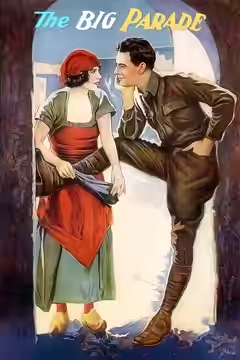
John Gilbert, as James ‘Jim’ Apperson, gives the film a centre that can support those changes of mood. His performance accommodates humour without making the emotional passages feel as though somebody else has taken over. Renée Adorée’s Melisande makes the quieter passages worth waiting for, and her performance benefits from the director’s willingness to take his time. The romance asks us to attend closely to the actors, and both repay that attention without needing to force their feelings upon us.
We were moved by the wordless exchanges, because the feeling between the actors is allowed to develop without being hurried into a declaration. The director trusts that watching people pay attention to one another can hold our interest in a war film. That trust is justified. These passages give us time to become interested in the relationships for their own sake, and the romantic material has enough weight to deserve that attention.
Charles Van Enger and John Arnold share the cinematography credit, and their work is most persuasive when our attention settles on the performers. There is room to watch a performance develop without feeling that every change of expression requires immediate emphasis. Hugh Wynn’s editing supports that patience, letting a quiet exchange carry its own interest. There are also passages where we wanted a firmer cut, once the feeling was clear and the film was still attending to it.
Music is credited to Maurice Baron, David Mendoza and William Axt, though it is the actors’ work that stays with us most strongly. The accompaniment is effective without becoming the principal reason to remember a passage. We are already watching closely enough to understand what these people feel. Where the film becomes insistent, it is the extra time spent confirming an emotion that causes the trouble.
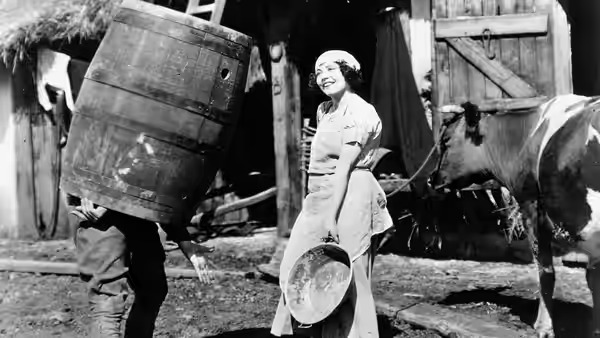
Harry Behn’s screenplay allows more than one kind of pleasure. The comedy matters, since a war drama in which nobody is ever amusing can make its people seem solemnly prepared for their own importance. The weaker stretches come when the film seems reluctant to leave people whose company it has taught us to enjoy. At this length, repeating an emotional point is costly, and warmth sometimes becomes an excuse for staying put when the story needs to move.
A war film needs to make its people matter before asking us to worry about them. This one passes that test comfortably, even when the storytelling needs a little less indulgence. Its deliberate pace will frustrate anyone looking chiefly for action, and a distracted evening would do the performances no favours. Set aside the full 151 minutes, and do not treat the quiet passages as an invitation to put the kettle on.