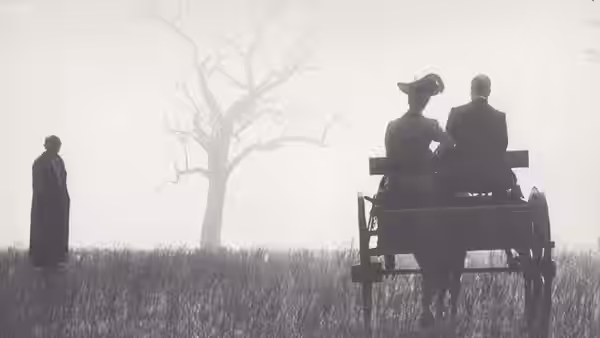
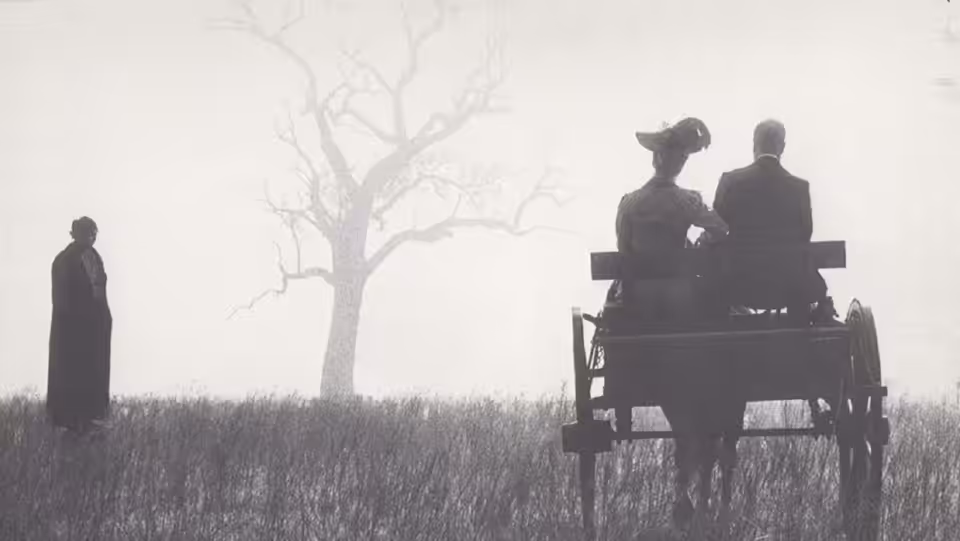
A lone figure watches two people riding a horse-drawn cart across a grassy field
Film review

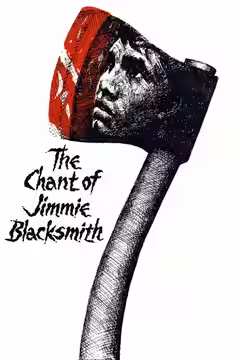
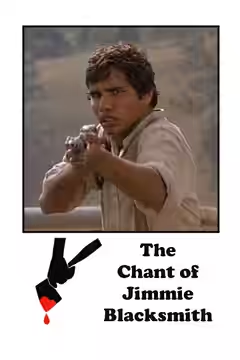
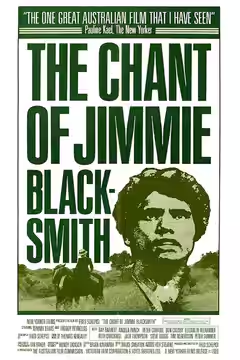
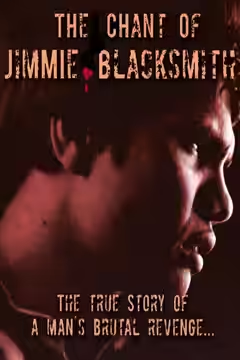
The Chant of Jimmie Blacksmith

1978 · Directed by Fred Schepisi · 1h 53m

In a sentenceHe builds their fences, courts their kitchen girl and reads their newspapers, and it gets him exactly nothing

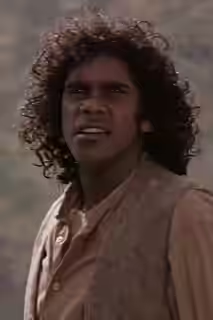
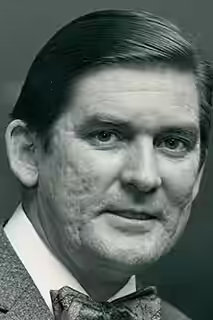
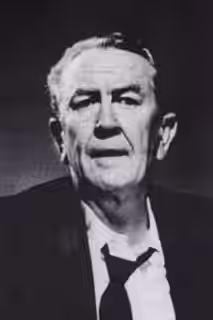
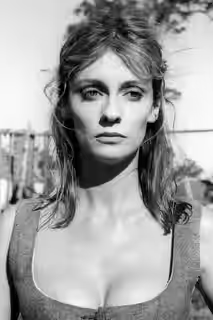
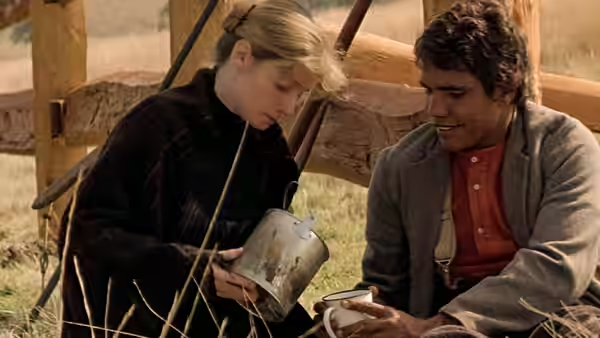
New South Wales, around 1900. Jimmie Blacksmith (Tom E. Lewis), born to an Aboriginal mother and a white father, is raised on a Methodist mission by the Reverend Neville (Jack Thompson), who tells him that a steady wage, a white wife and a patch of land will make him one of them. He goes out to build fences for farmers who pay half of what they promised, works as a tracker for the constable Farrell (Ray Barrett), and marries Gilda Marshall (Angela Punch McGregor), a kitchen hand. Jimmie wants a fair day’s pay and his name on a piece of paper. His employers want the fence. When his brother Mort (Freddy Reynolds) and his uncle Tabidgi (Steve Dodd) come to camp at the Newby homestead, Jack Newby (Don Crosby) stops his rations and his wages.

Plays from YouTube when you press play; nothing loads from them until then.

Fi1m review

Fred Schepisi’s account of a mission-raised man who does everything white Australia asks of him and is cheated for it is hard, clear and, at its centre, sickening to watch. The manhunt that fills the second half loosens its grip.

Fred Schepisi wrote and directed this from Thomas Keneally’s novel, and it follows a man taught to want what white Australia has and punished for wanting it. Jimmie Blacksmith (Tom E. Lewis) leaves a Methodist mission with the Reverend Neville’s advice in his ears: get a wage, marry a white girl, buy land. He goes out and builds fences for farmers who pay him half of what they agreed and dock the rest for flour. The film is hard, plain and, for the ten minutes at its centre, close to unbearable. We recommend it, with that warning attached.

Ian Baker shoots the country in flat, hard daylight and from far enough back that a homestead is a scratch of timber and iron on a hillside and a man on foot barely registers. The fences Jimmie builds run straight across it, post after post, and Baker keeps them in frame long after we have taken the point. Wendy Dickson’s homesteads are raw boards, unlined kitchens and one good room with a piano in it. Bruce Finlayson puts the settler women in dark buttoned dresses in the heat and Jimmie in a collar he has plainly saved for. Everyone in the picture looks as if they arrived last week, apart from the people who did not.

Lewis plays Jimmie by listening. He agrees to things with his face while his shoulders do something else, and when he finally states a grievance he says it as if surprised to hear it out loud. Freddy Reynolds, as his brother Mort, is loose and laughing where Jimmie is stiff, and the film’s few easy minutes are the two of them walking and talking. Angela Punch McGregor plays Gilda as a girl who has been told little and worked out less. Ray Barrett’s constable Farrell is a bully who has found a uniform to do it in. Don Crosby’s Jack Newby thinks of himself as a fair man while he counts out a fraction of what he owes, and Ruth Cracknell, as his wife Heather, is small, mean and entirely recognisable.

Then comes the scene at the Newby homestead, about an hour in, and we will not describe it beyond how it is made. It is quick and close and shot mostly from inside the kitchen. Brian Kavanagh cuts it into pieces a second or two long, so that we see less than we think we have, and Bruce Smeaton’s music stays out of it altogether. We felt sick, and we stayed sick for a good while after, because Schepisi neither looks away nor lingers, and because Cracknell has spent the previous half hour making Mrs Newby a person rather than a target. There is nowhere to stand back to. We do not think the violence is exploited. We do think the film never again finds anything to match it.

That is its problem. The second half is a manhunt through the bush, Jimmie and Mort ahead, the settlers, the police and the newspapers behind, and it loosens. The pursuers get scenes that run past their use. The schoolteacher McCready (Peter Carroll), taken along by the brothers, is given speeches that set out the film’s argument in case the pictures had not, and the pictures had. Headlines about Federation are cut against the chase, which lands once and is then repeated. Kavanagh, so exact in that kitchen, lets the last forty minutes sprawl. We were not bored, but we could feel the film walking us to an ending it had already earned.

Australian cinema of the period liked its landscape haunted and unknowable. Schepisi treats it as property: surveyed, fenced, disputed and paid for badly. Smeaton’s spare score and Baker’s long views give the country weight without making it mysterious, and the film is better for the refusal. Its case is not that the land is strange but that its new owners are, and that Jimmie has been asked to become one of them.

It runs 113 minutes. Watch it with someone, and not last thing at night; and when the second half starts to drift, remember that the first half is the reason it is still being talked about.
Critical consensus AI synthesised

71
Positive
3
Mixed
1
Negative
0
Variety
31 December 1977 · Variety Staff
80*

The review is strongly positive about Schepisi’s assured direction and the film’s exploration of racism and cultural loss. It particularly praises the harrowing violence as masterfully handled rather than exploited.

Read the full review →
Time Out
14 January 2013
70*

The page presents the film as a searing drama about a man rebelling against ingrained racism. It also notes that he is no saint, but the full review is unavailable to reveal further praise or criticism.

Read the full review →
The New Yorker
15 September 1980 · Pauline Kael
65*

Pauline Kael’s Current Cinema column includes a review of the film. The accessible archive listing provides no verdict or specific praise or complaint.

Read the full review →
Eye for Film
21 August 2019 · Amber Wilkinson
70*

Wilkinson finds the film’s exploration of racism and its continuing relevance compelling, despite some loss of momentum. She praises Schepisi’s handling of key moments, especially the striking camerawork, sound design, and symbolism around the violence.

Read the full review →

Straight answers AI written, from our review

Is The Chant of Jimmie Blacksmith worth watching?
The Chant of Jimmie Blacksmith is worth watching for anyone prepared for a hard, plain account of a man who does everything white Australia asks of him and is cheated for it, and we scored it 80. Fred Schepisi's film is at its best in its first hour and close to unbearable at its centre; the manhunt that fills the second half loosens its grip. Watch it with someone, and not last thing at night.
How long is The Chant of Jimmie Blacksmith, and what is it rated?
The Chant of Jimmie Blacksmith runs 1h 53m. It is a crime and drama film.
Where can I watch The Chant of Jimmie Blacksmith in Ireland?
The Chant of Jimmie Blacksmith is not on any streaming or rental service in Ireland at the moment. It is available in 4 other countries; change your country at the top of the page to see where. Availability is checked daily.
How violent or frightening is The Chant of Jimmie Blacksmith, and is it suitable for children?
The Chant of Jimmie Blacksmith carries no certificate in the UK or US, and it is not for children: it contains one scene of violence, about an hour in, that we found sickening and that stayed with us long afterwards. Schepisi shoots it quick and close, without lingering and without exploiting it, but there is nowhere to stand back to. The squeamish should know it is coming.
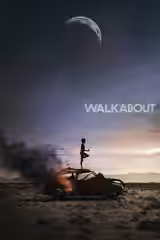
How does The Chant of Jimmie Blacksmith compare to Walkabout?
The Chant of Jimmie Blacksmith is the harder and angrier film, treating the outback as fenced and disputed property where Nicolas Roeg's Walkabout treats it as mysterious and unknowable. Roeg's is the gentler, stranger picture, though its contrast between wilderness and civilisation makes its people too simple; Schepisi's is sharper on its people but drifts in its second half. They are worth seeing side by side.
Is The Chant of Jimmie Blacksmith based on a true story or a book?
The Chant of Jimmie Blacksmith is based on a novel by Thomas Keneally, adapted for the screen by Fred Schepisi, who also directed. What is on screen is a drama set in New South Wales around 1900, about a mission-raised man cheated of wages, land and standing, and we cannot say from the film how far it follows the book. You need not have read it: the pictures make the argument on their own.
What should I watch after The Chant of Jimmie Blacksmith?
After The Chant of Jimmie Blacksmith, try Utu (1983, Fi1m 74): New Zealand’s answer: a Māori scout turns on the colonial army and the film refuses easy sides. Then Walkabout (1971, Fi1m 85): Nicolas Roeg’s outback is the mysterious one Schepisi declined to make, and worth seeing beside it.

Cast

Awards

AACTA Award for Best Actor in a Supporting Role, 1978

Won
AACTA Award for Best Actor in a Supporting Role

AACTA Award for Best Adapted Screenplay, 1978

Nominated
AACTA Award for Best Adapted Screenplay

AACTA Award for Best Cinematography, 1978

Nominated
AACTA Award for Best Cinematography

AACTA Award for Best Costume Design, 1978

Nominated
AACTA Award for Best Costume Design

AACTA Award for Best Direction, 1978

Nominated
AACTA Award for Best Direction

AACTA Award for Best Editing, 1978

Nominated
AACTA Award for Best Editing

AACTA Award for Best Original Music Score, 1978

Won
AACTA Award for Best Original Music Score

AACTA Award for Best Sound, 1978

Nominated
AACTA Award for Best Sound

If you liked this, try…

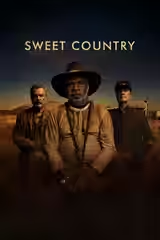
  1. Sweet Country (2017) · not on Fi1m yetWarwick Thornton’s Northern Territory western asks the same questions forty years on, more quietly.

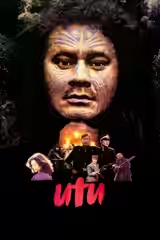
  2. Utu (1983, Fi1m 74)New Zealand’s answer: a Māori scout turns on the colonial army and the film refuses easy sides.

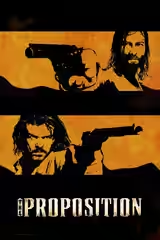
  3. The Proposition (2005) · not on Fi1m yetOutlaws, police and settlers in a Queensland that looks like an open oven.

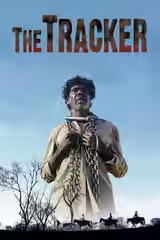
  4. The Tracker (2002) · not on Fi1m yetDavid Gulpilil leads a manhunt for a man who may not exist, with paintings for the killings.

  5. Walkabout (1971, Fi1m 85)Nicolas Roeg’s outback is the mysterious one Schepisi declined to make, and worth seeing beside it.

The Chant of Jimmie Blacksmith (1978) review: hard, clear and sickenin (Ireland) | Fi1m