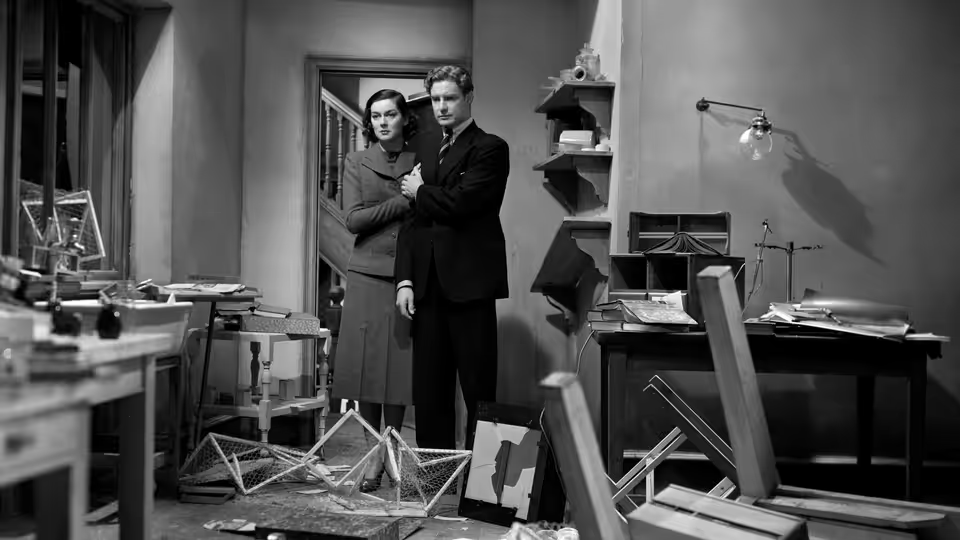
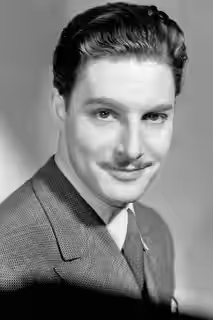
King Vidor’s film of A.J. Cronin’s novel is at its best in the Welsh valleys, where Robert Donat and Ralph Richardson make idealism look like hard, dirty work. Once it reaches London it starts preaching, but the first hour is close to first rate.
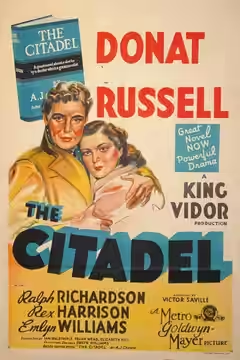
A.J. Cronin was a doctor before he was a novelist, and the studio sold The Citadel on exactly that: secrets of a doctor as told by a doctor. King Vidor’s film for producer Victor Saville keeps the shape of the book. A young Scots doctor goes to a Welsh mining valley full of ideals, learns what the job is, then goes to London and learns what the money is. It runs 110 minutes and it is a good film, better than good for its first hour, and something more dutiful after that.
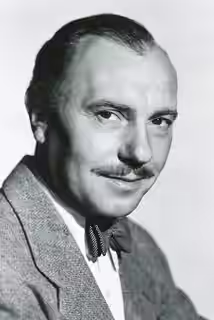
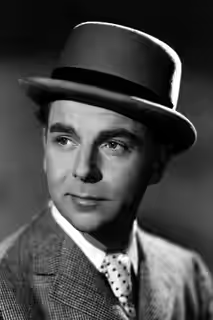
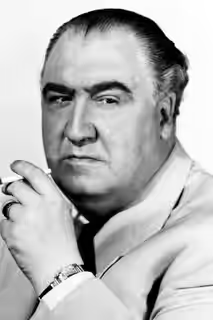
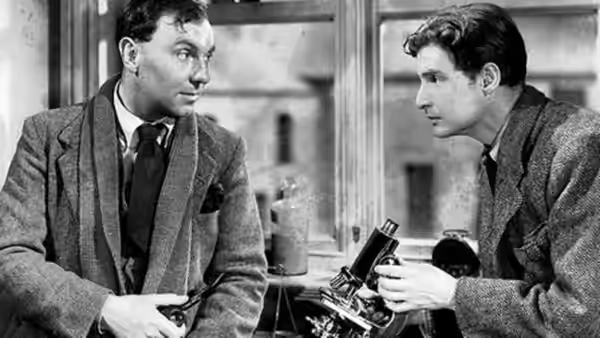
The valley is where it lives. Robert Donat plays Andrew Manson as a man who has read everything and touched nothing, and he lets us watch the reading get knocked out of him one house call at a time. Ralph Richardson’s Denny is the film’s best creation: a doctor who knows the place is killing its patients, has stopped expecting anyone to care, and drinks with a kind of scholarly thoroughness. His scenes with Donat, two clever men arguing over a bottle about a sewer, have the ease of people who have known each other for years, though the film has only just introduced them. Emlyn Williams, as Owen, and Francis L. Sullivan, as Ben Chenkin, fill out a village that feels lived in rather than built.
Then there is the birth. Manson is called out at night to Joe Morgan’s wife, the labour goes wrong, and the baby arrives without breathing. We knew the scene was coming and it made no difference; we held our breath with him, and when it was over we found we had been gripping the arm of the chair. Vidor does it with almost no music, a lamp, a basin of water and Donat’s face, and Charles Frend’s cutting stays on the doctor’s hands for longer than we expected and exactly as long as it needs to. It is the kind of sequence that tells you a director trusts his actor and his audience, and it is the high point of the film.
Harry Stradling photographs the valley in hard light and deep shadow, wet stone and miners’ lamps, so that every interior looks as if it has coal dust in the corners. When the film moves to London he switches to an even, flattering glow, and everyone in it looks well fed, which is the point. Louis Levy’s music stays out of the way in Wales and starts to swell in the consulting rooms, and we could have done with less of it there. Frend keeps the first half moving; the second he cuts more slowly, because the second has speeches in it.
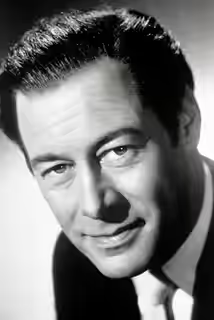
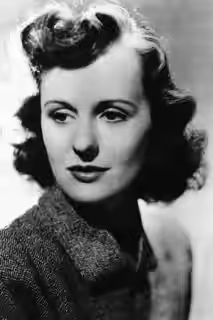
The London half is where the film starts explaining what it has already shown. Rex Harrison’s Dr. Frederick Lawford, smooth and amused, teaches Manson how to charge for nothing, and Harrison is so good at it that the film’s disapproval feels slightly ungrateful. Cecil Parker’s Dr. Charles Every and Athene Seyler’s Lady Raebank are there to be the profession’s comfortable face, and Penelope Dudley-Ward’s Toppy LeRoy is there to be tempting. Each scene proves one point and then stops. The screenplay by Elizabeth Hill, Ian Dalrymple and Frank Wead is tidy, and tidiness is its trouble: the messy valley let us find things out, and the neat city hands us the conclusions.
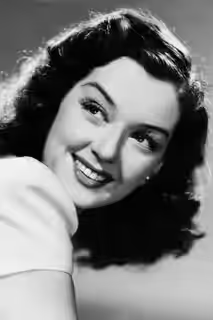
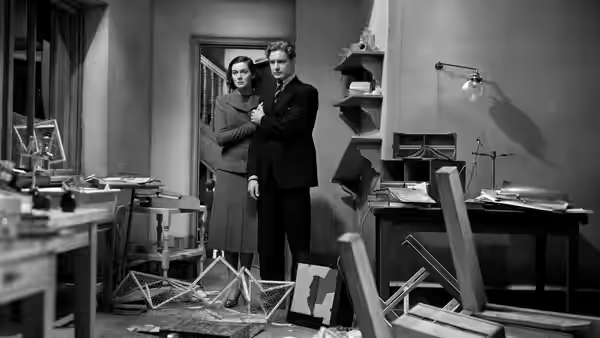
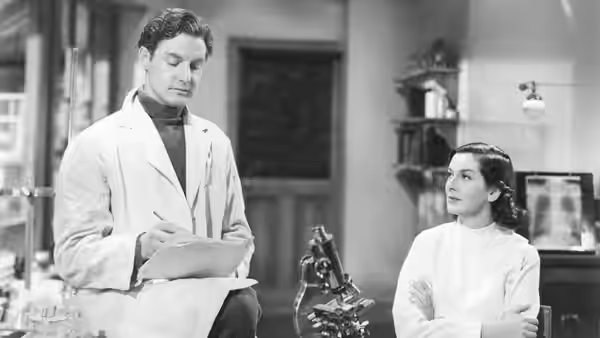
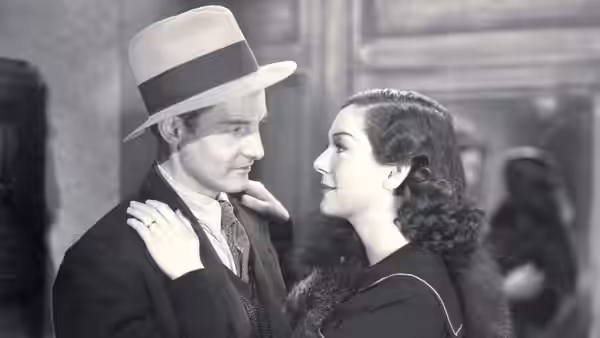
Rosalind Russell has the hardest job and does it with more warmth than the writing gives her. Christine Manson is the village schoolteacher who marries him, and the script gives her more patience than lines. What Russell brings is steadiness: she is the one who remembers what the man beside her used to want, and she says so without nagging, which the script does not always manage on her behalf. The last stretch takes the form of a hearing we will not describe. It is well staged, and it tells us the thing the film has already made us feel three times.
Vidor’s own great films, The Crowd (1928) and Our Daily Bread (1934), were about one person set against something too large to fight. Here the large thing is a profession, and the film’s view of what a good man can do about it is sober rather than heroic, which suits it. See it for the valley, for Richardson, and for that lamp-lit room with the basin. When it reaches London you may pour yourself a drink. Denny would.