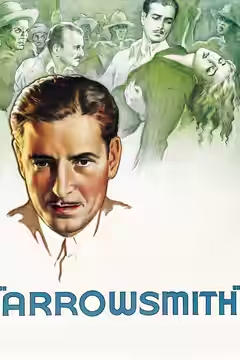
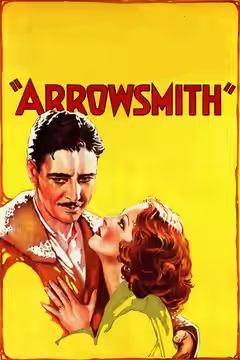
John Ford’s version of Sinclair Lewis’s novel is stiff, episodic and hurried, but honest about what a life in science costs the people who love the scientist. Helen Hayes is the reason to see it; Ronald Colman is why it never catches fire.
John Ford made Arrowsmith in 1931, eight years before Stagecoach, from Sinclair Lewis’s novel about a doctor who wants to do pure research and keeps being pulled back to the sick. Sidney Howard’s screenplay gets a long, crowded book into 108 minutes by taking a run at it, and you can feel the wind. It is a good film with a hurried middle and a lead who is not right for it, and it is worth an evening for Helen Hayes and for the plainness with which it says that science asks a price and somebody other than the scientist usually pays it.
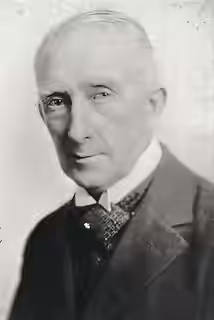
The shape is the book’s. Martin Arrowsmith wants the laboratory, Gottlieb thinks he might deserve it, and then he marries a nurse and goes to the prairie to be useful instead. There is a cattle plague, a home-made serum and an argument with the state’s own vet about who is allowed to save cows. There is a call to a well-funded institute in New York run by Dr Tubbs (Claude King), where Terry Wickett (Russell Hopton) is the only colleague who talks sense. The second half sails for a plague-struck island in the West Indies, and there the film’s questions get sharper and we will stop describing them.
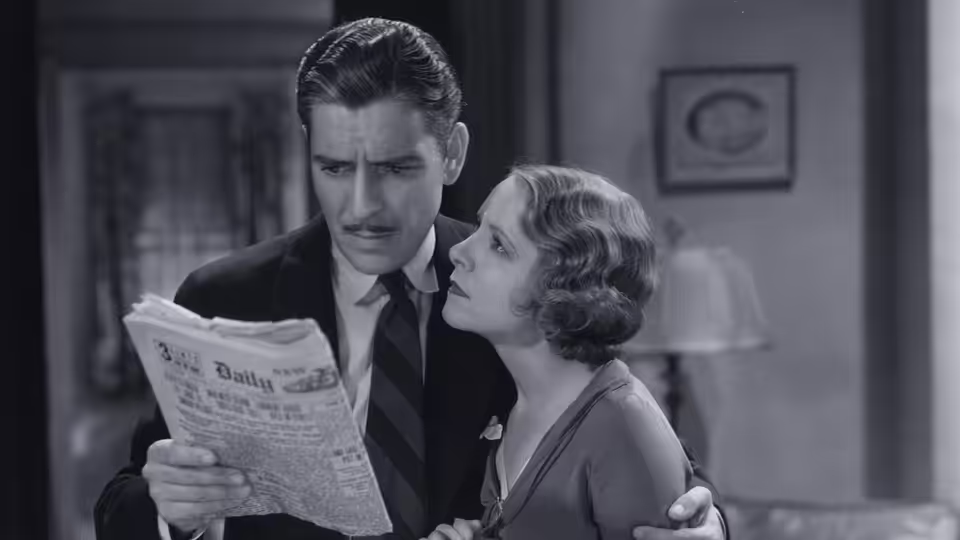
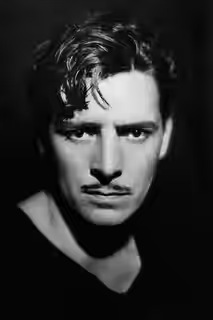
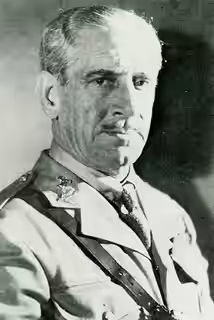
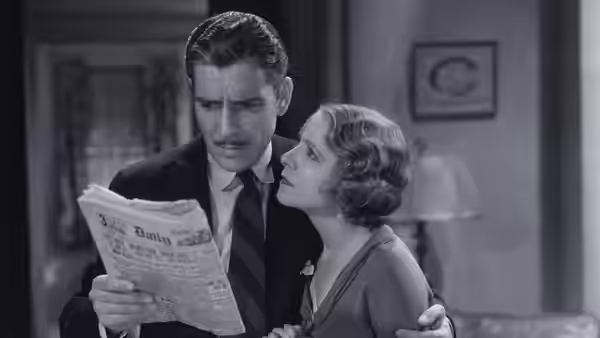
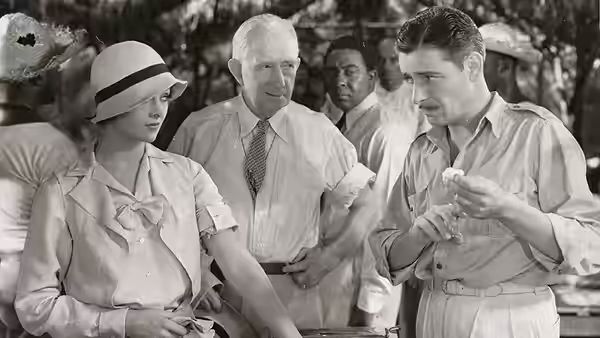
Colman is the problem, and one of the early reviews said so and was right. He is a lovely screen presence, the voice warm, the moustache tidy, the manners finished, and none of it belongs on a young man who has not yet worked out what he wants. Arrowsmith should be raw. Colman plays him as a gentleman who has mislaid something, and he is at his best in the institute scenes, where being a disappointed gentleman is the part. When the film needs hunger, when it needs a man who forgets to eat because a culture is growing, he gives us good posture.
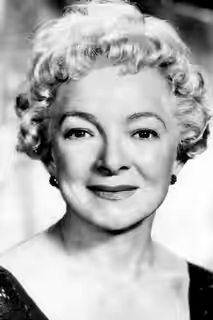
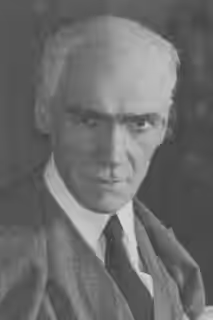
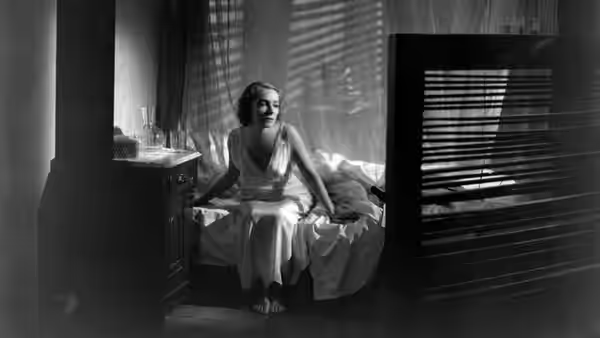
Hayes gets everything Colman misses. Leora is written as the wife who waits, and Hayes plays her as a woman who has chosen it with her eyes open and would choose it again. Early on there is a scene in which she watches him decide the shape of both their lives and simply lets him, and it moved us more than we expected, because Hayes does it without a speech and without asking for pity. Bert Roach is amiable as her brother Bert. Richard Bennett plays Gustav Sondelius, the roaring Swedish plague-fighter, with his whole body and most of the scenery, and the picture wakes up whenever he is in it.
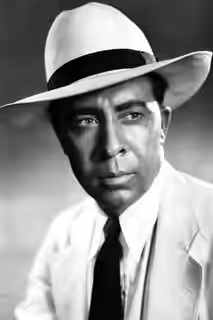
Clarence Brooks deserves a paragraph of his own. He plays Dr Oliver Marchand, a black physician on the island, as Arrowsmith’s equal, and the film treats him as one too: the two men talk medicine, not race, and nobody apologises for it. In an American film of 1931 that is rare enough to note and rarer to see done without fuss. Myrna Loy arrives late as Joyce Lanyon and is given handsome clothes and not much else.
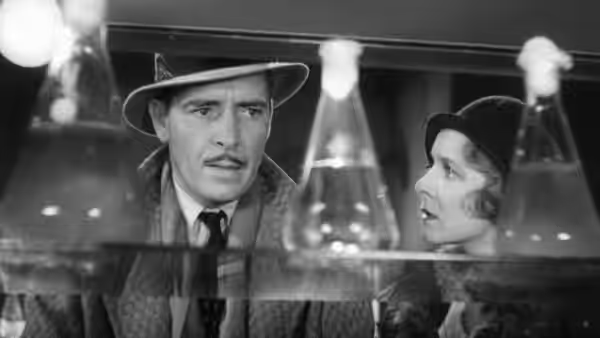
Ray June’s photography is where Ford is already Ford. He puts Colman in doorways and at the far ends of rooms, lights the laboratory so the glassware carries the light and the men stand behind it in shadow, and shoots the prairie house flat and grey so that the microscope, when it appears, looks like the only interesting object for a hundred miles. Hugh Bennett’s cutting is what makes the film feel rushed: courtship, marriage and a whole country practice go by in dissolves, so that the people have changed before we have finished meeting them. Alfred Newman’s music is mostly at the front and the back, as was the habit of the time, and the long stretches without it suit the material.
Set against the Ford of The Grapes of Wrath this is a stiff early talkie, the camera often parked and the sound close and dead. Set against the doctor films that came after, it is unusually clear-eyed about the fact that the hero’s great work is done in other people’s kitchens and on other people’s time. Somewhere around the hour we were impatient with how fast it was going. By the end we were glad it had not softened what it had to say.
See it for Hayes, for Brooks, and for the sight of a great director learning where to put the door. Judge the sound by 1931 rather than by the name on the poster, and forgive Colman his tailoring; the film very nearly does.