Sam Wood’s film of James Hilton’s novel is gentle, tidy and rather pleased with the England it describes. Robert Donat’s schoolmaster, ageing from nervous young man to shuffling institution, is reason enough to see it; the rest is a well-made accompaniment.
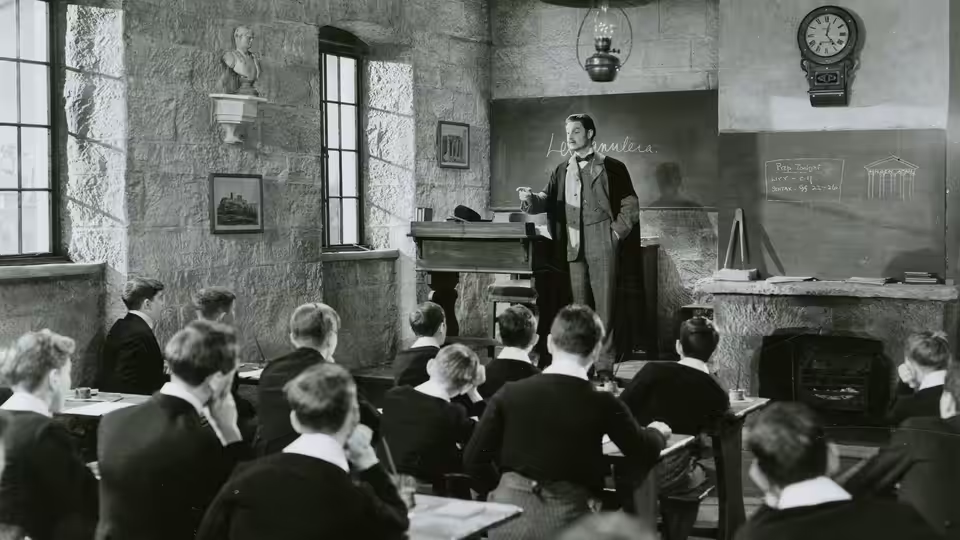
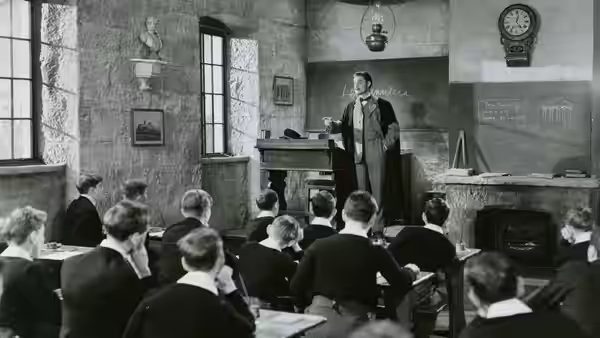
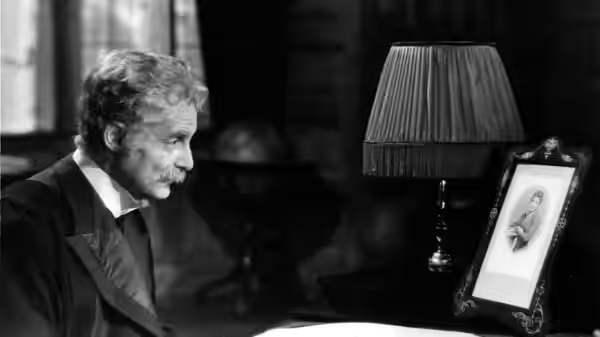
Charles Edward Chipping (Robert Donat) arrives at Brookfield School in 1870 to teach Latin and loses his first class within minutes. The boys throw things, the noise carries down the corridor, and the headmaster, Wetherby (Lyn Harding), tells him afterwards that a master who cannot keep order has no future there. Chipping decides to be feared instead, and for years he is. Sam Wood’s film, from James Hilton’s novel, tells the rest from the far end. It opens with the old man, kept indoors by a cold on the first day of term, dozing by the fire in Mrs Wickett’s (Louise Hampton) sitting room across the road and remembering how he became somebody else.
It is a gentle film and a tidy one, and it is worth your evening for Donat before anything else. We would add that it has less to say about schools than it thinks, and that the last third asks the same small scene to work several times over. It works, mostly. That is the caveat, and it is not a large one.
Donat plays the young man as someone holding himself still, hands behind his back, voice pitched a shade too high, and the old man loose and shuffling and delighted by his own jokes. The make-up is the least of it. What changes is the walk, the breathing, the way he listens. It moved us more than we expected, and the moment that did it was not a farewell but a reaction shot: Chipping makes his first deliberate joke in a lesson, the boys laugh with him rather than at him, and Donat’s face registers, for about a second, that he is allowed this. Everything the film knows about kindness is in that second.
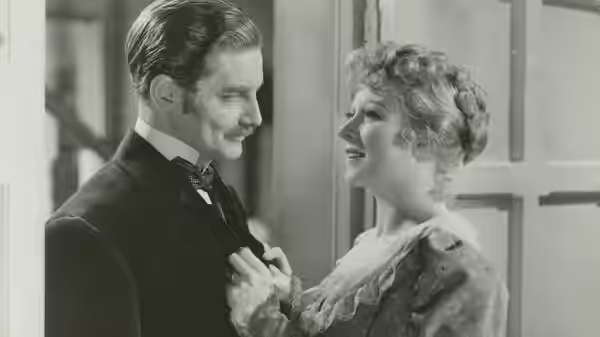
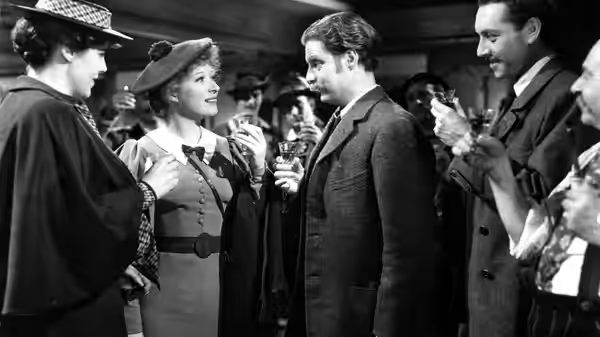
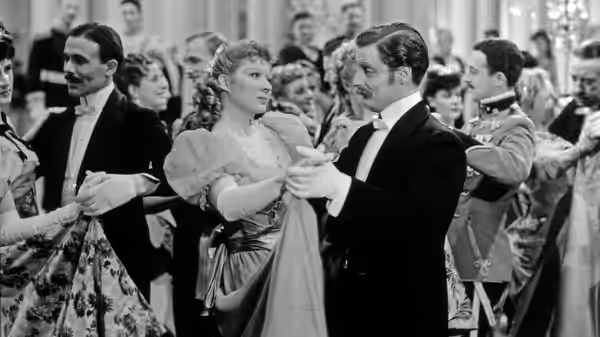
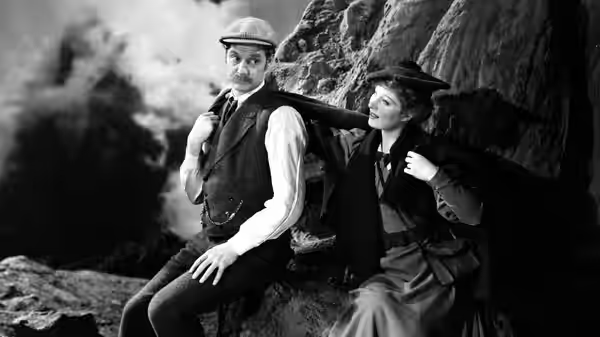
The person who teaches him is Katherine (Greer Garson), met on a mountain in the Tyrol during a walking holiday that Max Staefel (Paul Henreid), the German master, has bullied him into. She is on a bicycle tour; he thinks she is lost in the mist and sets out to rescue her, and she turns out to have the better sense of direction. Garson, in her first film, plays Kathy with enough briskness to stop the part being a wish. It is still a wish. She exists to cure a man of himself, tell him his nickname is a term of affection and open his rooms to the boys for tea. The Tyrol and Vienna stretch runs long, with a ballroom waltz Wood plainly could not bear to shorten, and the film sags in the middle of its own romance. Then Kathy arrives at Brookfield, the staff brace for a dragon, and it finds its pace again.
Freddie Young shoots the quad and the cloisters in the same even grey daylight in every decade, and the sameness is the point. Brookfield does not change; the boys do, and Chips does. Charles Frend carries the years in roll calls and dissolves, the same surnames answering from new faces, and the film’s cleverest idea is to have Terry Kilburn play a Colley in each generation, so that the boy Chipping first meets keeps turning up in the front row with the same haircut and a new first name. Richard Addinsell’s score has the tact to stay out of the classroom and let the boys’ voices carry those scenes; it saves its strings for the mountains and for the parts we will not describe.
What the film does not have is any doubt about the school. Brookfield is a place where the worst thing that can happen is a headmaster, Ralston (Austin Trevor), who wants the Latin pronounced differently and the old men moved on. Nobody asks what the place is for, or who is missing from the roll call. The screenplay, by R.C. Sherriff, Claudine West and Eric Maschwitz, treats English decency as something you inherit with a surname, and late on it repeats itself: another tea, another remark about a boy’s father, another dissolve. Two or three of these scenes overstay. Wood does not vary his tempo, and we had noticed the pattern before the film had finished using it.
It is a U certificate and 114 minutes, and it wants an evening rather than an afternoon; the last scenes are lit for a dark room. Watch it with anyone who has taught, or was taught by someone who stayed too long, and see which of you speaks first.