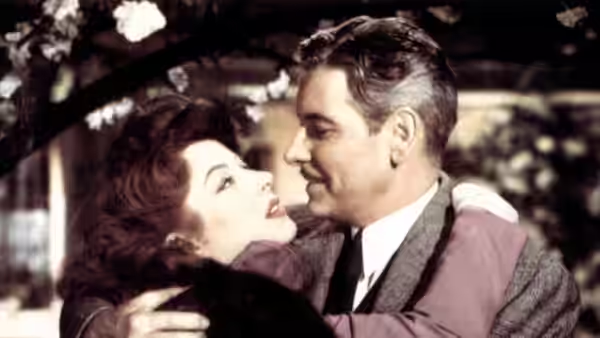
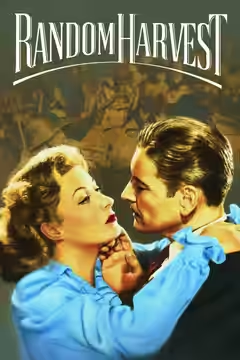
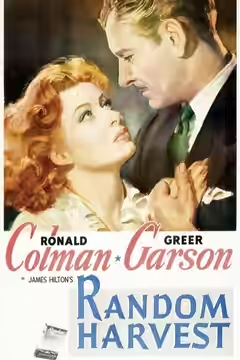
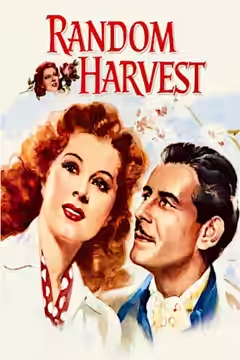
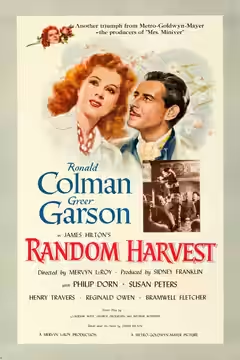
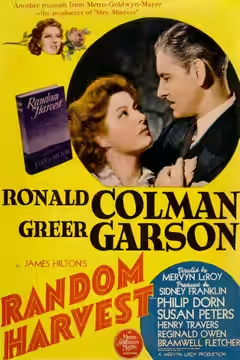
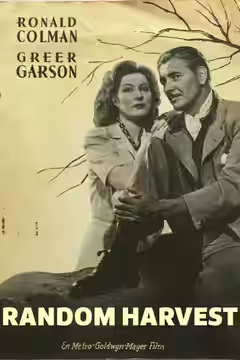
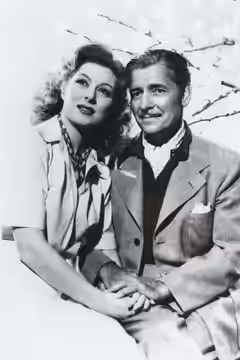
The amnesia plot is contrived past defending, and we stopped defending it early. Colman and Garson play a love story in which one of them cannot remember it, and they play it so quietly that the studio’s soft edges hardly matter.
Mervyn LeRoy’s film, from James Hilton’s novel, asks us to accept a great deal. A soldier comes home from the First World War with no name and no memory, is taken in by a music-hall singer, marries her, and then loses those years to a knock on the head that gives him back everything he had before. The screenplay, by Arthur Wimperis, George Froeschel and Claudine West, presents this with a straight face, and so does Ronald Colman. The plot is ridiculous. We stopped minding within twenty minutes, and that is the film’s achievement.
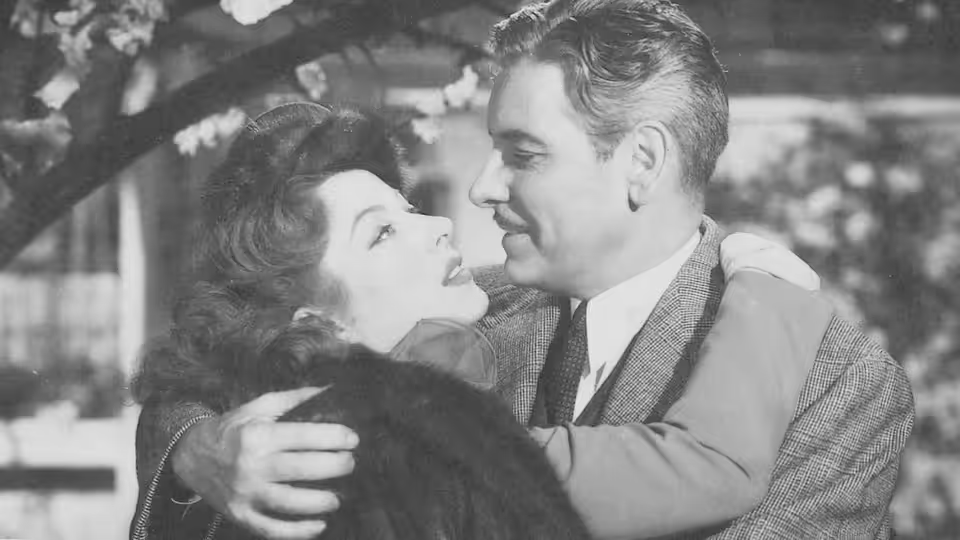
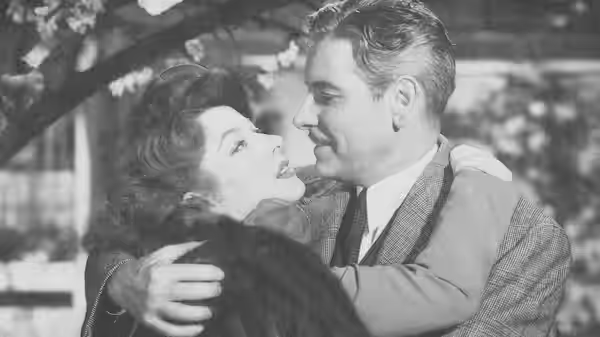
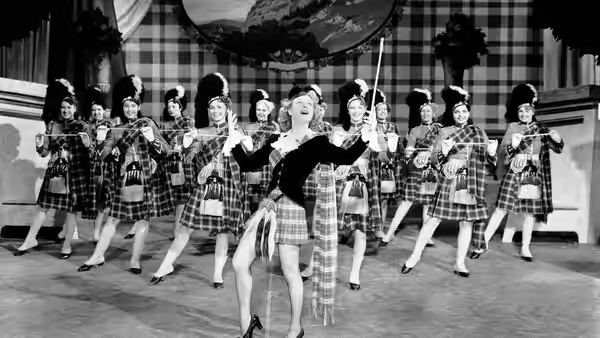
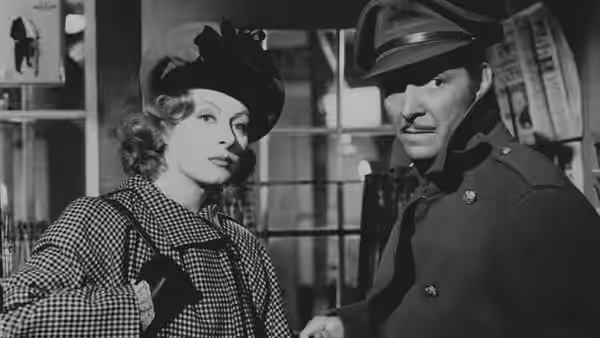
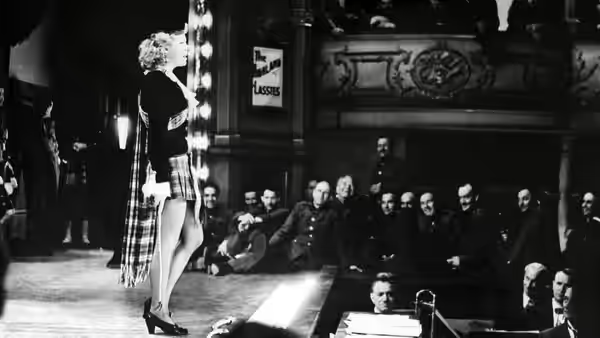
The first act is the happiest stretch. Colman plays the amnesiac as a frightened, well-mannered man who apologises for existing; he stammers, he stands too straight, and he watches doors. Greer Garson finds him in a tobacconist’s on Armistice night and decides, on no evidence, that he is worth saving. She does a music-hall turn in a kilt that is not much of a turn, and the film knows it; what matters is that he laughs. Cedric Gibbons gives them a cottage with a cherry tree in the garden, so plainly a set that it stops pretending and becomes a postcard, which is what the story needs.
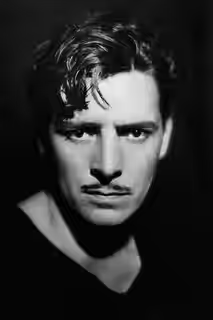
Then Liverpool, a taxi, and the film changes gear. Colman becomes Charles Rainier, heir to an industrial fortune, and plays him as another man: quick, dry, a little cold, good at business and unable to say why he feels he has misplaced something. The switch is done without make-up or tricks, in the shoulders and the speed of the speech, and it is the best thing Colman does. Susan Peters, as Kitty, the girl in the Rainier household who sets her heart on him, gives the middle of the film a fresh, unguarded voice. She is the only person in it who says what she wants out loud.
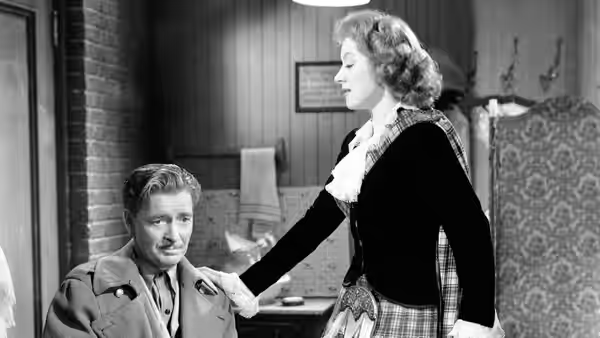
The second half turns on an arrangement we will not describe. What we can say is that Garson carries it almost alone, and that she does it by doing almost nothing. There is a scene a little past the hour in which she stands in an office doorway, Colman looks up with polite interest and nothing more, and we found we could not swallow. The reason is his face: not blank, but courteous, the look you give a competent stranger. The film repeats that cruelty for the best part of an hour, and it hurts a little more each time, because she has decided not to say anything.
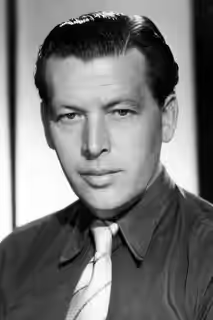
Herbert Stothart’s score does what a 1942 studio score did: it tells you the feeling a bar before the actors do, and at the cottage it is laid on so thick we winced. In the quieter office scenes he has the sense to stop. Harold F. Kress carries the years with dissolves over newspapers and the blossom on the cherry tree, which is corny and quick and works. Robert Kalloch dresses Garson first in music-hall tartan and later in the plainest grey suits he can find, so we read the change in her before anyone speaks. The photography is soft and silvery, with fog brought in whenever a character is confused, which is often. The England is a Hollywood backlot England: Una O’Connor’s tobacconist squawks, the pub kept by Reginald Owen’s “Biffer” has never seen rain, and every villager sounds as if they learned Cockney from a gramophone.
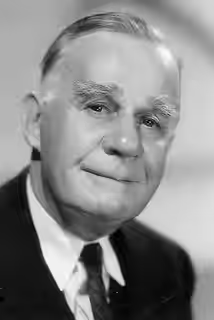
LeRoy made his name on hard, fast pictures, Little Caesar (1931) and I Am a Fugitive from a Chain Gang (1932), and there is none of that pace here. The film runs 125 minutes and takes its time on purpose, and the slowness is the right call more often than not. Where it fails is in the doctors. Henry Travers’s Dr. Sims explains amnesia at the start and Philip Dorn’s Dr. Benet keeps being sent on to explain it again later. The film does not trust its own premise and keeps producing a man in a white coat to reassure us.
It was made in the middle of a war, for audiences full of women whose men were away and might come back changed. That accounts for its hold then. It does not entirely explain why it still works on a sofa in peacetime with the lights on. Bring a handkerchief and do not bring anyone who likes to point out plot holes; there are several, they are all real, and by the last reel we could not have told you why they mattered.