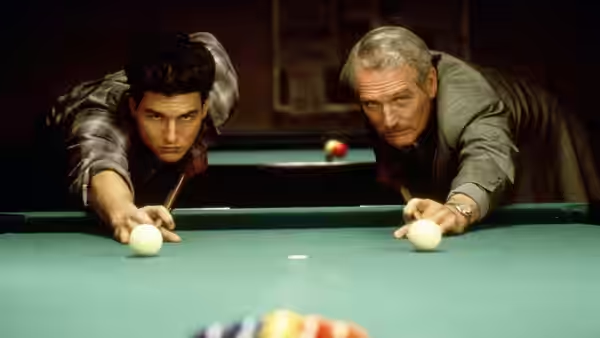
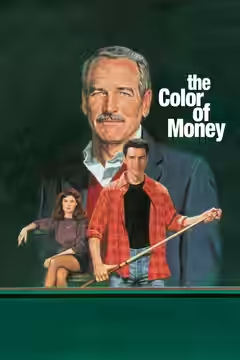
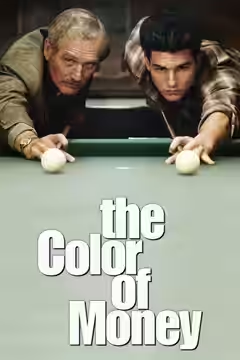
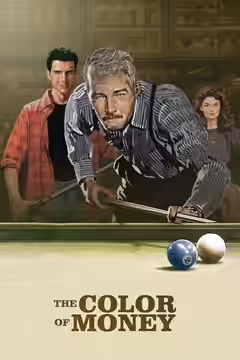
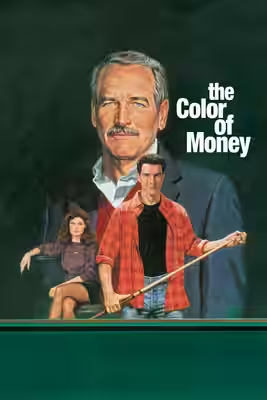
Paul Newman and Tom Cruise make this pool-hall drama worth the evening. Martin Scorsese gives their rivalry pace and pleasure, although the heavier confrontations ask the actors to sell more than the writing earns.
Eddie Felson is no longer the hustler he was, and Vincent Lauria has the talent to remind him of it. The Color of Money makes an absorbing drama out of that uncomfortable arrangement, with performances worth watching even when the writing presses too hard. Martin Scorsese treats the pool table as a place where people make themselves known. We recommend it, with a reservation about how insistently the later drama tries to give the rivalry extra weight.
Paul Newman is the reason to stay with it. His Eddie makes stillness interesting. He seems to be considering the cost of whatever is happening, including his own interest in this younger player. The performance allows vanity and good judgement to coexist without making a production of either. We were unexpectedly moved by Eddie’s effort to seem untroubled, because the strain is visible in Paul Newman’s watchfulness.
Tom Cruise makes Vincent’s eagerness entertaining without making him especially agreeable. There is a useful strain of childishness in the performance, a desire to be noticed that stops talent from becoming sufficient reason to like him. Mary Elizabeth Mastrantonio gives Carmen enough sharpness to prevent the two men from monopolising our attention. She brings a welcome impatience to material that might otherwise become too pleased with its men and their abilities.
Michael Ballhaus’s cinematography gives the pool the attention it needs: skill is legible, and showing off becomes a pleasure to watch. The table matters because the images persuade us to take an interest in what happens across it. Boris Leven’s production design keeps the pool halls convincing enough to support all that visual attention. These feel like places where a man might reasonably imagine that playing well makes him important to everyone present.
Thelma Schoonmaker’s editing gives the contrasting performances room to work; the film can enjoy Vincent’s eagerness without losing Eddie’s more guarded presence. A less patient approach would make the younger man’s energy exhausting. Robbie Robertson’s music reinforces the swagger, occasionally more insistently than the actors need. The pleasure of the game is already there in the images, and the extra encouragement can feel unnecessary when we are quite content to keep watching.
The weakness is in how much importance Richard Price’s screenplay asks us to place on the competition. Its more emphatic confrontations feel worked up to make sure we grasp what is at stake. That is a frustration rather than a fatal flaw, because these actors are capable of making a modest shift in status matter without much assistance. The film would gain from trusting that ability more consistently, especially when its dramatic ambitions become more pronounced.
For a drama about a game, it is usefully interested in how tiresome talented people can be. Martin Scorsese understands the pleasure of watching someone do something well, and the demands that person can make on everyone watching. The 119 minutes are worth giving it, provided a little forced drama does not spoil the pleasure. Watch it with someone who insists they have nothing left to prove.