Keanu Reeves is suitably unsettling, but Scott Derrickson’s environmental thriller is dull and emotionally thin. Its concern for the planet deserves more thought than David Scarpa’s screenplay gives it.
Scott Derrickson’s The Day the Earth Stood Still has a workable reason to revisit its story: environmental catastrophe makes an alien’s doubts about humanity easy enough to understand. It is a poor thriller, though, because so much of it is slow and over-serious. David Scarpa’s screenplay asks whether we deserve to survive, then devotes much of its attention to the military response to a visitor. The people whose survival ought to concern us are less carefully considered.
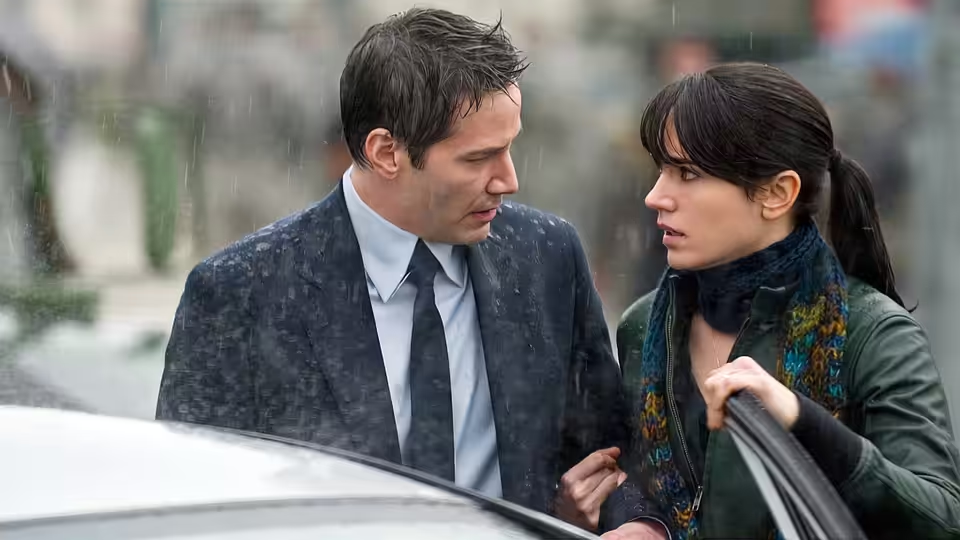
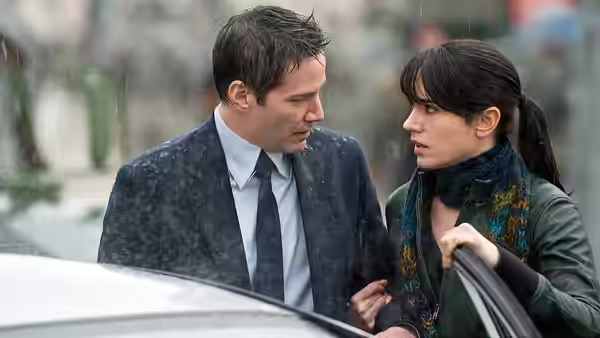
Keanu Reeves is the principal reason to stay with it. His Klaatu seems to be considering us rather than performing for us, and the stillness suits someone with little reason to share our panic. We felt briefly uneasy watching that impassive face, because there is so little reassurance in it. Klaatu’s lack of visible anger makes the threat harder to read, though the film leans on it until stillness begins to look like having nothing further to do.
Jennifer Connelly works hard to make Helen Benson’s concern feel immediate, and that effort is worth acknowledging. But the family drama involving Jacob Benson, played by Jaden Smith, is too broadly written to give the threat much human weight. The script needs these relationships to make us care about humanity at close range; instead, it keeps treating feeling as something the audience will supply because the situation calls for it. There is little room for either performance to become particular.
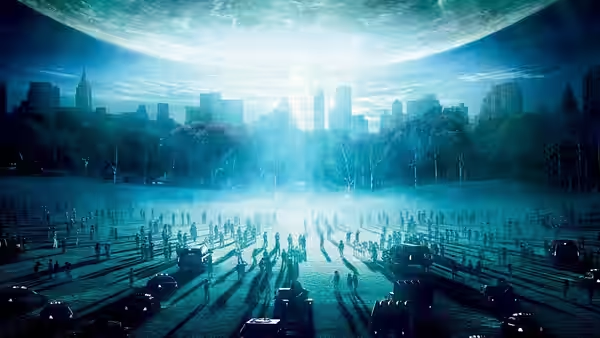
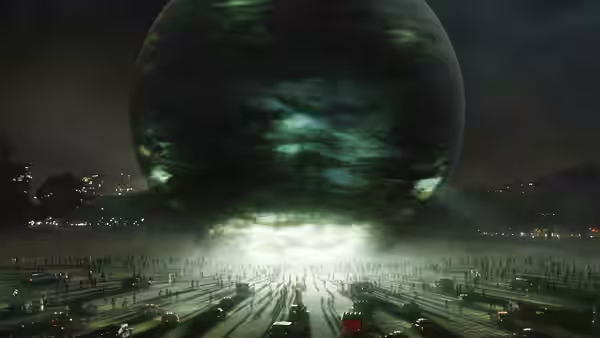
David Tattersall’s cinematography takes the military response as seriously as the alien, which makes the material look more convincing than it reads. David Brisbin’s production design likewise gives the emergency a sense of organisation and scale. Neither contribution is careless, and the military hardware provides something solid to look at when the dialogue grows vague. The difficulty is that all this attention to equipment leaves the people looking underwritten.
Wayne Wahrman’s editing struggles to make the chases and family material feel like parts of the same story. Moving between them repeatedly stalls the film, since neither has developed enough interest to survive being put aside. Tyler Bates’ music supplies urgency without making those changes of emphasis feel any more convincing. At 104 minutes, the film should not feel this slow.
The effects offer occasional spectacle, and the concern about environmental destruction is plainly sincere. Those are virtues, but neither excuses the lack of thought about what people might actually do differently. Alien-visitor stories can expose familiar behaviour simply by making it look strange; here, humanity is reduced to broad examples of folly and feeling. The film expects the size of the danger to make up for the vagueness of the case against us.
A story that puts human survival up for discussion needs to let that discussion become uncomfortable. Here, we are too often asked to wait through another stretch of action before anyone can get back to the question. If the prospect of Keanu Reeves regarding humanity with deep reservations appeals, there is some pleasure here; do not expect the film to pursue those reservations far.