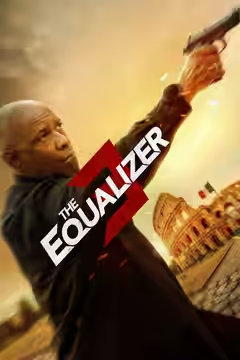
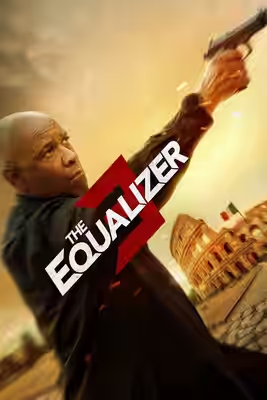
Denzel Washington’s third turn as Robert McCall is a handsome, slow, savage holiday in a small Italian town. He is as watchable as ever; the film around him has run out of ideas and makes up the difference in blood.
Antoine Fuqua and Denzel Washington have made three of these now, and the third is the one in which Robert McCall would like to stop. The Equalizer 3 opens in a Sicilian vineyard littered with the men he has just killed, puts a bullet in his back, and carries him to a small town stacked up a cliff above the sea, where an old doctor stitches him together. For its first half it is a film about a tired man deciding whether he is allowed a quiet life, and it is at its best there. Then the local gangsters do what gangsters in these films always do, and McCall does what he does.
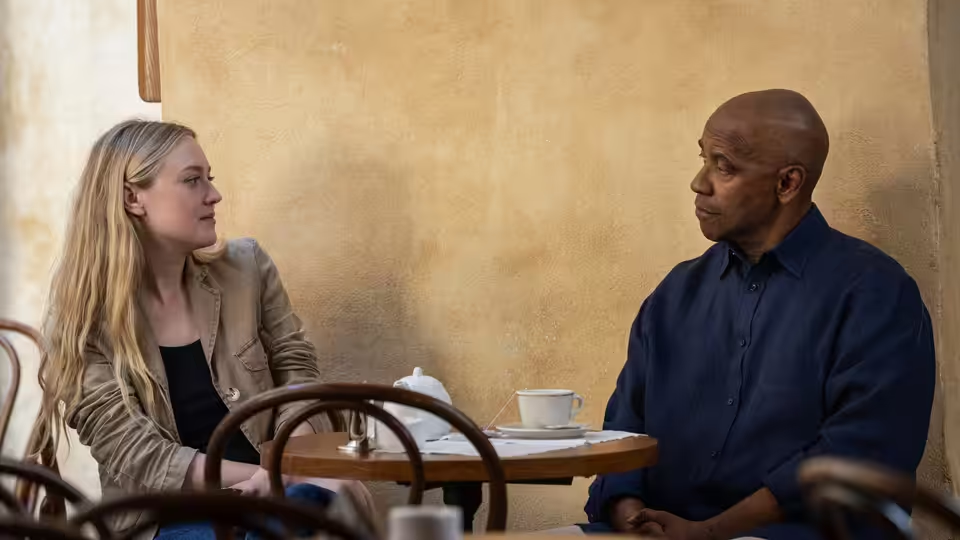
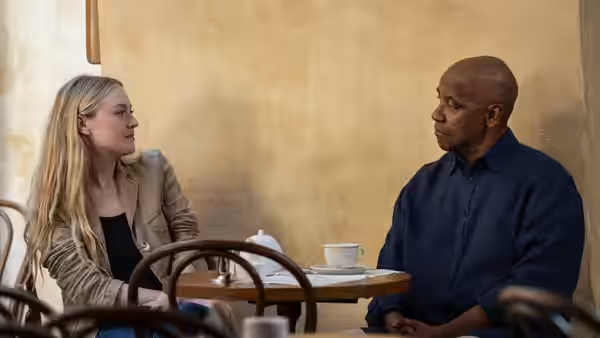
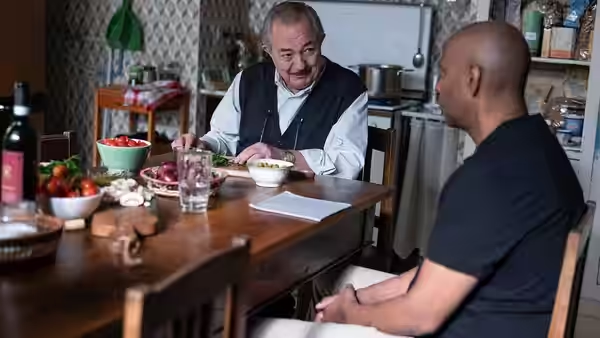
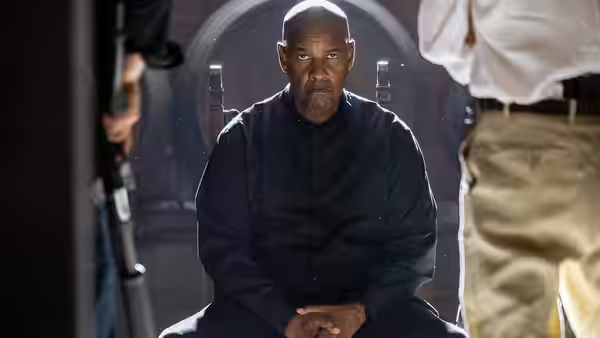
Washington plays him slower than before, in a flat cap and a knitted jumper, the walk stiff, the smile arriving late. He sits on the café terrace, drinks tea, learns the names of the fishmonger and the widow, and Fuqua has the nerve to let him do it. We liked these scenes more than we expected to. Nothing happens in them, and Washington fills them anyway: a look at a saint’s statue held a beat too long, a hand steadied on a railing. It is the one new thing the film has.
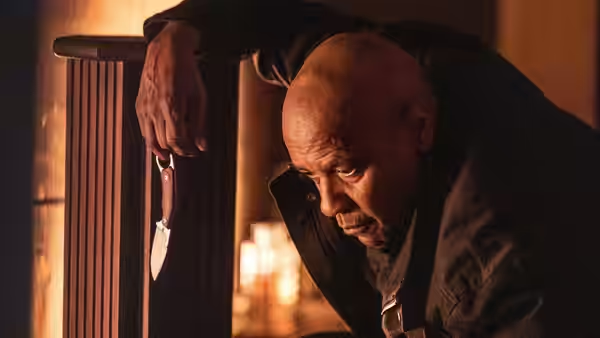
Robert Richardson shoots the town in two lights. By day it is bleached and flat, whitewashed walls, hard shadows, the sea a wall of pale blue behind everything. By night faces are lit from one side by a bulb or a candle, and almost every killing happens in the dark. Naomi Shohan gives the place a church, a market, a café and a long stone stairway and makes them look used rather than dressed. Marcelo Zarvos keeps the score to low strings and single held notes and does not tell us when to be frightened. Giovanni Casalnuovo puts the gangsters in leather and gold and McCall in the clothes of a man who has stopped looking in mirrors.
It is also a nasty film, and it means to be. The vineyard opening is the worst of it, a gun used in a way we will not describe and a body left on a table for someone to find. We watched one death through half-closed eyes. Conrad Buff IV cuts the fights fast and close, so we see the result more than the movement. McCall does not fight men. He finds them and finishes them, in seconds, with whatever is to hand. Fuqua plainly believes this is more honest than a ballet. By the end we had stopped feeling much about it at all.
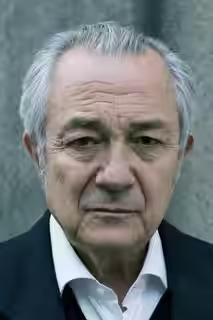
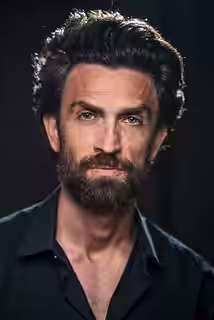
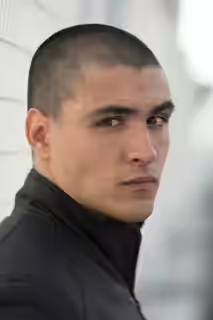
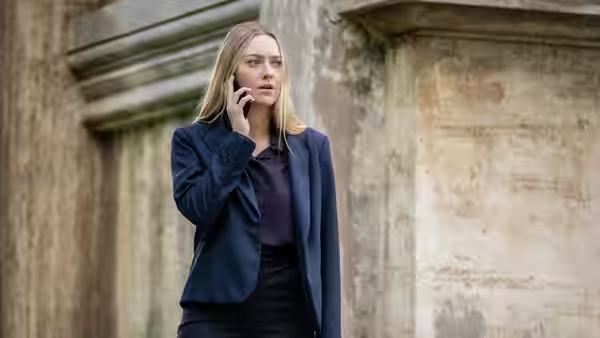
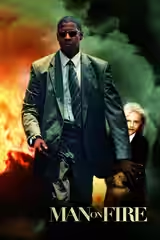
Richard Wenk has written all three films and he is writing the same one. The Quaranta brothers, Vincent (Andrea Scarduzio) and Marco (Andrea Dodero), want the town’s land and its shopkeepers frightened. They shout, they smash a fish stall, they set something alight. That is all we could tell you about either man, and there is no one on the other side worth the wait. Dakota Fanning’s CIA analyst is there so that Washington and Fanning can share a screen again, nineteen years after Man on Fire; the script gives her a laptop, a phone and a hospital corridor. Eugenio Mastrandrea’s Gio and Gaia Scodellaro’s Aminah are warm and specific and are sidelined the moment the shooting starts.
The first Equalizer (2014) had a clean shape. The second (2018) lost its way. This one is simpler than either and, for an hour, calmer, and we kept waiting for the calm to pay off the way it does in the westerns the film is thinking of. Here the retired gunman’s reluctance lasts exactly as long as the plot needs it to. Once McCall picks up a gun the film forgets he ever put it down.
It runs 109 minutes and carries a 15, and it earns the certificate inside its first ten. If you have seen the other two you know what you are getting, and Washington makes it worth having one more time. If you have not, start with the first. Watch this one at home with the lights low, where the town looks lovelier and the deaths are smaller.