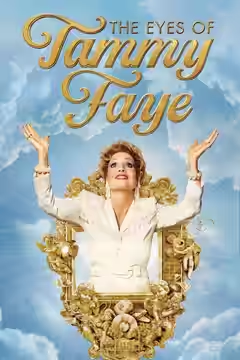
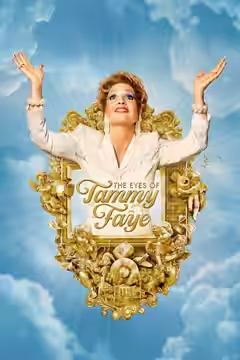
Jessica Chastain gives this cautious biography warmth and feeling, despite a screenplay reluctant to question Tammy Faye Bakker. Worth considering for the acting, though anyone hoping to understand her contradictions will have work left to do.
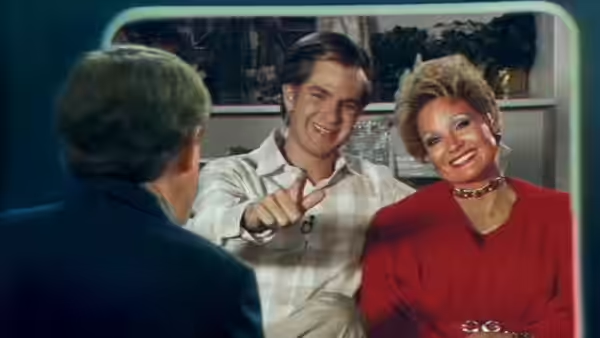
Michael Showalter’s The Eyes of Tammy Faye is a watchable, cautious biography with a performance good enough to make its caution frustrating. It asks us to look past Tammy Faye Bakker’s make-up and theatrical manner, and Jessica Chastain gives us reason to do so. The difficulty is that Abe Sylvia’s screenplay seems so anxious to secure our sympathy that it stops short of asking what else we ought to feel. We get little help in working out how her optimism survives the extravagance around her.
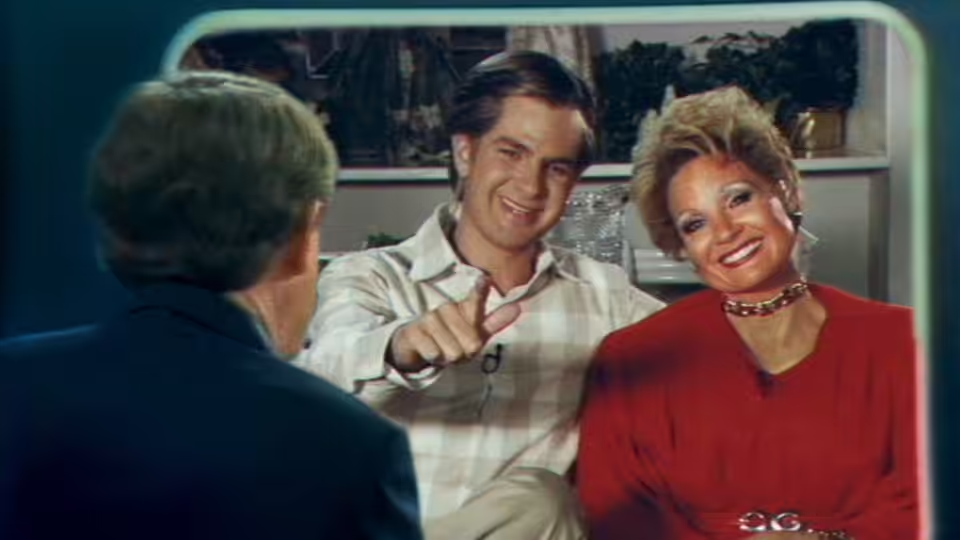
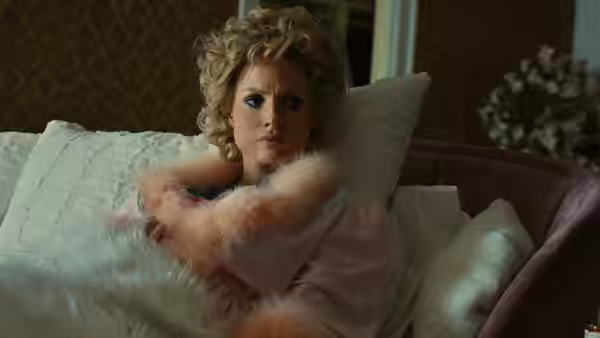
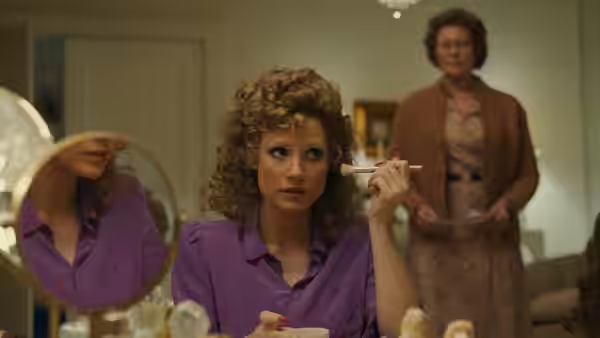
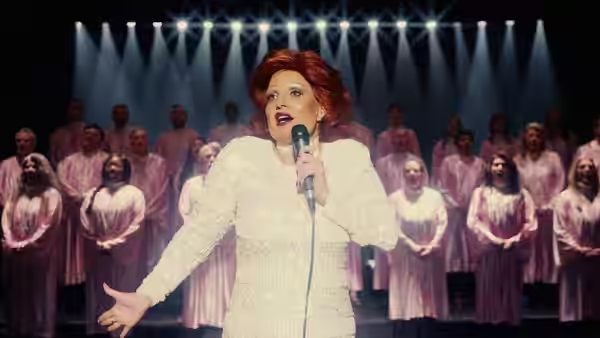
Jessica Chastain makes the painted face expressive instead of treating it as the whole performance. Tammy Faye’s flamboyance remains conspicuous, but the acting also makes room for earnestness, embarrassment and the possibility that she does not understand herself completely. We were moved by the vulnerability visible beneath the make-up and theatrical mannerisms. There is something affecting about the effort she puts into presenting herself, especially when that effort cannot quite conceal her uncertainty.
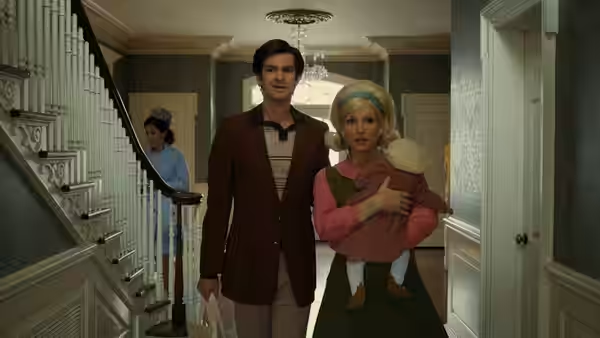
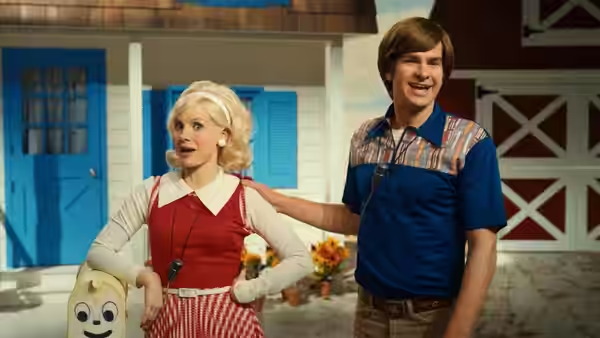
Andrew Garfield gives Jim Bakker an evasiveness that is entertaining and a little unsettling. There is enough charm in the performance to make that slipperiness plausible, though the writing does too little to develop the people around Tammy Faye. The supporting performances suggest a larger, more difficult story without being allowed to tell much of it. We are left wanting the screenplay to give Jim more sustained attention, particularly when his behaviour might complicate our understanding of her.
Mike Gioulakis’s cinematography and Laura Fox’s production design make the Bakkers’ extravagant surroundings enjoyable to inspect. The colour and excess are persuasive, and the film deserves credit for suggesting why this environment might appeal to someone who lives in it. Mitchell Travers’s costumes belong comfortably to that conspicuous world, helping the outward display feel consistent rather than incidental. Yet the pleasure of looking is allowed to do too much, and the film rarely presses Tammy Faye about her attraction to such excess.
Mary Jo Markey and Andrew Weisblum’s editing keeps the biography moving without making its changes feel sufficiently earned. At 126 minutes, it has time to investigate, but too often settles for moving to the next part of a life. Theodore Shapiro’s score provides emotional encouragement where a little uncertainty would have been useful. The uneven shifts between humour and sympathy are more troublesome: we are sometimes unsure how seriously the film takes the woman it is asking us to care about.
The treatment of Tammy Faye’s support for gay Christians gives the film something substantial to consider beyond her public appearance. Her sympathy matters, and the film is right not to dismiss it because she is easy to caricature. But it is equally reasonable to ask about her responsibility within the Bakkers’ extravagant world, and the screenplay avoids pursuing that question far enough. Its familiar biographical structure compounds the problem, giving us successive aspects of a life without spending enough time examining how they fit together.
There is enough here for viewers interested in Tammy Faye, provided they can accept how much of the work is left to the central performance. The acting sustains attention through passages that offer little fresh understanding, which is an achievement worth acknowledging without pretending it fixes the writing. Go for Jessica Chastain, and expect to leave with some fairly basic questions unanswered.