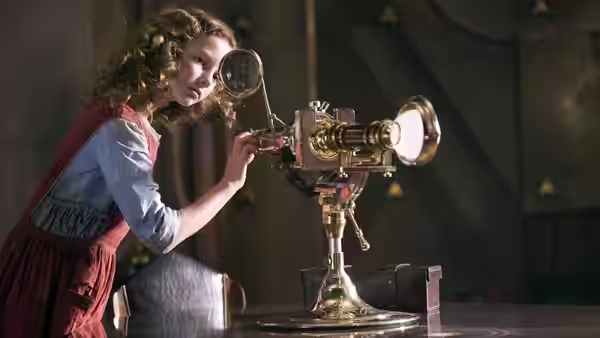
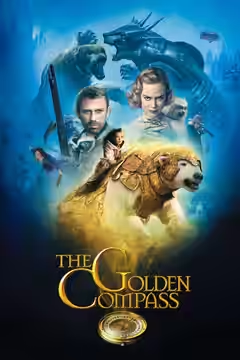
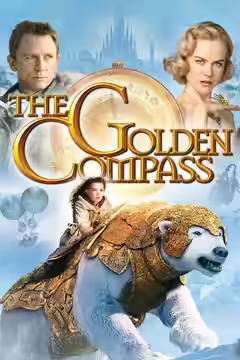
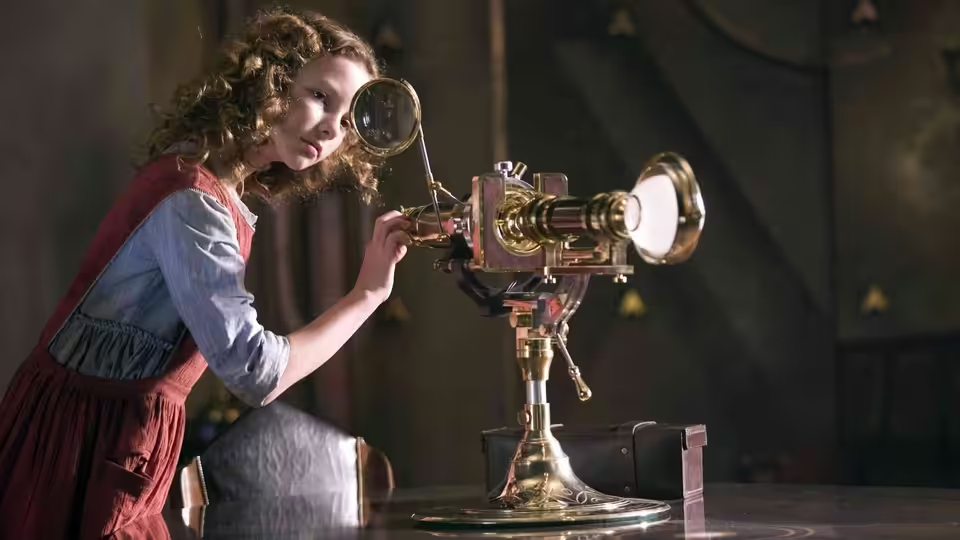
Lyra Belacqua (Dakota Blue Richards) peers through a brass optical instrument in a dim room
Film review

The Golden Compass

2007 · Directed by Chris Weitz · 1h 53m · MPA PG-13

In a sentenceArmoured bears, talking souls and Nicole Kidman in white fur, each given about four minutes before the next one arrives

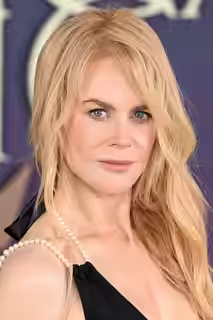
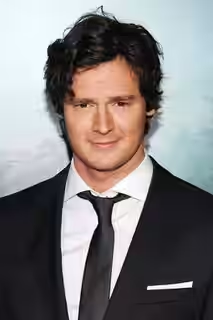
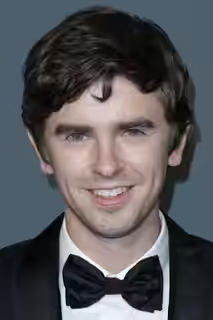
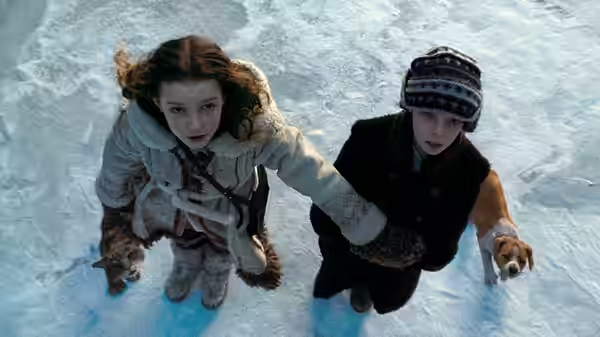
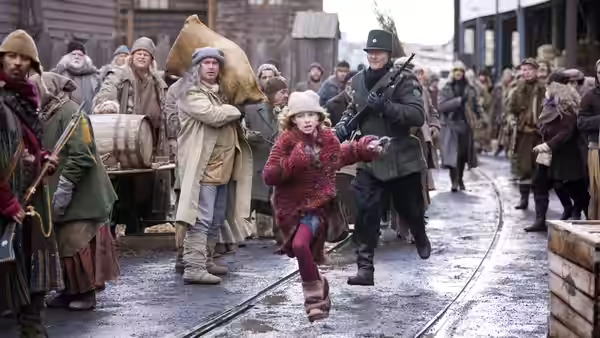
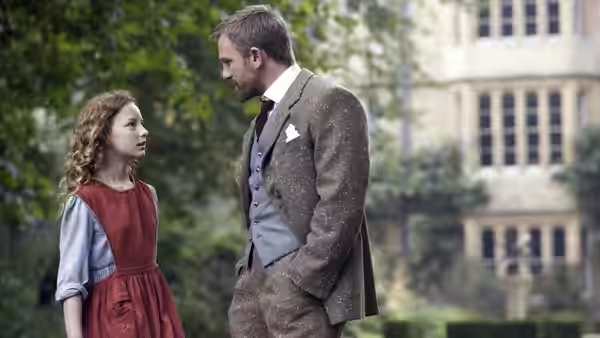
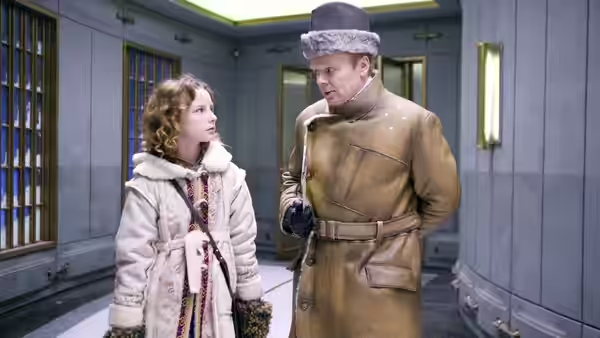
In a world much like ours, every person’s soul walks beside them as an animal called a daemon. Lyra Belacqua (Dakota Blue Richards) is an orphan running wild at Jordan College, Oxford, with her daemon Pantalaimon (voiced by Freddie Highmore) and her friend Roger Parslow (Ben Walker). Lord Asriel (Daniel Craig), her uncle, arrives to show the scholars what he has found in the frozen north, and the Magisterium, the authority that governs what may be studied, wants him stopped. Children are vanishing from the streets, taken by people called Gobblers. When Roger disappears, Lyra is handed a golden truth-telling compass and sent to London in the care of Marisa Coulter (Nicole Kidman). She means to find Roger, and the Gyptians, led by John Faa (Jim Carter), are looking for their children too.

Plays from YouTube when you press play; nothing loads from them until then.

Fi1m review

Chris Weitz builds Philip Pullman’s world with real care and then runs through it as if late for something. Dakota Blue Richards and Nicole Kidman are good enough to make you wish the film had slowed down; the bears are the best thing in it.

Chris Weitz writes and directs an adaptation of Philip Pullman’s Northern Lights, the first book of the His Dark Materials trilogy, published in Britain in 1995 and sold in America under the title the film has taken. The novel is long, argumentative and angry about organised religion. The film runs 113 minutes, carries a PG certificate and is anxious not to upset anyone. It is handsomely built and well cast, and it moves through its story at the pace of someone reading the chapter headings aloud.

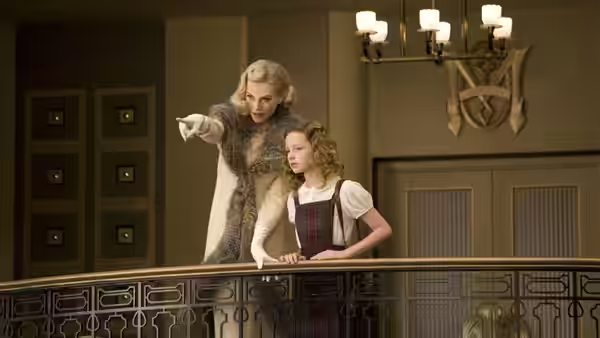
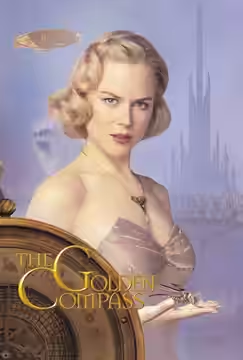
The world is the part Weitz gets right. Dennis Gassner’s production design gives us an Oxford of brass and amber where airships moor to college towers, and a north that is all ice and black rock. Ruth Myers dresses Nicole Kidman’s Marisa Coulter in cream, gold and fur so that she looks like something expensive left out in the snow. Henry Braham lights the interiors warm and the exteriors bleached. The daemons, the animal souls that walk beside every person, are the best idea on screen. When Mrs Coulter’s golden monkey seizes Lyra’s daemon Pantalaimon and the girl folds in pain several yards away, we flinched. The film has told us the rule that a daemon must not be touched, and then it shows us the cost.

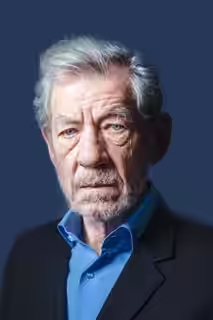
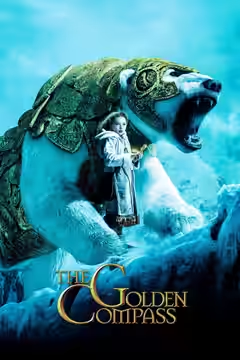
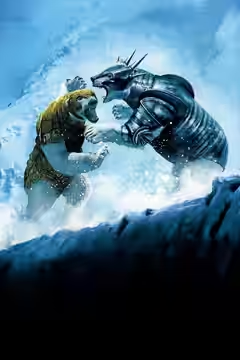
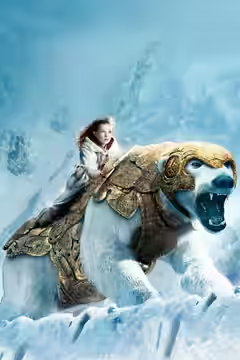
Dakota Blue Richards plays Lyra as a liar, a sulker and a quick thinker who knows she is cleverer than the adults. She is not sweet, which is correct. Kidman plays Coulter almost without moving; the smile does the work, and it is the most frightening thing in the film. Daniel Craig’s Lord Asriel is on screen for a few minutes and then gone north, which follows the book but leaves a hole where a leading man was. Freddie Highmore gives Pantalaimon a worried, sensible voice. Ian McKellen’s Iorek Byrnison, the armoured bear, has weight: fur that shifts, plate that clanks, a tired dignity in the delivery. When he finally fights another bear we sat up for the first time in half an hour.

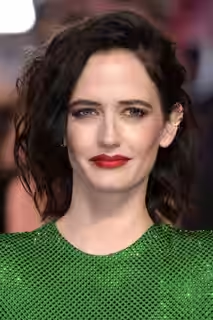
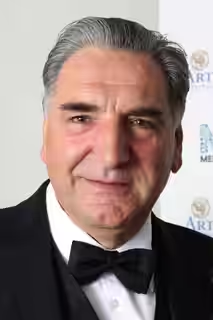
Everything else is hurried. Three editors are credited, Anne V. Coates, Kevin Tent and Peter Honess, and the film cuts like a thing that has been through three sets of hands. Characters arrive, say the line that identifies them and leave. Eva Green’s Serafina Pekkala flies down, speaks, flies off. Sam Elliott’s Lee Scoresby turns up with a hat and a balloon as if from a Western playing next door. Jim Carter’s John Faa and Tom Courtenay’s Farder Coram are given a deck to stand on and a speech each. Alexandre Desplat’s score works hard to tell us things the script has not had time to.

The Magisterium is the clearest casualty. In Pullman it is a church; here it is a committee in a grand building, with Christopher Lee as its First High Councilor glowering in a dark room, and nobody ever says what it believes. A children’s film is entitled to soften a book. But a villain with no stated belief is just a man in a hat, and Lyra’s flight loses its point when the thing she is running from has none. The film also stops a chapter or so short of the novel and closes on a promise of more rather than an ending. More did not come.

Weitz is plainly most at ease in the quiet scenes between Lyra and Pan, a girl and her own conscience arguing in a corridor about what to do next, and those are the scenes with a director in them. The scale swallows him.

See it with a child of about ten who has not read the book, and see it for the bears and for Kidman. Readers of the novel will recognise everything and wait for an argument that never arrives. At home it is less painful, because you can pause and explain who everyone is, which the film in a cinema leaves you to work out alone.
Critical consensus AI synthesised

50
Positive
2
Mixed
5
Negative
7

Most critics rate the film as mixed to poor, and the praise that does exist clusters almost entirely in one department: the look of it. The daemons, the northern landscapes, the production design and the blend of live action with effects are admired even in the harshest reviews, and the polar-bear duel is singled out more often than any other sequence. Nicole Kidman’s performance draws warm words, and Dakota Blue Richards gets a mention in the kindest notice.

The reservations cluster around the storytelling. Reviewers call the adaptation rushed and overstuffed, with characters arriving so quickly that none has room to breathe, and several find the result cold and oddly uninviting for all its spectacle. Others go further and accuse it of sanitising Pullman’s novel. The spread is wide: Eye for Film finds an energetic adventure, Empire calls it a crushing disappointment, and little in between is enthusiastic.

The Hollywood Reporter
29 November 2007 · Kirk Honeycutt
70*

Honeycutt finds the film an engaging, imaginative fantasy with a strong story, though its rapid succession of characters weakens the plot. He especially praises the superb blend of live action, computer-generated imagery and visual effects.

Read the full review →
RogerEbert.com
64*

The page could not be accessed, so the critic’s verdict is unavailable. I cannot determine what the review singles out for praise or complaint.

Read the full review →
Screen Daily
30 November 2007 · Roger Clarke
64*

The readable excerpt does not reveal the critic’s verdict. It also provides no specific praise or complaint beyond the plot description.

Read the full review →
The New York Times
64*

The supplied page text does not reveal the critic’s verdict. It provides no details about what the review praises or criticizes.

Read the full review →
The AV Club
6 December 2007 · C+ · Keith Phipps
63

Phipps finds the adaptation overstuffed and rushed, though it succeeds in bringing Pullman’s world to the screen. He praises the production design and effects, but says they crowd out character development and reflection.

Read the full review →
Radio Times
★★★ · Jamie Russell
60

Russell gives the film a measured three-star assessment. He highlights its imaginative parallel-universe setting, populated by daemon familiars, flying witches and the Magisterium.

Read the full review →

Straight answers AI written, from our review

Is The Golden Compass worth watching?
The Golden Compass is worth watching mainly for its armoured bears and for Nicole Kidman, and we scored it 54. Chris Weitz builds Philip Pullman's world with care and then rushes through it, so characters arrive, say one line and leave. See it with a child of about ten who has not read the book; readers of the novel will wait for an argument that never comes.
How long is The Golden Compass, and what is it rated?
The Golden Compass runs 1h 53m and is rated PG-13 by the MPA in the US. It is an adventure and fantasy film.
Where can I watch The Golden Compass in the US?
The Golden Compass is streaming on The Roku Channel and Tubi in the US, and it is also available to rent from Amazon Prime Video from $3.99. It leaves The Roku Channel on 2 October. Availability is checked daily; the links above go straight to each service.
Is The Golden Compass based on a true story or a book?
The Golden Compass is based on a book, Philip Pullman's novel Northern Lights, the first of the His Dark Materials trilogy, published in America under the film's title. The film follows the plot closely but removes the book's anger at organised religion and stops a chapter or so short of its ending. Knowing the novel helps you follow who everyone is, but will also show you what has been cut.
What should I watch after The Golden Compass?
After The Golden Compass, try Spirited Away (2001, Fi1m 92): A girl, a strange world and real stakes, from Miyazaki, with no committee in sight. Then Pan's Labyrinth (2006, Fi1m 87): Del Toro’s child in a cruel adult world; for grown-ups only, and the stronger for it.

Cast

Awards

Academy Awards, 2008

Nominated
Best Production Design
Won
Best Visual Effects

Broadcast Film Critics Association Award for Best Family Film, 2007

Nominated
Broadcast Film Critics Association Award for Best Family Film

If you liked this, try…

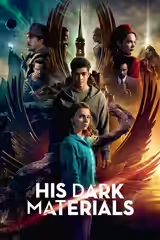
  1. His Dark Materials (2019) · not on Fi1m yetThe same book given the hours it needed, and a Lyra allowed to grow up.

  2. Stardust (2007) · not on Fi1m yetAnother British fantasy from the same year that remembered to enjoy itself.

  3. Spirited Away (2001, Fi1m 92)A girl, a strange world and real stakes, from Miyazaki, with no committee in sight.

  4. The Dark Crystal (1982) · not on Fi1m yetHenson’s puppet world, odd and sincere, built with the care this film’s north shows.

  5. Pan's Labyrinth (2006, Fi1m 87)Del Toro’s child in a cruel adult world; for grown-ups only, and the stronger for it.