Sidney Franklin’s film of Pearl S. Buck’s novel is handsomely built, slow, and led by two white actors in Chinese roles, which is hard to look past. Luise Rainer, saying almost nothing, and a frightening storm of locusts get it through.
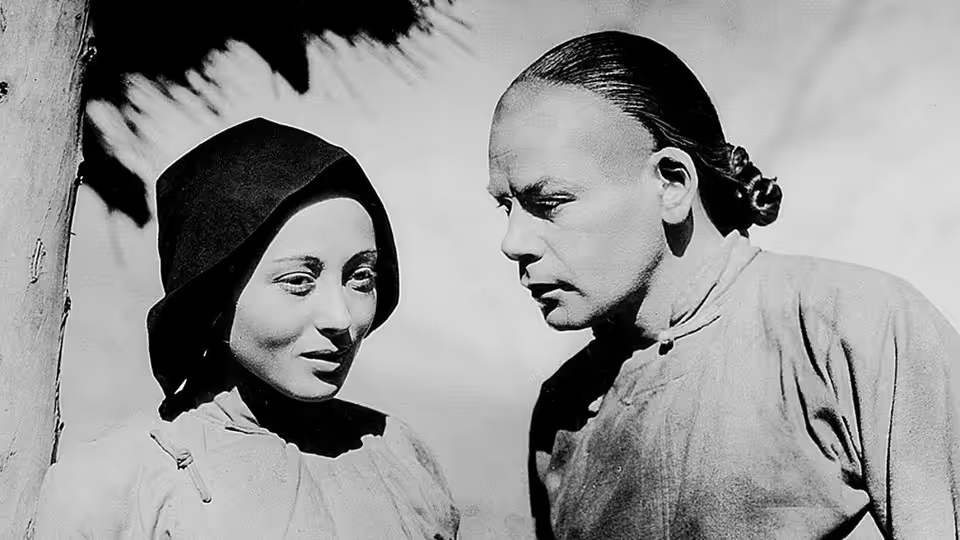
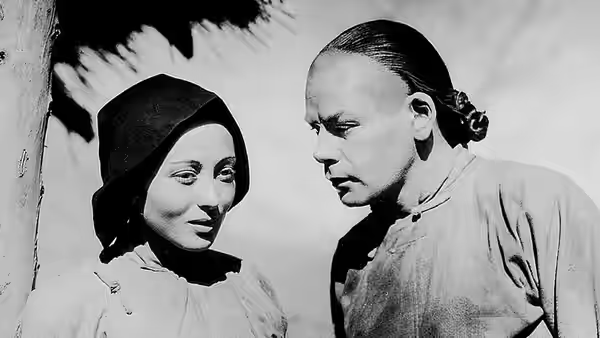
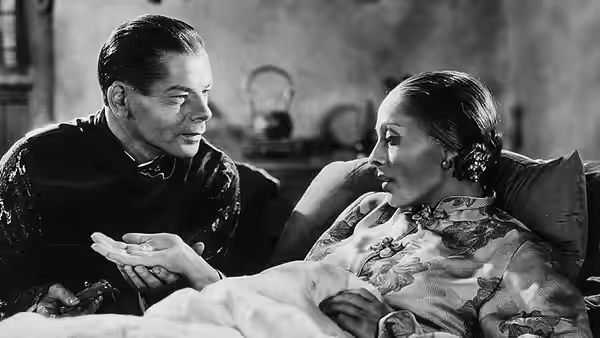
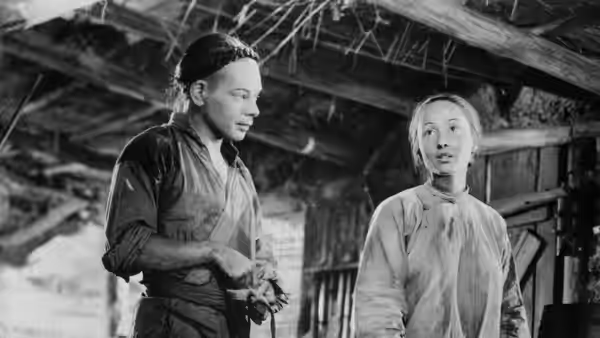
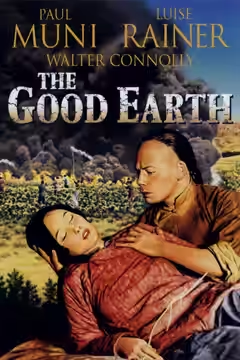
Pearl S. Buck’s novel was a large book about a small life: a farmer, his wife, their fields and the weather. Sidney Franklin’s film, produced by Irving Thalberg, gives it 139 minutes, a valley of terraced fields and a village with real dust in the streets, and it takes the book seriously in every way but the one that matters most. The two people at the centre of this Chinese family are played by Paul Muni and Luise Rainer, with taped eyelids and darkened skin, and the Chinese actors in the cast are stood behind them. That is the fact you have to make your peace with before the first scene is over, and we never quite did.
We recommend it, with that caveat placed in front of the recommendation rather than after it, because of what Rainer does with O-Lan. The screenplay, by Tess Slesinger, Claudine West and Talbot Jennings, gives her very few lines and she seems to have asked for fewer. On the walk home from the wedding Wang eats a peach and throws away the stone; O-Lan stoops, picks it up and keeps it, and Rainer does not look at him or at us. Later she gives birth alone in the hut and is back at the harvest the same afternoon. That moved us more than we were ready for, and it was not the labour that did it. It was the way she comes out of the door afterwards and simply picks up where she left off, as if nothing about the day was worth mentioning.
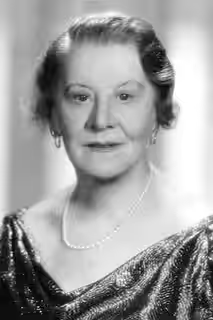
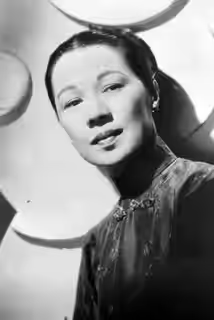
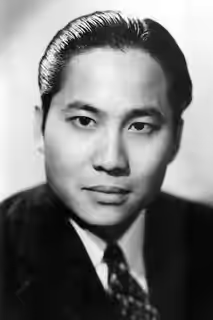
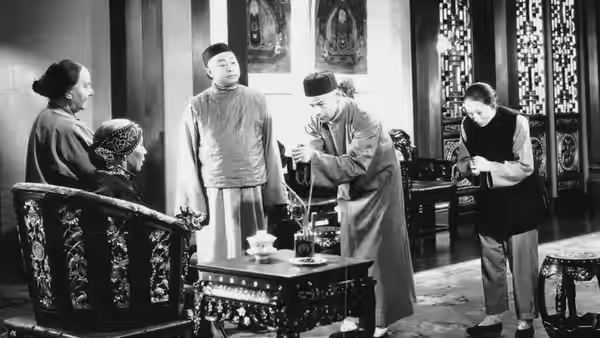
Muni is another matter. He plays Wang as a grinning innocent in the first half, with a sing-song delivery that belongs to no country we know of, and as a sulking landlord in the second, and neither is a person. We winced at the early scenes, and not only at the make-up. Walter Connolly’s Uncle, a professional sponger, is the one performance among the leads that knows it is in a comedy of manners, and Charley Grapewin’s Old Father cackles over his tea to good effect. Keye Luke, Soo Yong, Roland Lui and Ching Wah Lee get the Chinese faces into the film, and are given the smaller parts to do it in.
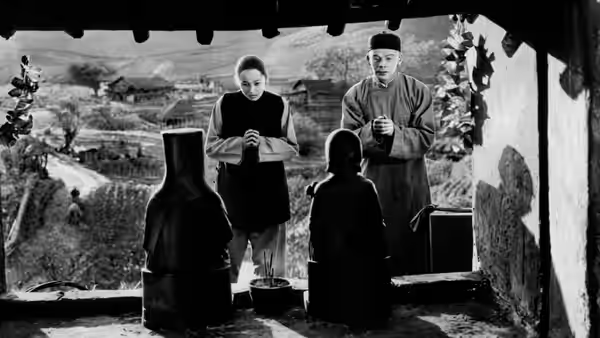
Karl Freund shoots the land as the book describes it. The horizon sits low and the sky takes up most of the frame, so that the family looks small even when it is prospering. When the drought comes he lets the light go flat and white, and the editors, Slavko Vorkapić and Basil Wrangell, dissolve from the empty well to the withered stalks to O-Lan scraping a pot, a montage that does more in a minute than the dialogue manages in ten. The city sequence, a night of crowds, torches and shouting, is staged on a scale that most films of the period could not have afforded and it looks it. Herbert Stothart’s score is less disciplined. It borrows a pentatonic tune and brings the strings in whenever O-Lan goes quiet, which is exactly when she needs no help.
The set piece that every review from 1937 mentions is the locusts, and they were right to. The sky darkens, the farmers run into the fields with flails and torches to burn a break, and the insects land on faces and hands and in the frame in numbers that made us sit back. We were frightened, and we admit we were thrilled, and for those few minutes we understood why the first critics forgave the rest.
The rest needs forgiving. After the family’s fortunes turn, Wang brings a dancer from the tea house, Lotus (Tilly Losch), into the household, the Uncle and Cousin move in, and the film settles into a long, furnished middle stretch in which people sit in rooms and disappoint each other. It is the part of the book that most needed cutting and it is the part Franklin keeps. Time Out’s later verdict, that this is a cautious and overblown Thalberg production, is nearer our view than the raves it opened to. The handful of reviews we have read are warmer than we are, and we think the difference is that they were judging the effort and the expense, and we are judging what the camera is pointed at.
Watch it for Rainer and the locusts, and know going in that the film’s idea of China did not include letting Chinese actors play its leads.