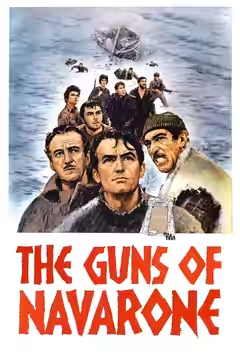
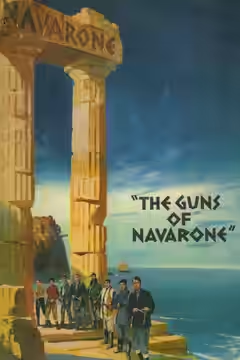
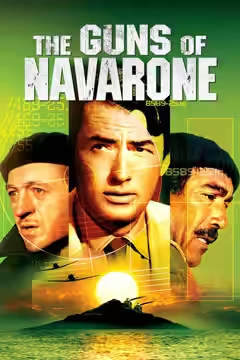
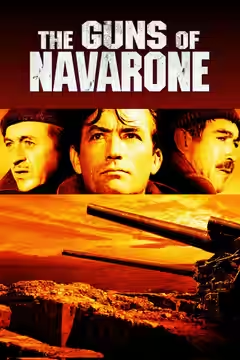
J. Lee Thompson’s raid on the German guns is a big, well-made adventure with a storm and a cliff climb that still grip, and a Carl Foreman script that keeps stopping to argue about war. Stay for the climbing.
Carl Foreman’s screenplay, from the Alistair MacLean novel, sends six men up a cliff to blow up two guns, and it wants to be two films at once: a large, handsome adventure and a film about whether the adventure is worth the men it costs. J. Lee Thompson directs the first with real skill. The second is left to the actors, standing in caves, saying what they think about war. There is room for both in 160 minutes, and the room is part of the problem.
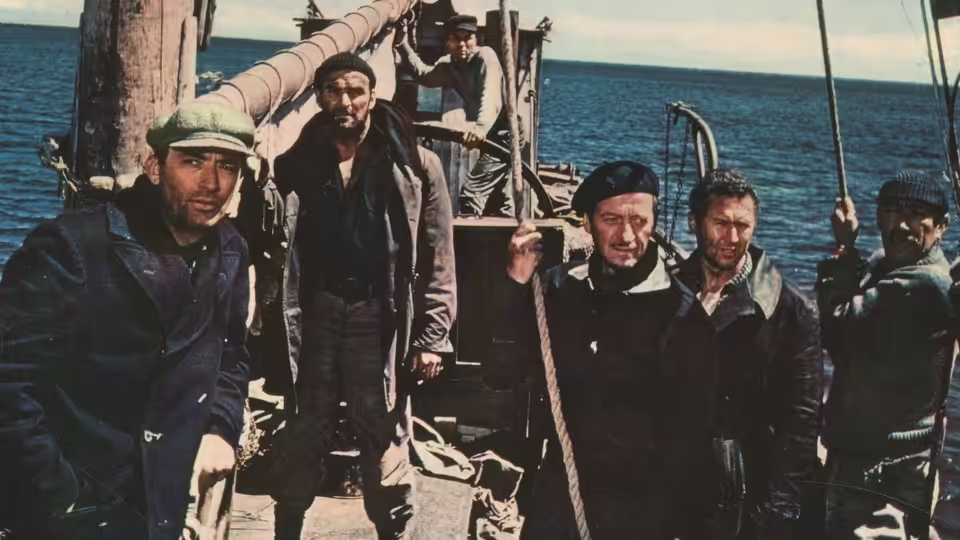
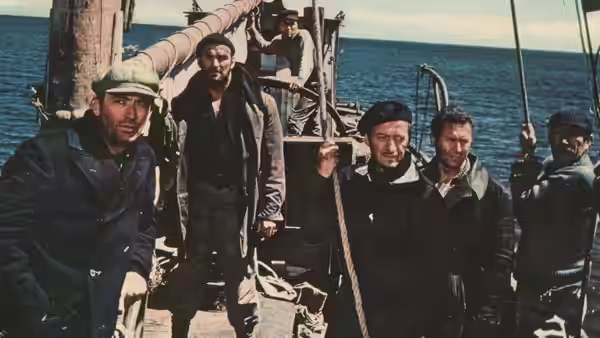
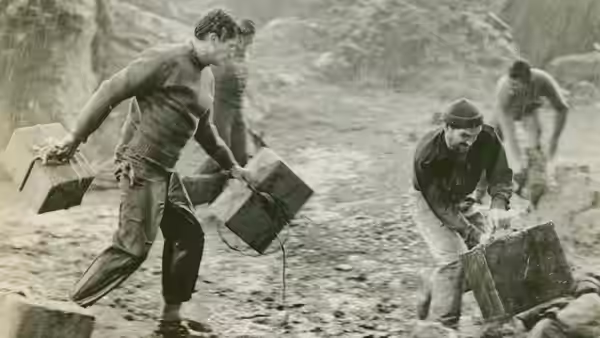
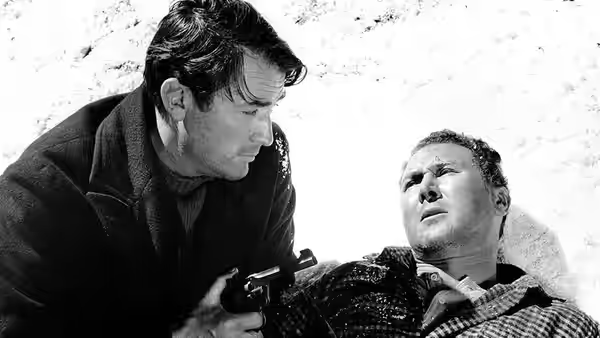
The storm that wrecks the fishing boat is plainly a studio tank, a wind machine and a great deal of thrown water, and it does not matter. Thompson shoots it close and wet, and Alan Osbiston never leaves a shot up long enough for us to look at the join. The cliff climb that follows is the best thing in the film. It is night and raining, Oswald Morris lights it with almost nothing, and the men are small grey shapes on black rock. We watched Peck’s hand go up for a hold and found we were holding our own breath.
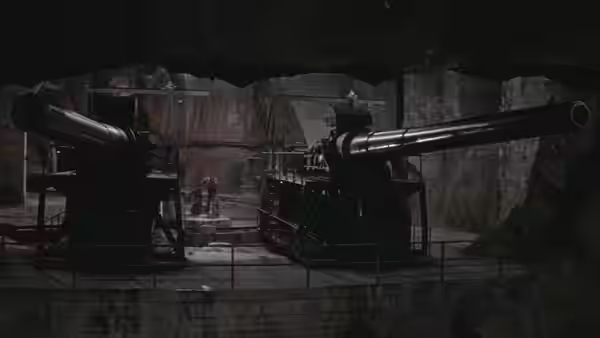
In daylight Morris opens the frame out: white villages, blue water, the island looking like somewhere the war has arrived at by mistake. Geoffrey Drake’s fortress is the opposite world, grey concrete corridors and a lift, and at the end of them the gun chamber itself, two barrels the size of buses on turntables over a cave mouth. We hear about these guns for two hours before we see them. When we do, they are worth the wait.
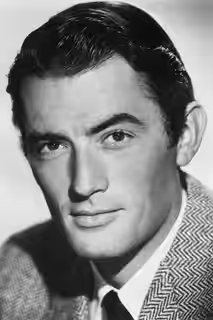
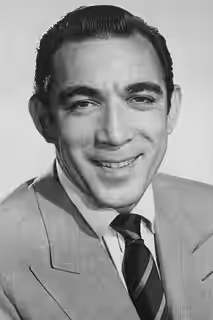
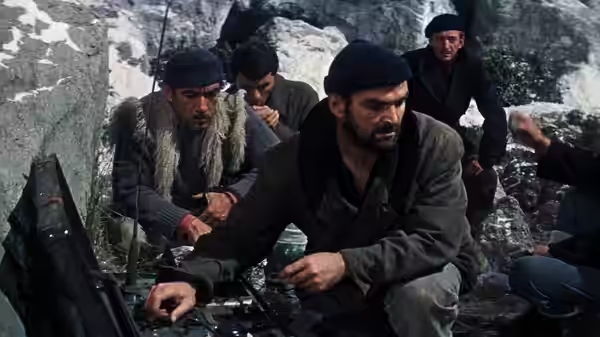
Peck plays Mallory as a man who has decided to show nothing, and he keeps to it through the storm, the climb and every argument. It is a choice, and it costs the film, because Foreman keeps asking us to watch what the mission is doing to Mallory and Peck’s face declines to say. Quinn is the opposite, all appetite, and he makes Stavros’s grudge against Mallory the one relationship that feels lived in.
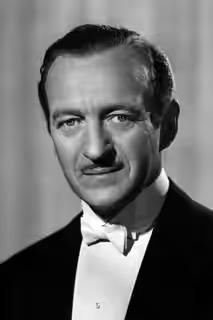
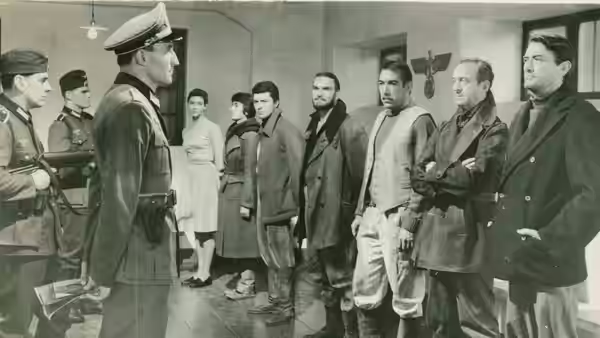
Niven is why the talk works when it works. His Miller grumbles through the first half like a man on a poor walking holiday, and then, late on, gets a scene in which he tells Mallory exactly what he thinks of him, and it was the one speech that made us sit up. Stanley Baker has the best small part, a knife man who has lost his taste for it, and far too little of it. Irene Papas, as the resistance fighter Maria, looks at these men as if she has already buried several like them.
The rest of the talk is the trouble. Foreman’s speeches about the futility of it all arrive on schedule and they stop the film rather than deepen it; the men say what they think about war in full sentences, facing the camera, in the way men in films of this period do. Somewhere in the middle stretch, between the fortress and the interrogation rooms, we found ourselves working out how much was left, which is not something we felt for a second on the cliff. Dimitri Tiomkin does not help the quiet scenes, laying a brass march over moments that wanted silence. His main theme is a proper tune, though, and the Greek strings under the village scenes are the warmest thing in the score.
Much of the furniture the later men-on-a-mission films used is here first: the team of specialists, the target that cannot be reached, the boat, the clock. Where Eagles Dare (1968), from another MacLean novel, took the furniture and threw out the conscience, and is more fun for it. This film keeps the conscience and does not quite know where to put it. That is a more honourable failing, and it still makes for a long evening.
See it on the largest screen you have, and forgive it its length; the storm and the cliff need the width, and the speeches are over soon enough. It carries a PG, and a child of ten will love the climb and fidget through the caves, which is roughly how we felt too.