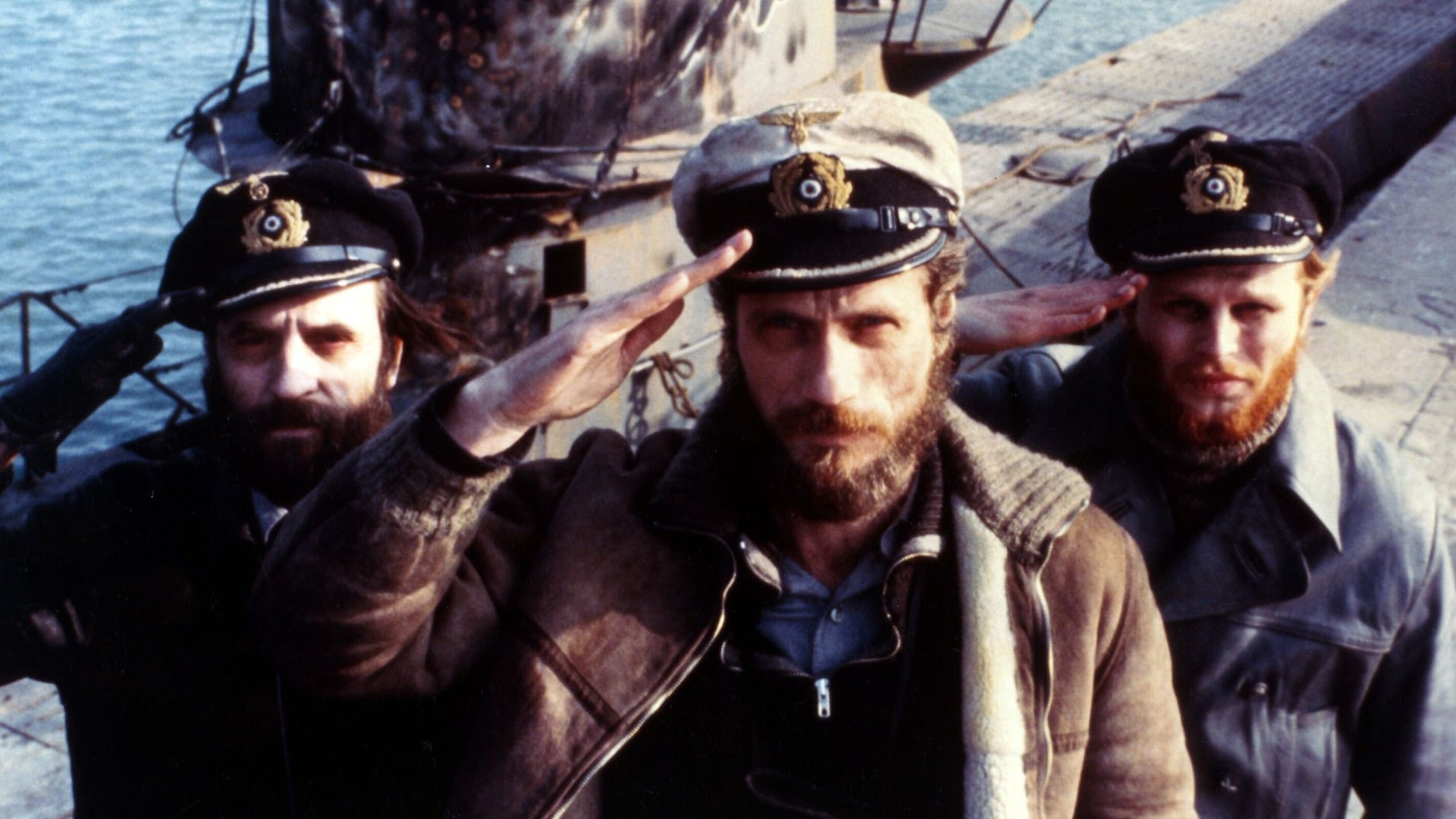
Wolfgang Petersen’s submarine drama is gripping, humane and worth the strain. Jürgen Prochnow’s captain gives it weight, though several of the men around him never become much more than frightened faces in a confined space.
Das Boot is a war film we recommend warmly, provided a relaxing evening is not the requirement. Wolfgang Petersen follows a German U-boat crew through a Second World War mission and makes their confinement hard to shake off. At 150 minutes, the film gives waiting and routine enough time to become oppressive before the danger makes us miss them. It is exceptionally effective at making us care whether these men survive, even when it has given us little else to know about them.
Jürgen Prochnow’s captain is the main reason that concern holds. Prochnow makes command seem like a demanding job, requiring concentration rather than a supply of stirring speeches. We watch him because the other men need him to know what to do, and because he cannot make the boat any less vulnerable. It is a restrained performance that gives Petersen a reliable centre, keeping the fear personal when the action could easily reduce everyone to a collection of shouted orders.
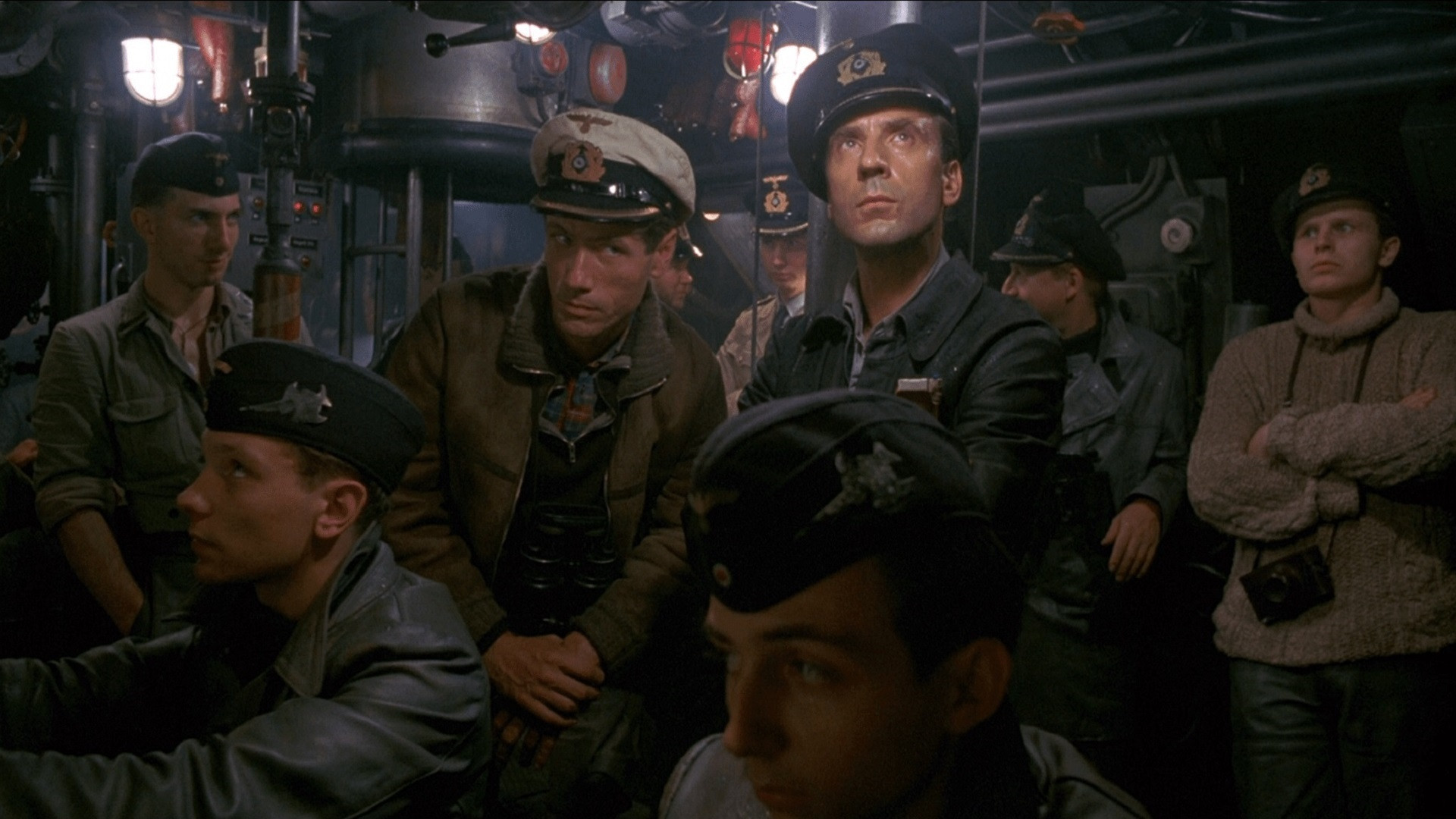
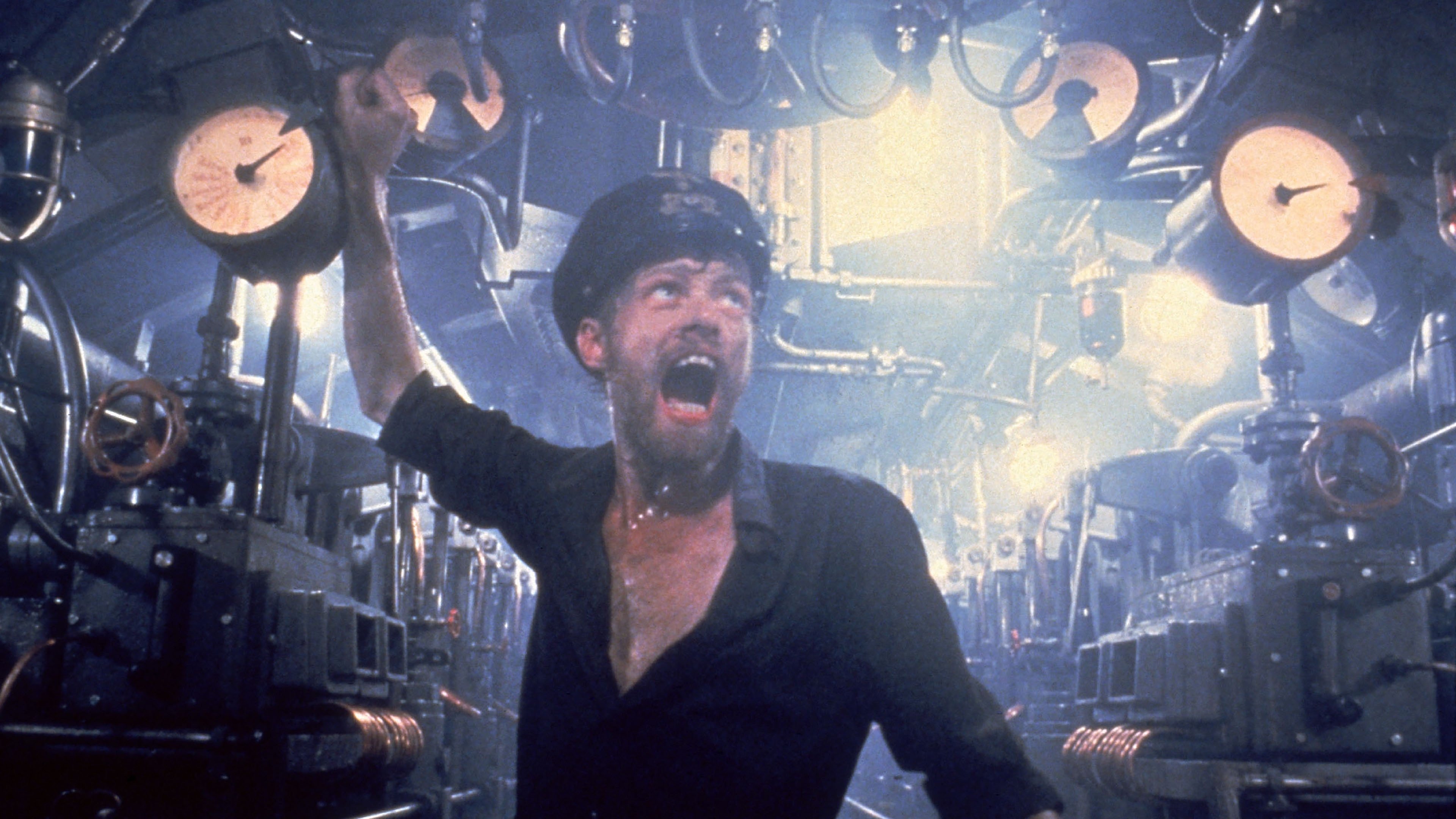
Jost Vacano’s cinematography is just as important: the cramped interior remains legible, even when there seems scarcely enough space for the crew to move. The action is exciting without making the submarine feel conveniently larger whenever the camera needs access. Rolf Zehetbauer’s production design gives the men a convincing place to work, with equipment claiming space that people might reasonably want for themselves. The closeness does not wear off once we have understood the layout; Petersen keeps making us sit with it.
Hannes Nikel’s editing lets the tedious stretches register instead of treating them as an inconvenience to be hurried past. That patience pays off during the depth-charge sequences, since the men spend so much time in a place where they cannot get out of one another’s way. We were frightened by the explosions heard from inside the boat, with so little visible to tell us how much worse things might get. The sound makes us listen as intently as the crew, waiting for the next explosion.
Klaus Doldinger’s music helps sustain the tension, though it sometimes gives fear more encouragement than it needs. The film has already made the men’s helplessness clear through the sounds outside their confined quarters. Petersen’s compassion works with similar directness: we spend enough time with the crew for their distress to matter, regardless of their uniforms. His view of war is not complicated, but the physical misery gives it more force than a speech could.
The weakness is how unevenly those men are developed. Herbert Grönemeyer’s Werner and Klaus Wennemann’s chief engineer belong to a crew we believe in as a working group, but several individuals remain difficult to describe beyond their function aboard. Prochnow has enough weight to cover some of that thinness, though he cannot supply everybody else’s inner life. A war film can make a group worth caring about without giving each man an elaborate history; here, a little more distinction would have made the anxiety more personal.
Those limits do not blunt the film’s command of suspense. By the standards of a war thriller, this is patient filmmaking, willing to spend time on the dull business of endurance and trusting us to stay alert. Allow it your full attention, and choose something else if enclosed spaces already make you uneasy.