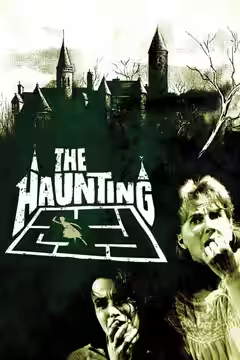
Robert Wise’s haunted-house film shows us nothing and frightens us anyway, with a swelling door, a knocking wall and Julie Harris coming apart in whispers. The script explains too much and the men are dull, but the house is not.
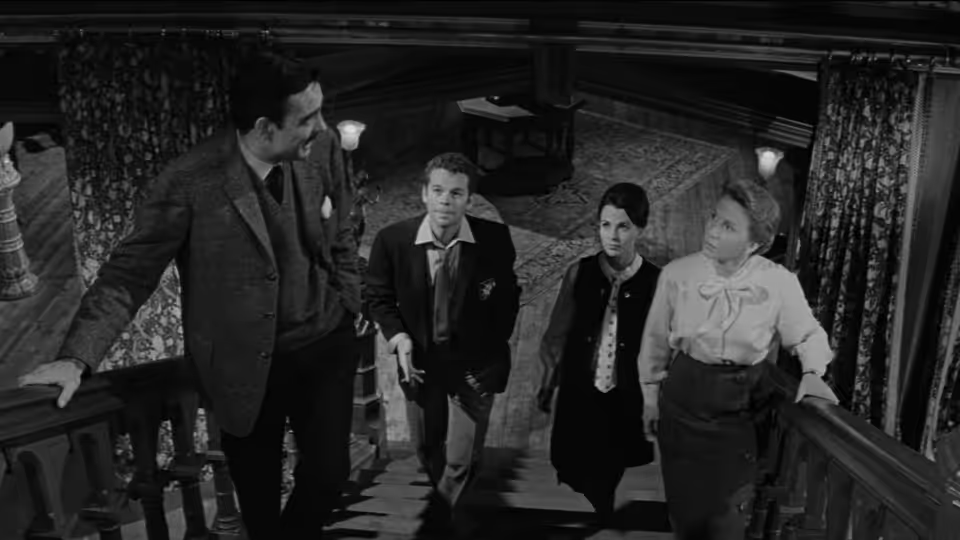
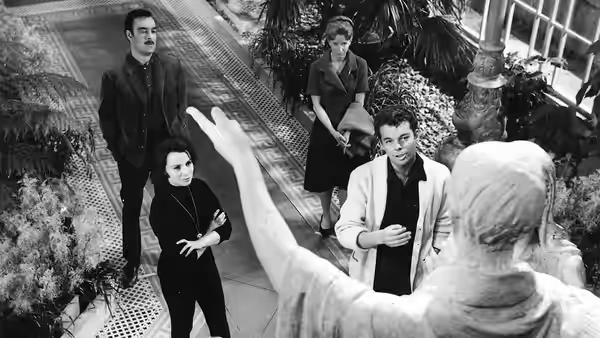
Robert Wise takes Shirley Jackson’s novel The Haunting of Hill House and does the thing horror films almost never trust themselves to do. He shows nothing. No ghost, no figure at a window, no face in the mirror. Four people move into a house that does not want them, and for 112 minutes the film frightens with a door, a wall, a cold patch of corridor and the inside of one woman’s head. It is a fine film with a talky middle and two dull men in it.
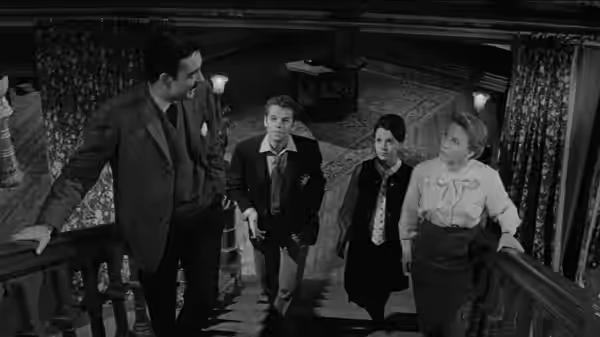
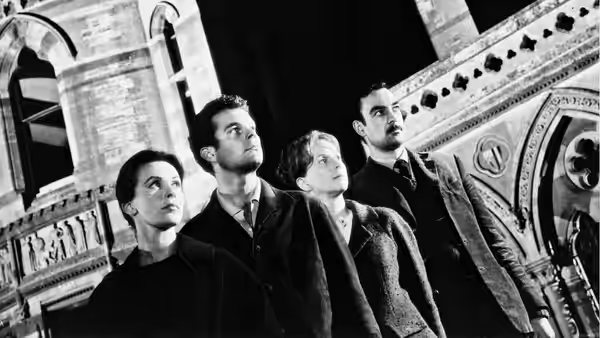
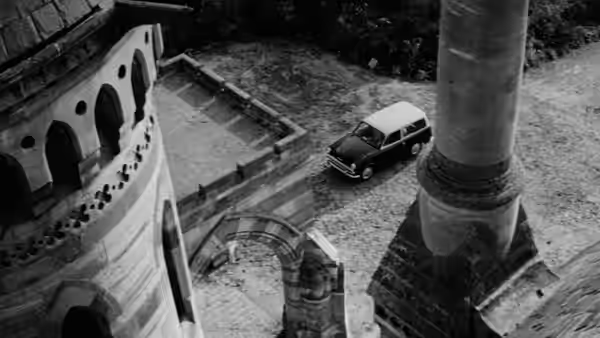
Davis Boulton shoots the rooms through wide lenses, so the corners bow and a corridor looks longer than the walk down it. Outside, the house is photographed against a nearly black sky, its stone chalk-white, and Wise returns to it again and again, tilting up at the same windows until we have decided for ourselves that the place is looking back. Elliot Scott fills the interiors with pattern and statuary: a nursery door with cherubs on it, a library with an iron spiral staircase nobody should climb, walls whose plaster is worked into faces if you look long enough. Nothing about any of this is explained. It is simply there when the camera turns.
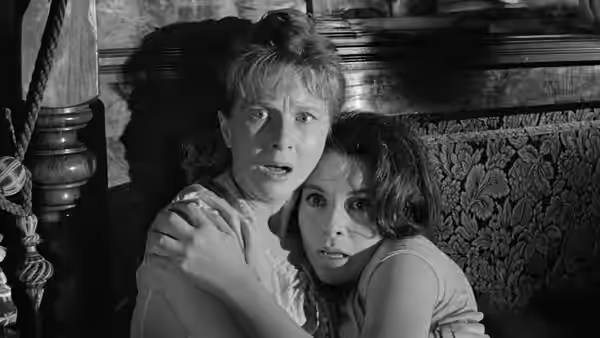
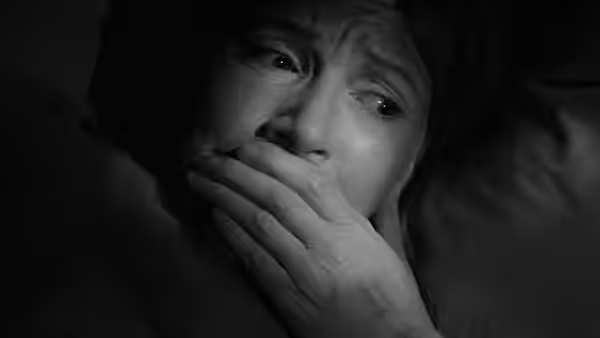
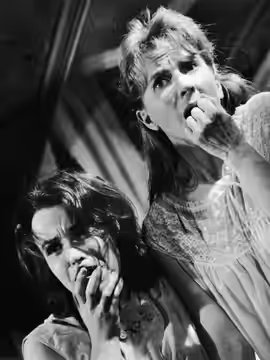
The frightening is done with noise. Humphrey Searle’s score is held back for most of the running time and what fills the space is the house itself: a pounding that starts at the far end of a corridor and works along the wall to the bedroom door, a child’s giggle, a murmur that might be words. In the film’s best scene Eleanor and Theodora sit up in bed and watch a door bend inwards, the panels swelling as if something on the other side had leaned on it with its whole weight. We watched that door on a sofa, in daylight, and it frightened us badly. What did it was that Wise holds the shot and lets the wood breathe rather than cutting away, and Ernest Walter’s edit goes only to the two women’s faces and back. Nothing comes through. That is worse.
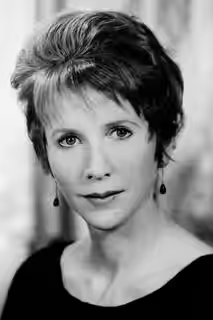
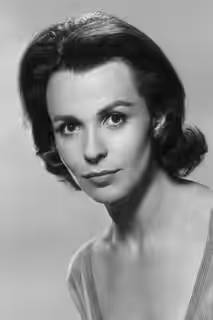
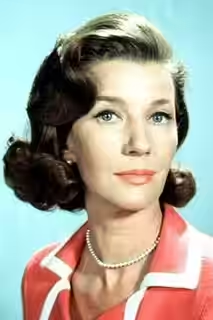
Julie Harris carries it. Eleanor has never had a life of her own, and Harris plays her as a guest at a house party who cannot stop apologising for being there. Nelson Gidding’s script gives her a running interior voice, whispered on the soundtrack. At its best it lets us hear the exact moment a frightened woman decides the house wants her and is flattered. At its worst it tells us what Harris’s face has already said. Claire Bloom’s Theodora is sleek, amused and cruel when bored, and the scenes between the two women, in which affection and spite change places by the line, are where the film is most alive. It hints at what Theodora is and then decides it has said enough.
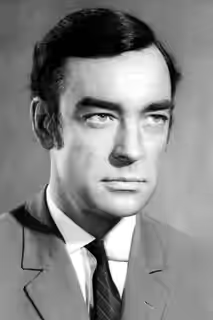
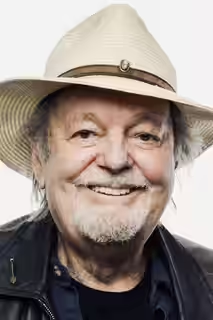
The men are the trouble. Richard Johnson’s Markway is upright, decent and a lecture in a tweed jacket; Gidding has him explain the supernatural in paragraphs, with a tape measure and a theory, and the film stops dead each time. Russ Tamblyn’s Luke is there to disbelieve and to eye the drinks, and Tamblyn plays him as a man who has wandered in from a lighter picture. Rosalie Crutchley, by contrast, gets two scenes as the housekeeper Mrs Dudley and takes both, with a speech about what happens here after dark that she delivers like a bus timetable. Fay Compton has one scene as the owner and makes it count.
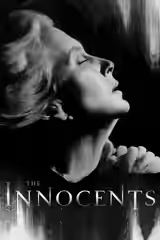
Wise is not a director anyone associates with horror; the films either side of this one are West Side Story (1961) and The Sound of Music (1965). That is part of why it works. He approaches the haunting as a craftsman rather than a believer, testing each effect and keeping only those that still work with the lights on. Against Jack Clayton’s The Innocents (1961), the obvious comparison, this is rougher, and it frightened us more. Jackson’s novel is better on the inside of Eleanor’s head, which is the one room a camera cannot enter, and the voice-over is the film’s admission of that.
The second half we will leave alone, except to say that the script’s fondness for explanation catches up with it and the final stretch is busier than the house needed it to be. Watch it at night with the sound up, because the sound is where the film lives. It runs 112 minutes and carries a 12, which is about right: there is nothing in it to see, and a great deal to hear.