Wes Craven strands a suburban family in the desert and sets another family loose on them. It is cheap, ugly in places and badly acted in others, and it frightened us anyway. Seventies horror at its least safe, for those who want that.
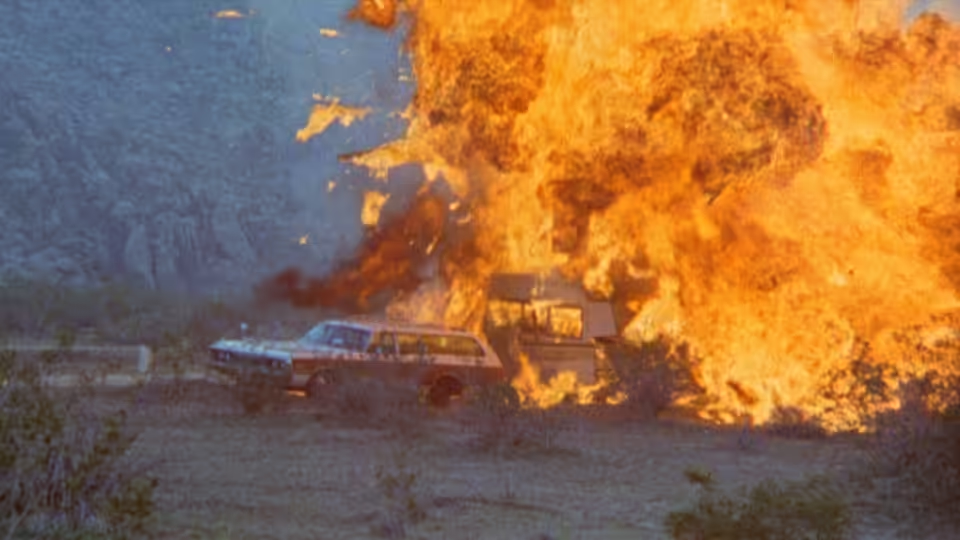
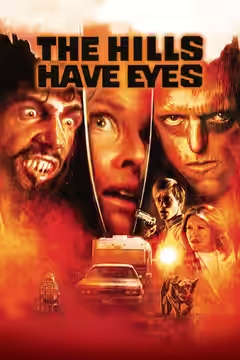
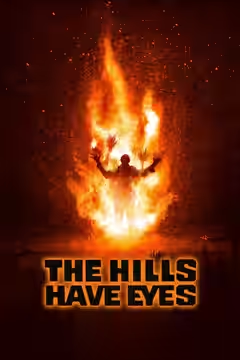
The Carters are the sort of family American films spent the seventies being kind to: a retired policeman, his wife, three grown children, a son-in-law, a baby and two Alsatians, towing a caravan from Cleveland to California. Wes Craven, who wrote, directed and edited The Hills Have Eyes, drives them off the road in the Nevada desert and hands them to a second family who live in the rocks and eat what they catch. It is a blunt, cheap and often clumsy film, and at 90 minutes it is also one of the more efficient frightening machines of its decade. We recommend it to anyone who knows what they are in for.
Craven’s first film, The Last House on the Left, was a nasty piece of work that we have never managed to admire. This one is better made in every department. Eric Saarinen shoots the desert in flat, hard daylight where nothing casts a useful shadow, then at dusk turns the rocks black against orange so that any outline could be a man. At night he lights the caravan from inside like a lantern, and the family sits in it as visible as fish in a tank. Don Peake’s score is percussion, scraped strings and electronic groans, and it falls silent for long stretches so that the wind and the crackle of the CB radio can do the work.
The set-up is patient for a film of this kind. Fred (John Steadman), the old man at the petrol station, tells them to stay on the main road, and Russ Grieve’s Big Bob ignores him with the confidence of a man who used to carry a badge. A jet screams over at rooftop height, the car leaves the track and hits rock, and for twenty minutes the film does little but let people stand in the heat and argue about what to do. Craven cuts these scenes slowly, so that when the pace changes you feel it in your stomach. We will not say what happens in the caravan after dark. Decades on, it is still hard to sit through.
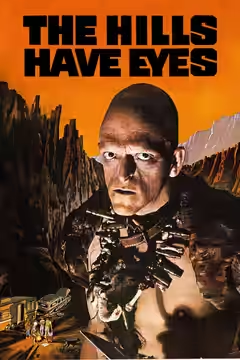
The hill people are less frightening when they talk and more frightening when they do not. James Whitworth’s Jupiter is given speeches about his father and what was done to him, and they land somewhere between the Old Testament and a pub bore. Michael Berryman, as Pluto, with his hairless head and long jaw, needs only to appear at a window. Joanne Jaffe dresses him and Lance Gordon’s Mars in hides, bones and other people’s boots, and the costumes say everything the dialogue labours over. Janus Blythe’s Ruby, the daughter who wants out, is the one member of that family drawn with any care, and Blythe plays her with a watchfulness the film could have used more of.
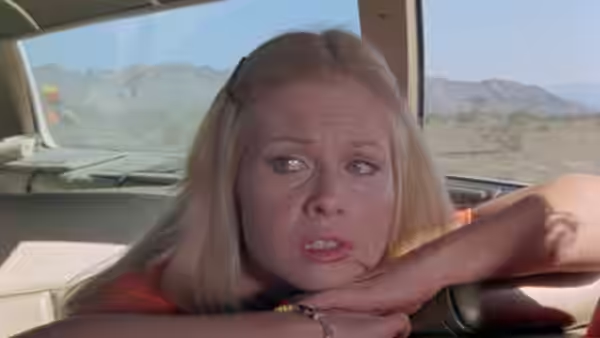
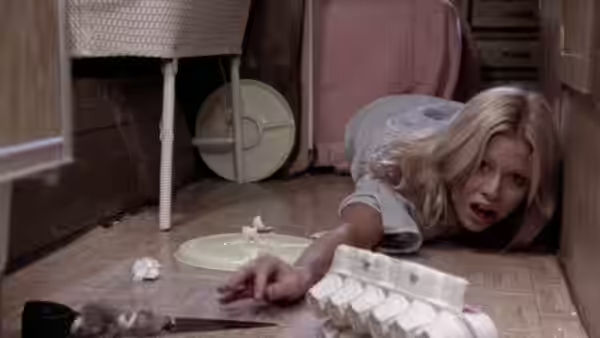
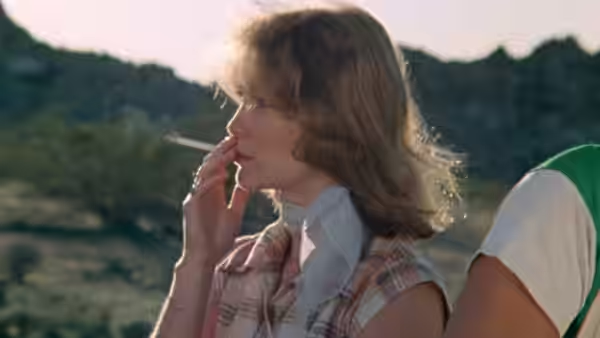
The Carters are uneven. Virginia Vincent’s Ethel is written as a scold and played as one; Susan Lanier’s Brenda spends much of the film screaming, competently. Dee Wallace brings more feeling to Lynne than the script asks for, and Martin Speer’s Doug is decent and dull in the way sons-in-law often are. The performance the film rests on is Robert Houston’s. Bobby is a teenager who goes looking for a dog in the hills and finds something he decides not to tell his family about, and Houston lets us watch him make the decision. That face upset us more than any of the violence that follows. We had expected to be jolted by this film, not moved, and it is the moment it stops being a shocker and becomes a story about people.
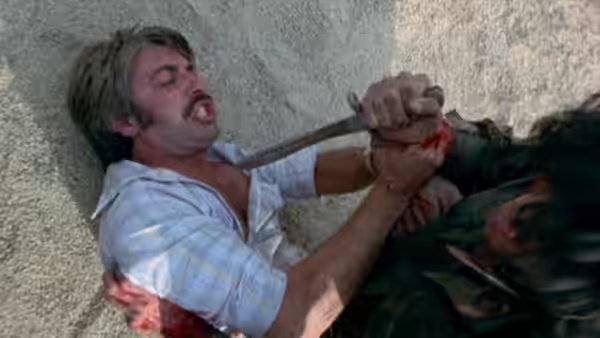
The last half hour is where the seams show. Craven wants the ordinary family to turn savage, and he gets there, but the means strain belief and one confrontation runs on well past the point where it has made itself clear. The baby is used for suspense in a way some viewers will find plainly cruel. Set against Craven’s own later work it has none of the wit of A Nightmare on Elm Street; set against its obvious model, The Texas Chain Saw Massacre, it is cruder and less strange. It also has more of a story than either, and people you can tell apart.
Watch it with the curtains shut, and notice how quickly you stop trusting the glass. It carries an 18 certificate, and the certificate is right.