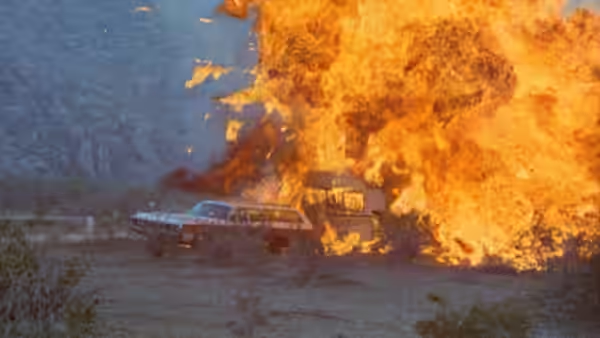
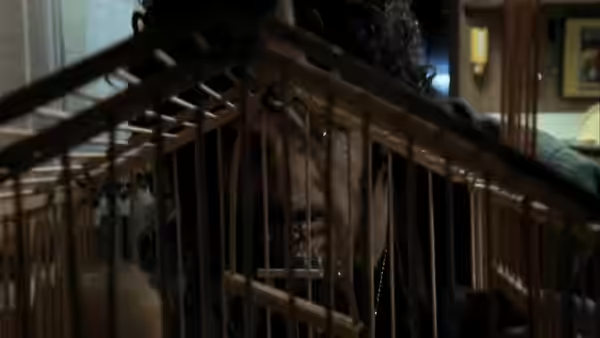
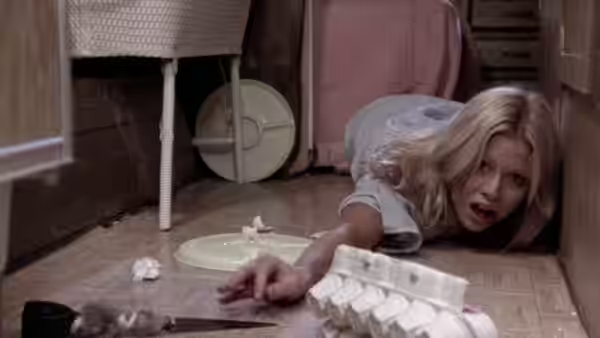
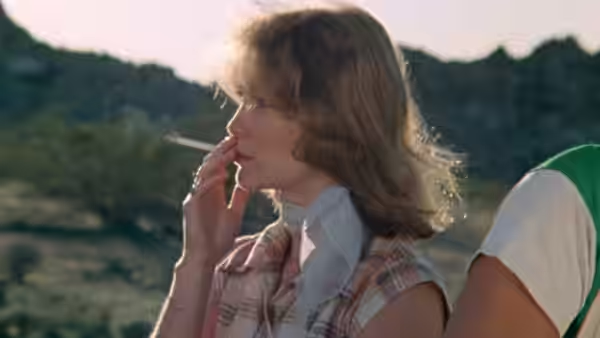
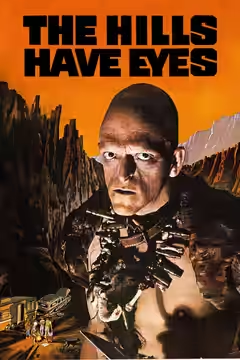
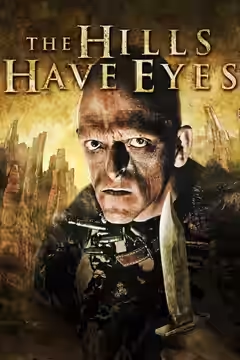
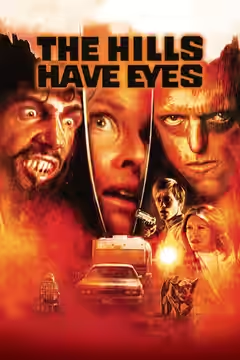
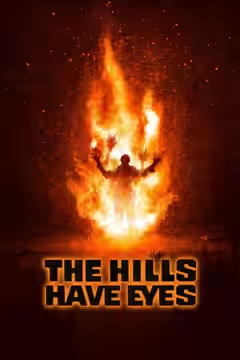
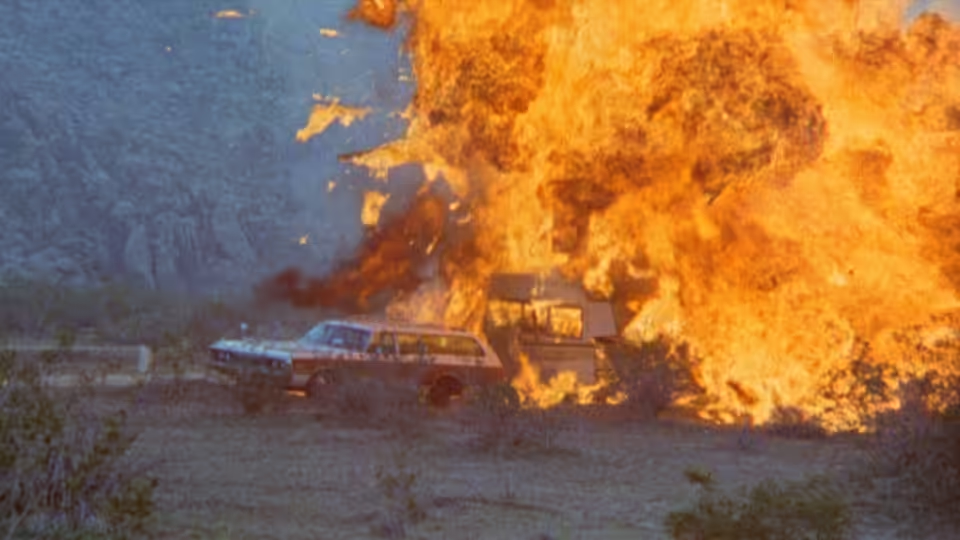
A station wagon burns beside a desert road as flames engulf the vehicle
Film review

The Hills Have Eyes

1977 · Directed by Wes Craven · 1h 30m · BBFC 18

In a sentenceStay on the main road, said the man at the petrol station; the film is ninety minutes of why

Big Bob Carter (Russ Grieve), a retired policeman, is driving his family to California across the Nevada desert, towing a caravan: his wife Ethel (Virginia Vincent), children Brenda (Susan Lanier) and Bobby (Robert Houston), daughter Lynne (Dee Wallace), her husband Doug (Martin Speer), a baby and two dogs. At a petrol station Fred (John Steadman) tells them to stay on the main road. Bob does not; he wants to see a silver mine they have been given. A jet screams overhead, the car leaves the track and hits rock, and they are stranded. Bob and Doug walk off in opposite directions for help. In the hills, Jupiter (James Whitworth) and his sons Mars (Lance Gordon) and Pluto (Michael Berryman) are watching and listening on the CB radio.

Plays from YouTube when you press play; nothing loads from them until then.

Fi1m review

Wes Craven strands a suburban family in the desert and sets another family loose on them. It is cheap, ugly in places and badly acted in others, and it frightened us anyway. Seventies horror at its least safe, for those who want that.

The Carters are the sort of family American films spent the seventies being kind to: a retired policeman, his wife, three grown children, a son-in-law, a baby and two Alsatians, towing a caravan from Cleveland to California. Wes Craven, who wrote, directed and edited The Hills Have Eyes, drives them off the road in the Nevada desert and hands them to a second family who live in the rocks and eat what they catch. It is a blunt, cheap and often clumsy film, and at 90 minutes it is also one of the more efficient frightening machines of its decade. We recommend it to anyone who knows what they are in for.

Craven’s first film, The Last House on the Left, was a nasty piece of work that we have never managed to admire. This one is better made in every department. Eric Saarinen shoots the desert in flat, hard daylight where nothing casts a useful shadow, then at dusk turns the rocks black against orange so that any outline could be a man. At night he lights the caravan from inside like a lantern, and the family sits in it as visible as fish in a tank. Don Peake’s score is percussion, scraped strings and electronic groans, and it falls silent for long stretches so that the wind and the crackle of the CB radio can do the work.

The set-up is patient for a film of this kind. Fred (John Steadman), the old man at the petrol station, tells them to stay on the main road, and Russ Grieve’s Big Bob ignores him with the confidence of a man who used to carry a badge. A jet screams over at rooftop height, the car leaves the track and hits rock, and for twenty minutes the film does little but let people stand in the heat and argue about what to do. Craven cuts these scenes slowly, so that when the pace changes you feel it in your stomach. We will not say what happens in the caravan after dark. Decades on, it is still hard to sit through.

The hill people are less frightening when they talk and more frightening when they do not. James Whitworth’s Jupiter is given speeches about his father and what was done to him, and they land somewhere between the Old Testament and a pub bore. Michael Berryman, as Pluto, with his hairless head and long jaw, needs only to appear at a window. Joanne Jaffe dresses him and Lance Gordon’s Mars in hides, bones and other people’s boots, and the costumes say everything the dialogue labours over. Janus Blythe’s Ruby, the daughter who wants out, is the one member of that family drawn with any care, and Blythe plays her with a watchfulness the film could have used more of.

The Carters are uneven. Virginia Vincent’s Ethel is written as a scold and played as one; Susan Lanier’s Brenda spends much of the film screaming, competently. Dee Wallace brings more feeling to Lynne than the script asks for, and Martin Speer’s Doug is decent and dull in the way sons-in-law often are. The performance the film rests on is Robert Houston’s. Bobby is a teenager who goes looking for a dog in the hills and finds something he decides not to tell his family about, and Houston lets us watch him make the decision. That face upset us more than any of the violence that follows. We had expected to be jolted by this film, not moved, and it is the moment it stops being a shocker and becomes a story about people.

The last half hour is where the seams show. Craven wants the ordinary family to turn savage, and he gets there, but the means strain belief and one confrontation runs on well past the point where it has made itself clear. The baby is used for suspense in a way some viewers will find plainly cruel. Set against Craven’s own later work it has none of the wit of A Nightmare on Elm Street; set against its obvious model, The Texas Chain Saw Massacre, it is cruder and less strange. It also has more of a story than either, and people you can tell apart.

Watch it with the curtains shut, and notice how quickly you stop trusting the glass. It carries an 18 certificate, and the certificate is right.

Critical consensus AI synthesised

77
Positive
3
Mixed
1
Negative
0

With only 4 reviews in so far, the lean is positive. Most critics find Craven’s desert horror still unsettling, crediting its low-budget realism and the unease of its vast, hostile setting, and Radio Times ranks it the strongest of his early cheap horror films for its suspense and shock imagery. Slant Magazine is the main qualifier: effective, but less frightening than its chief influence, with a climax that runs long and strains belief, though it singles out Robert Houston’s performance for its emotional complexity. Time Out’s verdict is not readable from what we have, so the spread cannot yet be called narrow or wide.

Slant Magazine
15 November 2021 · ★★★★½ · Eric Henderson
90

Henderson finds the film effective but less terrifying than its chief influence, with an overextended, credibility-straining climax. He praises Robert Houston’s emotionally complex performance and the UHD presentation’s improved detail and sound.

Read the full review →
Radio Times
★★★★ · Alan Jones
80

Jones calls it the best of Craven’s early low-budget horror films. He praises its sharp suspense and willingness to push shock imagery to its limits.

Read the full review →
Empire
1 January 2000 · Kim Newman
75*

Newman finds the film still unsettling and a reminder of horror’s once-unsafe edge. He praises its low-budget realism and the unease created by its vast, hostile desert setting.

Read the full review →
Time Out
· CA
64*

The available page metadata identifies this as a film review but does not reveal the critic’s verdict. It singles out no element for praise or complaint in the accessible text.

Read the full review →

Straight answers AI written, from our review

Is The Hills Have Eyes worth watching?
The Hills Have Eyes is worth watching for anyone who wants seventies horror at its least safe, and we scored it 74. It is cheap, clumsy in places and unevenly acted, yet Wes Craven's slow set-up and a long night in the caravan still frighten, and Robert Houston's Bobby gives it more feeling than we expected. Not for anyone who needs polish.
How long is The Hills Have Eyes, and what is it rated?
The Hills Have Eyes runs 1h 30m and is rated 18 by the BBFC in the UK. It is a horror film.
Where can I watch The Hills Have Eyes in the UK?
The Hills Have Eyes is not on any streaming or rental service in the UK at the moment. It is available in 3 other countries; change your country at the top of the page to see where. Availability is checked daily.
How violent or frightening is The Hills Have Eyes, and is it suitable for children?
The Hills Have Eyes carries an 18 certificate in the UK and an R in the US, and it is not suitable for children. A stranded family is hunted by another family in the desert, the night attack on the caravan remains hard to sit through decades on, and a baby is used for suspense in a way some viewers will find plainly cruel. Squeamish adults should also stay away.
How does The Hills Have Eyes compare to The Texas Chain Saw Massacre?
The Hills Have Eyes is the cruder and less strange of the two; The Texas Chain Saw Massacre is the film it is chasing, and Tobe Hooper's is the more ferociously effective. Craven's has more of a story and people you can tell apart, where Hooper's relentless scares leave its characters little room to be more than victims. Choose Hooper for pure dread, Craven for characters.
What should I watch after The Hills Have Eyes?
After The Hills Have Eyes, try The Texas Chain Saw Massacre (1974, Fi1m 87): The film this one is chasing; stranger, hotter and somehow even cheaper. Then Deliverance (1972, Fi1m 85): City men on a river, country men on the bank; the same nightmare with canoes; and Wake in Fright (1971, Fi1m 86): No cannibals, only heat, beer and hospitality, and it is more frightening for it.

Cast

If you liked this, try…

  1. The Texas Chain Saw Massacre (1974, Fi1m 87)The film this one is chasing; stranger, hotter and somehow even cheaper.

  2. Deliverance (1972, Fi1m 85)City men on a river, country men on the bank; the same nightmare with canoes.

  3. Wake in Fright (1971, Fi1m 86)No cannibals, only heat, beer and hospitality, and it is more frightening for it.

  4. Eden Lake (2008) · not on Fi1m yetThe English version: a lake, a couple, and teenagers who will not go home.

  5. Calvaire (2004) · not on Fi1m yetA Belgian village, a stranded singer and a welcome nobody asked for.