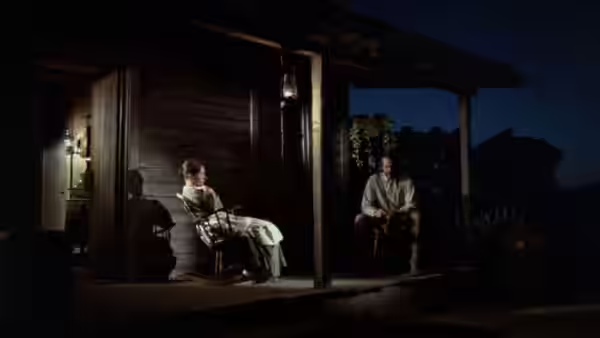
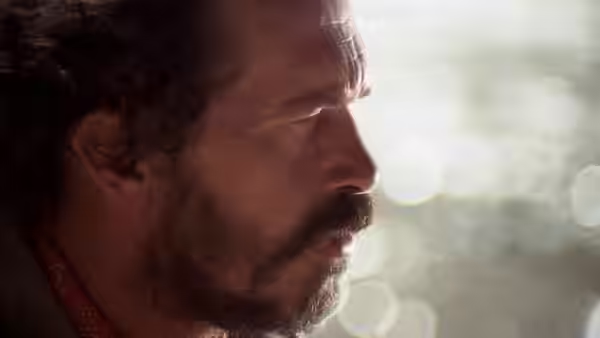
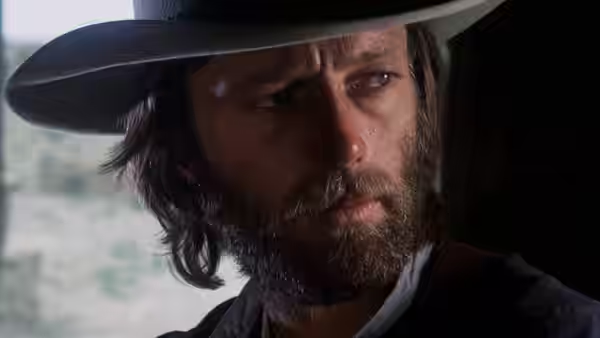
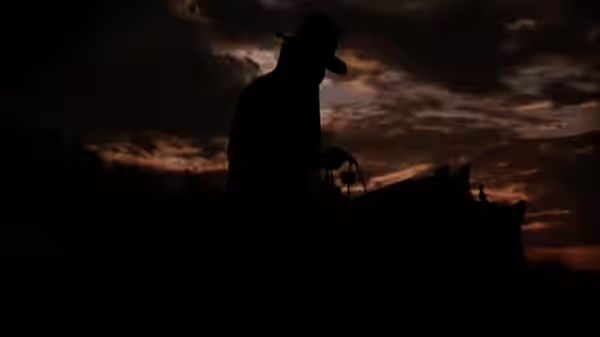
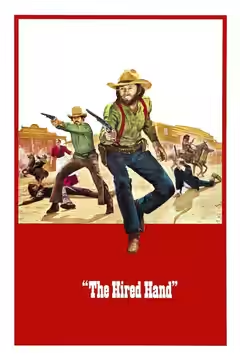
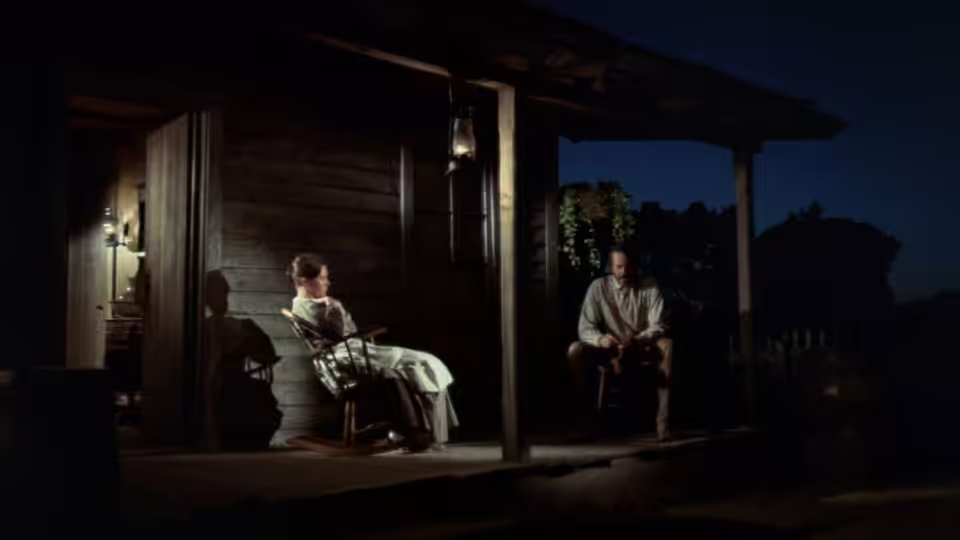
A woman sits on a porch while a man watches from the darkness outside
Film review

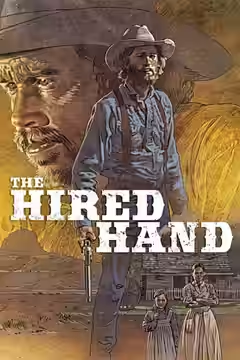
The Hired Hand

1971 · Directed by Peter Fonda · 1h 31m

In a sentenceWe would give Verna Bloom more time and the scenery a little less

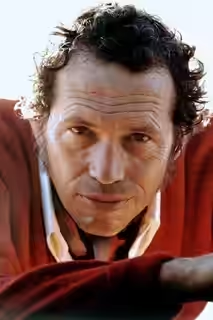
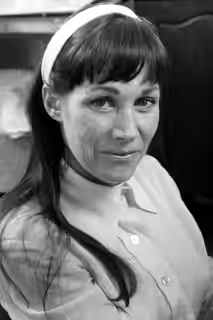
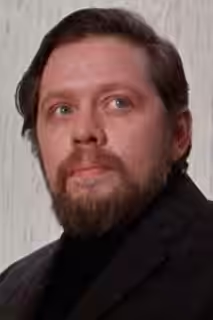
Harry Collings (Peter Fonda) rides towards the woman he has lost, with revenge also on his mind. His story involves Arch Harris (Warren Oates), Hannah Collings (Verna Bloom) and Dan Griffen (Robert Pratt), with McVey (Severn Darden) also among its figures. Harry has both a relationship to return to and a score he wants to settle. Peter Fonda directs and takes the lead in this 91-minute Western, written by Alan Sharp, photographed by Vilmos Zsigmond and scored by Bruce Langhorne.

Fi1m review

Peter Fonda’s intimate Western rewards patience, especially when Verna Bloom and Warren Oates take our attention. Its visual flourishes sometimes overstate the melancholy, but the performances make the sadness worth sitting with.

Peter Fonda’s The Hired Hand is a fine, unhurried Western, with a little more visual ingenuity than it knows what to do with. The prospect of a man returning to a woman he has lost, while also craving revenge, suggests business that could be dispatched quite briskly. Peter Fonda directs as though briskness would miss most of what interests him. That choice is rewarding: the performances deserve the attention, even when the treatment begins to feel precious.

The performance that most justifies this patience is Verna Bloom’s Hannah Collings. We were moved by the firmness of her performance: Hannah’s hurt registers without any appeal for our pity. There is something bracing about an actor who can make unhappiness apparent while refusing to make it the only interesting thing about a person. Peter Fonda’s restraint as a director is useful here, because there is no need to insist on feelings that the actor has already made clear.

Warren Oates, as Arch Harris, is equally worth watching, though the pleasure is different. His unforced presence keeps the solemnity from becoming oppressive; he makes acting look like a less strenuous occupation than it is. Peter Fonda, playing Harry Collings, keeps his own performance spare enough to give his fellow actors room. Alan Sharp’s screenplay benefits from that generosity, with the differences between the performances holding our interest through stretches that a more impatient film would hurry past. These actors are good company without having to charm us.

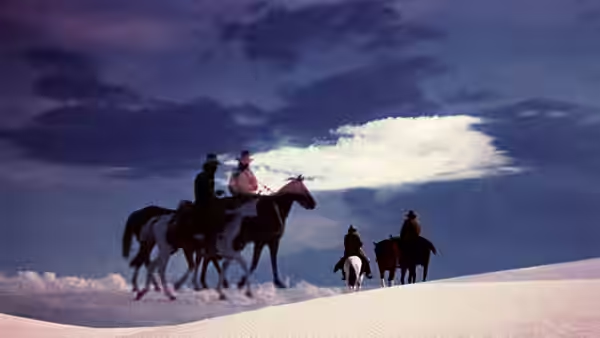
Vilmos Zsigmond’s cinematography is essential to the appeal, making the film’s melancholy pleasurable to watch. It is also where our reservation begins: the images occasionally seem too pleased with their own sadness. Frank Mazzola’s editing encourages contemplation, although the more experimental passages can interrupt our attention to the actors. The freedom to linger is welcome, but sometimes a feeling has registered well before the film is ready to move on, and the extra emphasis makes it less affecting.

Bruce Langhorne’s music is an important part of the appeal, allowing the sadness to linger without making it feel compulsory. Lawrence G. Paull’s production design has a modesty that suits these performances; it rarely seems to ask us to stop and admire the workmanship. Both help the film retain an intimacy that the more emphatic visual flourishes can threaten. The surroundings remain persuasive without needing to become another attraction, leaving the actors enough space to hold our attention through small changes of feeling.

At 91 minutes, this is hardly a test of endurance, although its lingering will trouble anyone who comes principally for revenge. Within a genre that often gives a man a grievance and sends him off to act upon it, the attention paid to Verna Bloom is especially valuable. Peter Fonda trusts that another person’s unhappiness can warrant our time, and his film is good enough to earn that trust despite its occasional fussiness. Choose it for an evening when nobody needs the story to get a move on.
Critical consensus AI synthesised

77
Positive
5
Mixed
3
Negative
0

Most critics respond warmly to The Hired Hand, with praise clustering around its intimate performances and melancholy visual style. Verna Bloom receives particular attention for the nuance of her performance, while Warren Oates also earns praise. The reviews favour Fonda’s restrained, experimental direction and the atmospheric work of the cinematography and editing, with Vilmos Zsigmond’s images singled out for their texture. The shared appreciation is for a downbeat western with psychological depth and palpable feeling.

The reservations concern its stylistic choices rather than its performances. Empire finds it dated but still fascinating, while Time Out offers the sharpest dissent, describing the opening as an unpleasant Western parody of Easy Rider. The recorded responses range from strong enthusiasm to mixed notices, with none classified as negative. Two other entries provide no verifiable verdict or detailed criticism, however, which limits how fully the disagreement can be described.

Vulture
19 August 2019 · Bilge Ebiri
95*

Ebiri regards the film as a long-overdue masterpiece and one of the great Westerns. He especially praises Verna Bloom’s nuanced performance and Fonda’s restrained, experimental direction.

Read the full review →
Empire
1 January 2000 · William Thomas
90*

The critic calls Fonda’s debut a dated but fascinating treat. They praise its melancholy cinematography and single out Warren Oates’s performance as a reason to watch.

Read the full review →
Slant Magazine
20 September 2018 · ★★★★½ · Chuck Bowen
90

Bowen praises the film as a beautiful, unjustly overlooked western. He singles out its intimate performances and expressive visual style for making its emotional currents feel palpable.

Read the full review →
The Independent
21 December 2001
85*

The critic calls the film a small classic and says its performances help raise it to greatness. They single out Verna Bloom’s performance and the film’s atmospheric work by its director, cinematographer and editor.

Read the full review →
The Guardian
30 December 2001 · Philip French
75*

French welcomes the restored film as a downbeat, psychologically acute western. He especially praises Vilmos Zsigmond’s textured cinematography.

Read the full review →
The New Yorker
21 August 1971 · Penelope Gilliatt
64*

The page identifies this as a review of the film, but does not expose Gilliatt’s verdict. It provides no specific praise or complaint about the film.

Read the full review →

Straight answers AI written, from our review

Is The Hired Hand worth watching?
The Hired Hand is worth watching for its performances and intimate, unhurried approach to the Western; we score it 80 out of 100. Verna Bloom and Warren Oates reward the patience it asks for, though the visual flourishes sometimes labour the sadness. We recommend it for the acting rather than a brisk revenge story.
How long is The Hired Hand, and what is it rated?
The Hired Hand runs 1h 31m. It is a western film.
Where can I watch The Hired Hand in France?
The Hired Hand is not on any streaming or rental service in France at the moment. Availability is checked daily.
How violent or frightening is The Hired Hand, and is it suitable for children?
The Hired Hand carries a UK 15 certificate and a US R rating, making it unsuitable for children under 15. The certificates indicate adult material, but we cannot give a precise account of its violence or frightening content here; the patient pacing should not be taken as reassurance for younger or sensitive viewers.
How does The Hired Hand compare to McCabe & Mrs. Miller?
The Hired Hand and McCabe & Mrs. Miller are patient Westerns in which loneliness matters as much as gunfire, and we recommend both with reservations. We would choose McCabe & Mrs. Miller for humour alongside the sadness, though some dialogue gets lost. The Hired Hand suits an evening of quiet, performance-led intimacy, provided its occasionally fussy imagery does not distract.

Cast

If you liked this, try…

  1. McCabe & Mrs. Miller (1971, Fi1m 90)Another patient Western in which loneliness matters as much as gunfire.

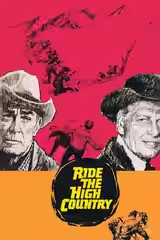
  2. Ride the High Country (1962) · not on Fi1m yetWeathered companionship, difficult loyalties and men less certain than they first appear.

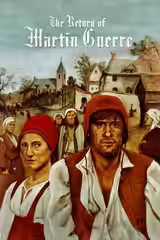
  3. The Return of Martin Guerre (1982) · not on Fi1m yetA homecoming that gives the woman waiting at home proper attention.

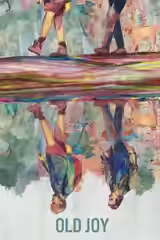
  4. Old Joy (2006) · not on Fi1m yetFor quiet companionship and feelings that become harder to put into words.

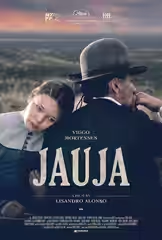
  5. Jauja (2014) · not on Fi1m yetA stranger Western that gives its landscapes even more time to trouble us.