Gary Ross’s adaptation of Suzanne Collins’s novel is best before the arena: a coal-town reaping played in silence, a Capitol of dyed beards, and Jennifer Lawrence, who never asks to be liked. Once the fighting starts, the camera shakes and the horror slips through.
Suzanne Collins’s novel imagines a nation, Panem, that punishes its twelve districts every year by taking a boy and a girl from each, putting the twenty-four of them in an arena and televising what happens until one is left. Gary Ross, who shares the script with Collins and Billy Ray, had to bring that to the screen for millions of readers who know every line, under a certificate that permits almost none of it. He has made a good film. Its first hour, before anyone reaches the arena, is as well made as this kind of blockbuster gets; the arena itself is the part it handles worst.
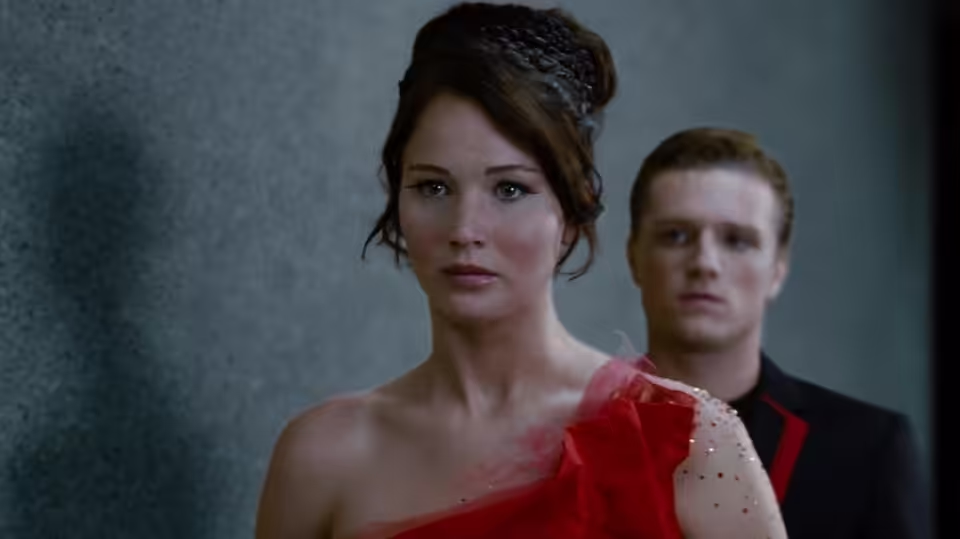
District 12 is the reason to trust it. Philip Messina builds a coal town of clapboard, slate and washing lines, and Tom Stern shoots it handheld with the colour wrung out. Katniss Everdeen (Jennifer Lawrence) hunts in the woods with Gale Hawthorne (Liam Hemsworth). Then the reaping. Children in pressed Sunday clothes stand in roped squares while Effie Trinket (Elizabeth Banks), in fuchsia and a powdered face, reads a name off a slip of paper. James Newton Howard keeps his score almost entirely out of it, and the quiet does the work.
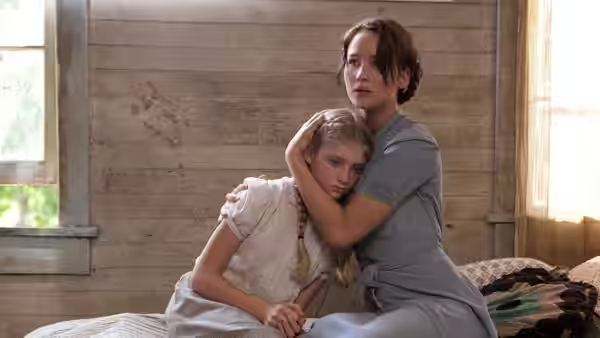
We had read the book and knew who would be called and what Katniss would do about it, and our throat tightened anyway. What did it was the crowd: a square full of people who raise three fingers instead of applauding, and a girl who has to be pulled off her sister by guards. Ross plays it without a single swelling note. It is the most honest minute in the film, and the film never quite gets back there.
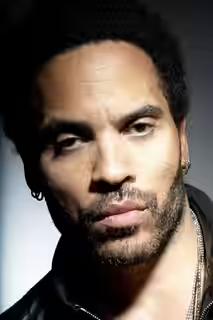
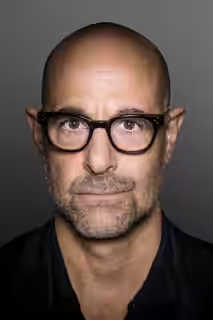
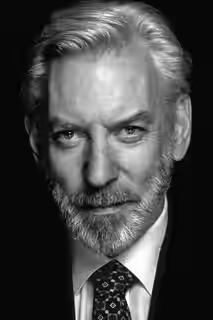
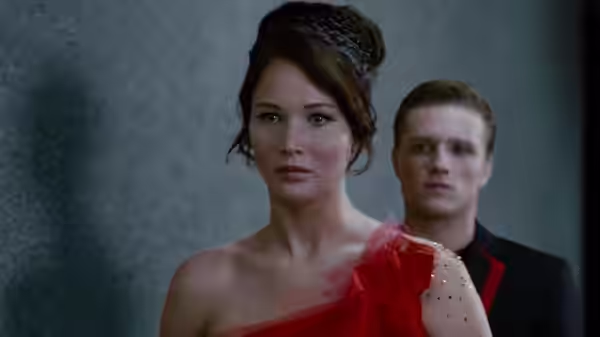
The Capitol is the other good idea. Messina makes it a city of marble and sherbet colours, and Judianna Makovsky dresses its citizens in dyed beards, gold eyelids and hats shaped like pastries. Stanley Tucci, as the host Caesar Flickerman, has blue hair, a wall of teeth and a laugh he switches on like a lamp, and he is the best thing in the film: a man who believes he is being kind. Woody Harrelson plays Haymitch Abernathy, the drunk mentor, with a lazy ease that is funnier than the lines. Donald Sutherland’s President Snow prunes roses and speaks softly to Wes Bentley’s head gamemaker, Seneca Crane, whose beard is a piece of topiary in its own right. Lenny Kravitz is quiet and decent as the stylist Cinna.
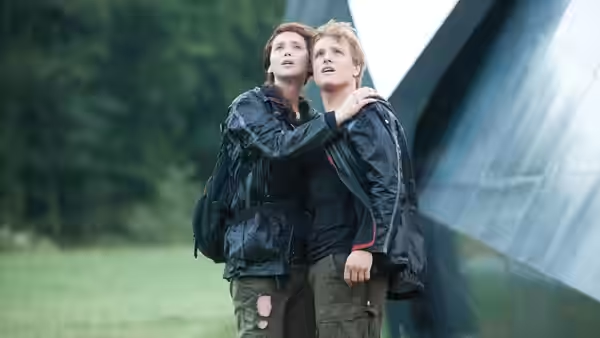
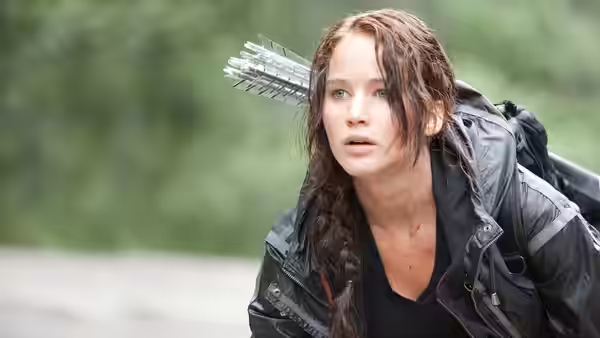
Lawrence holds the middle without once asking to be liked. Her Katniss is stiff in interviews, bad at smiling and watchful on the train, and Lawrence lets her be all of those things rather than nudging us towards affection. Josh Hutcherson gives Peeta Mellark a soft, apologetic decency the film needs. Hemsworth is given a look of longing and little else.
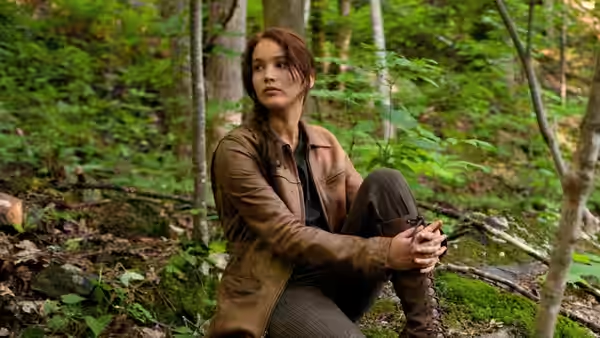
Then the arena, and the trouble. Stephen Mirrione, Juliette Welfling and Christopher S. Capp cut the opening fight into shards, none held longer than it takes to see a blade, and Stern’s camera shakes so hard that we could not have told you who was standing over whom. This keeps the 12A. It also means a child dying registers as noise rather than as loss, which is the one thing this story cannot afford. The film knows the arena is hard to follow, so it keeps cutting away to Tucci and Toby Jones’s Claudius Templesmith in a studio to explain the rules, and to Bentley’s control room, where men in white move clouds about on a table. It is useful, and it is also a way of leaving the arena whenever it gets difficult. At 142 minutes there is a long stretch of waiting in trees.
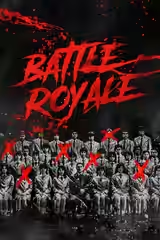
Battle Royale (2000) did the same premise with less money and more nerve, and never let its audience look away. Ross has something that film did not: a heroine who understands she is on television and starts to act for the cameras, and the scenes where Katniss learns to perform are the smartest in the film. The second half takes turns we will not describe. Some land; the last lands softly.
See it for the first hour, for Tucci, and for Lawrence, who was about to become a star and behaves in every scene as if nobody had told her. At home the arena is easier on the eye and the Capitol loses nothing. Bring someone who has read the book to tell you what you missed in the blur.